Journals
-
HAYATI Journal of Biosciences
HAYATI Journal of Biosciences (HAYATI J Biosci; p-ISSN: 1978-3019; e-ISSN: 2086-4094) is an international peer-reviewed and open access journal that publishes significant and important research from all area of biosciences fields such as biodiversity, biosystematics, ecology, physiology, behavior, genetics and biotechnology. All life forms, ranging from microbes, fungi, plants, animals, and human, including virus, are covered by HAYATI J Biosci. HAYATI J Biosci published by Department of Biology, Bogor Agricultural University, Indonesia and the Indonesian Society for Biology. We accept submission from all over the world. Our Editorial Board members are prominent and active international researchers in biosciences fields who ensure efficient, fair, and constructive peer-review process. All accepted articles will be published on payment of an article-processing charge, and will be freely available to all readers with worldwide visibility and coverage. HAYATI J Biosci has been also indexed/registered in SCOPUS, Asean Citation Index, DOAJ, SINTA, National Library of Medicine Catalog, Crossref, ROAD, CABI, EBSCO, Publons, Scilit, Agricola, ProQuest and others.
-
Tropical Animal Science Journal
Tropical Animal Science Journal (Trop. Anim. Sci. J.), previously Media Peternakan, is a scientific journal covering broad aspects of tropical animal sciences. Starting in 2018, the title was changed from Media Peternakan to develop and expand the distribution as well as increase the visibility of the journal. The journal is published SIX times a year in January, March, May, July, September, and November, starting in the year 2025 by the Faculty of Animal Science, IPB University, associated with the Animal Scientist's Society of Indonesia (Himpunan Ilmuwan Peternakan Indonesia). The first edition with the new title was published in April 2018 edition (Vol 41 No 1 2018), while the previous edition (up to the 2017 edition) will still use Media Peternakan as the title and can be accessed on the old website (https://journal.ipb.ac.id/index.php/mediapeternakan).
This journal has been accredited by the Directorate General of Higher Education, Research, and Technology, Republic of Indonesia, with First Grade (Sinta 1) from the year 2022 to 2026 according to decree No. 225/E/KPT/2022.
Tropical Animal Science Journal has been indexed and abstracted in Elsevier products (Scopus, Reaxys), Clarivate Analytics products (Emerging Sources Citation Index), Scimago Journal Rank, DOAJ, Dimensions-Digital Science, CABI, EBSCO, Science and Technology Index (SINTA), Google Scholar, and other scientific databases. The journal also used Similarity Check to prevent any suspected plagiarism in the manuscripts.
Tropical Animal Science Journal receives manuscripts encompassing a broad range of research topics in tropical animal sciences: breeding and genetics, reproduction and physiology, nutrition, feed sciences, agrostology, animal products, biotechnology, behaviour, welfare, health and veterinary, livestock farming system, socio-economic, and policy.
-
Media Peternakan
 Media Peternakan (MP) is a scientific journal covering animal science aspects published since 1967, and until now is consistently published three times a year in April, August, and December by Faculty of Animal Science, Bogor Agricultural University, associated with Animal Scientist's Society of Indonesia. MP is a peer reviewed journal that has been accredited by Directorate General of Research and Development Strengthening, Ministry of Research, Technology and Higher Education of the Republic of Indonesia since 2005.
Media Peternakan has been indexed and abstracted in Elsevier products (Scopus, Reaxys), Clarivate Analytics products (Emerging Sources Citation Index), Scimago Journal Rank, ASEAN Citation Index, DOAJ, CABI, EBSCO, Science and Technology Index (SINTA), Google Scholar, and other scientific databases. The journal also used Similarity Check to prevent any suspected plagiarism in the manuscripts.
MP receives manuscripts encompass a broad range of research topics in tropical animal sciences: breeding and genetics, reproduction and physiology, nutrition, feed sciences, agrostology, animal products, biotechnology, behaviour, welfare, health, livestock farming system, socio-economic, and policy.
Media Peternakan has been Indexed in Scopus
-
Jurnal Manajemen Hutan Tropika
Jurnal Manajemen Hutan Tropika (JMHT, J Man Hut Trop) is a periodic scientific journal of articles and conceptual thinking on tropical forest management covering all aspects of forest planning, forest policy, forest resource utilization, forest ergonomics, forest ecology, forest inventory, silviculture, and management of regional ecosystems. JMHT is published by the Department of Forest Management (IPB University) associated with Rumah Akademisi Kehutanan Indonesia.
Open Access
Free for readers, with article processing charges (APC) paid by authors or their institutions.
High Visibility
Indexed within Scopus, WoS Journal, Emerging Sources Citation Index (Clarivate Analytics), and other databases.
Journal Rank
Recognition of Reviewers
In recognition of their efforts, reviewers who submit timely, detailed peer-review reports will be offered vouchers redeemable against the Article Processing Charge (APC) of their next publication in JMHT.
-
Jurnal Agronomi Indonesia (Indonesian Journal of Agronomy)
Jurnal Agronomi Indonesia (Indonesian Journal of Agronomy), formerly named Buletin Agronomi, first published in 1962. This journal is published by the Indonesian Society of Agronomy (Perhimpunan Agronomi Indonesia, PERAGI) and the Department of Agronomy and Horticulture, Faculty of Agriculture, IPB University, Bogor, Indonesia.
J. Agron. Indonesia publishes primary research papers, review articles, and research notes in all areas of agronomy. Issues are published online in April, August, and December.
This journal has been accredited Fourth Rank (Peringkat 4) by Decree of the Director General of Research and Development Number 295/C/C3/KPT/2026 dated January 2, 2026, concerning the Accreditation Ranking of Scientific Journals for Period 2 of the Year 2025. This accreditation is valid from Vol. 53 No. 1 (April 2025) to Vol. 57 No. 2 (August 2029).
-
Jurnal Teknologi dan Industri Pangan
JURNAL TEKNOLOGI DAN INDUSTRI PANGAN
Jurnal Teknologi dan Industri Pangan (Journal of Food Technology and Industry) is an official publication of the Indonesian Association of Food Technologists (IAFT) in collaboration with the Faculty of Engineering and Technology IPB University (previously, until February 2026, with the Department of Food Science and Technology, Faculty of Agricultural Engineering and Technology, IPB University (Bogor Agricultural University) starting from 2001 Volume XII). The online version of the journal can be accessed at https://journal.ipb.ac.id/index.php/jtip/; https://patpi.or.id/
E-ISSN: 2087-751X
JTIP was published twice a year, i.e. in June and December, until 2025. Starting from January 2026, JTIP is published three times a year, i.e. in March, July, and November. Full English edition is started from July 2026. The journal contains research results and scientific reviews related to food science and technology as well as nutrition. JTIP is a double-blind peer reviewed journal that has been Accredited by the Directorate General of Higher Education (DGHE), Republic of Indonesia since Volume 35 No 2 2024 by the decree No. 295/C/C3/KPT/2026.
Starting Journal Volume XIX No 1, 2008 the ISSN of the journal has changed from 0216-2318 to 1979-7788, and since 2011 the online version of this journal has been issued (E-ISSN: 2087-751X). Reorganization in the management has been done during the first edition of the volume XXI to improve the performance of the journal.
For further information and correspondence, please contact the secretariate of Jurnal Teknologi dan Industri Pangan, Faculty of Engineering and Technology, IPB University (Bogor Agricultural University), Dramaga, Bogor 16680; Phone/Fax: (0251) 8626725; E-mail: jurnaltip@apps.ipb.ac.id -
Jurnal Ilmu dan Teknologi Kelautan Tropis
Journal Title : Jurnal Ilmu dan Teknologi Kelautan Tropis Abbreviation : J. Ilmu dan Teknologi Kelautan Tropis Scope : Marine biology, marine ecology, biological oceanography, chemical oceanography, physical oceanography, dynamic oceanography, coral reef ecology, marine acoustics, marine remote sensing, marine geographic information systems, marine microbiology, marine pollution, marine aquaculture, post-harvest fisheries technology, integrated coastal management (ICM), marine biotechnology, air-sea interactions, marine engineering. Type of manuscript : Original Research, Systematic Reviews, and Meta-Analyses Frequency : April, August, December DOI : 10.29244/jitkt Print ISSN : 2620-309X Online ISSN : 2087-9423 Publisher : Department of Marine Science and Technology, Faculty of Fisheries and Marine Sciences-IPB University, in collaboration with the Association of Indonesian Maritime Specialists, and the Association of Indonesian Coastal Management Experts. Language : English Citation Analysis : Scopus, Google Scholar Open Access Policy : Creative Commons Attribution (CC BY) Preservation Archiving : PKP PN -
Jurnal Pengolahan Hasil Perikanan Indonesia
Jurnal Pengolahan Hasil Perikanan Indonesia (JPHPI), formerly known as Buletin Teknologi Hasil Perikanan, was established in 1996 at the Department of Aquatic Product Technology. Since 2010, the publication of JPHPI has been jointly managed by the Department of Aquatic Product Technology at IPB University in collaboration with Masyarakat Pengolahan Hasil Perikanan Indonesia (MPHPI). The latest MoU is provided here.
JPHPI has been accredited since 2015 up to date, with an accreditation history as follows:
JPHPI has also been listed in Scopus, EBSCO, Science and Technology Index (SINTA), Garuda, ASEAN Citation Index (ACI), and Google Scholar.
-

Jurnal Fitopatologi Indonesia

Jurnal Fitopatologi Indonesia (JFI) is an Indonesian-based scientific journal, published by the Indonesian Phytopathology Society (Perhimpunan Fitopatologi Indonesia) and suported by the Department of Plant Protection, Faculty of Agriculture, IPB University. JFI is published 6 times a year (January, March, May, July, September and November). The journal is an open-access and Accredited by Directorate General of Higher Education (DGHE), Republic of Indonesia No. 85/M/KPT/2020, 1 April 2020, as "SINTA 2" of Indonesian journal accreditation level (until volume 20 issue 2 2024). Also, has been registered in Crossref, DOAJ, EBSCO, Google Scholar, Portal Garuda, Dimension, and other scientific databases.
JFI includes manuscript articles relating to plant diseases and their control, including pathogenic characterization, pathogen detection and identification, physiology and biochemistry of diseases, molecular biology, morphology and ultrastructure, genetics, disease transmission, ecology and epidemiology, chemical and biological control, also topics about characteristics of biocontrol agents and abiotic abnormalities in plant health. Articles can be either original research papers, short communications, or disease note.
P-ISSN: 0215-7950
E-ISSN: 2339-2479Download: Author Guideline
-
Jurnal Manajemen dan Agribisnis
Journal of Management & Agribusiness (JMA) publishes articles in agribusiness management fields such as agribusiness competitiveness, value chain of agribusiness, supply chain of agribusiness, and strategic agribusiness issues. JMA is published by School of Business, Bogor Agricultural University (SB-IPB) associated with Indonesian Society of Agricultural Economics (PERHEPI/ISAE). JMA was first published at the beginning of 2004 with twice per year in frequency on march and october. Since 2012, JMA has been published three times per year on March, July and November. Editor receives articles of empirical research and reviews in agribusiness & strategic management.
JMA is a peer reviewed journal that has been Accredited by Directorate General of Higher Education (DGHE), Republic of Indonesia No 12/M/Kp/IE/2015 which is valid for 5 (five) years since enacted on 11 May 2015. Base on Directorate General of Research and Development Strengthening, Ministry of Research, Technology and Higher Education of the Republic of Indonesia No 30/E/KPT/2018 JMA get ranked 2 accredited (SINTA 2) status.
JMA has been registered in Crossref (since 2015), ACI - ASEAN Citation Index, DOAJ, EBSCO, Indonesian Publication Index (IPI), SINTA Rank 2, Google Scholar, and other scientific databases.
Editors can revise the paper without changing the substance and content after a blind review process. The articles sent by the author must be an original script and is not being considered for publication by other journal or publishers.
P-ISSN: 1693-5853
E-ISSN: 2407-2524Download the Submissions Guidelines and Author Guidelines
______________________________________________________________
 JMA started in 2018 only receives articles using english
 ______________________________________________________
-

Jurnal Ilmu Pertanian Indonesia
Jurnal Ilmu Pertanian Indonesia (JIPI) or Indonesian Journal of Agricultural Sciences is the open access journal and accredited by KEMENDIKBUDRISTEK Nomor 158/E/KPT/2021, 27th Dec 2021 as Sinta 2 of Indonesian journal accreditation level (until volume 31 issue 1 2026). The journal publishes four times a year in Januari, April, July, and October. The publisher is Directorate of Research and Innovation (DRI), IPB University, Indonesia. Articles of the journal cover research results in agricultural practices and sciences such as agronomy, soil sciences, pest and disease of zoological and medicinal veterinary, agricultural engineering, industrial technology, food technology, the science of nutrition, family and consumers, biometry, biology, climatology, livestock, fisheries and marine science, health care and the environment, forestry, and socioeconomic agriculture. Information on equipment, observation, and techniques the experiment will be accepted as articles notes.
-
Indonesian Journal of Business and Entrepreneurship
 Indonesian Journal of Business and Entrepreneurship (IJBE) publishes information of empirical research and reviews in business and entrepreneurship. IJBE is published by School of Business, Bogor Agricultural University (SB-IPB) associated with Indonesian Alliance of Magister Management Program (APMMI). IJBE was first published at the beginning of 2015 with three issue per year in January, May, and September. Editor receives articles of empirical research and reviews in business and entrepreneurship.
IJBE is a peer reviewed journal that has been Accredited by the Ministry of Research, Technology and Higher Education Number 32a/E/KPT/2017 which is valid for 5 (five) years since enacted on 26 April 2017. Base on Directorate General of Research and Development Strengthening, Ministry of Research, Technology and Higher Education of the Republic of Indonesia No 30/E/KPT/2018 IJBE get ranked 2 accredited (SINTA 2) status. Base on Director General of Higher Education, Research, and Technology of the Republic of Indonesia 158/E/KPT/2021 IJBE get ranked 2 accredited (SINTA 2) status until 2026.
IJBE has been registered in Crossref, DOAJ, SINTA Rank 2, Indonesian Publication Index (IPI), Google Scholar, and other scientific databases.
Editors can revise the paper without changing the substance and content after a blind review process. The articles sent by the author must be an original script and is not being considered for publication by other journal or publishers.
P-ISSN: 2407-5434
E-ISSN: 2407-7321Click for Submissions Guidelines and Author Guidelines
______________________________________________________________
-
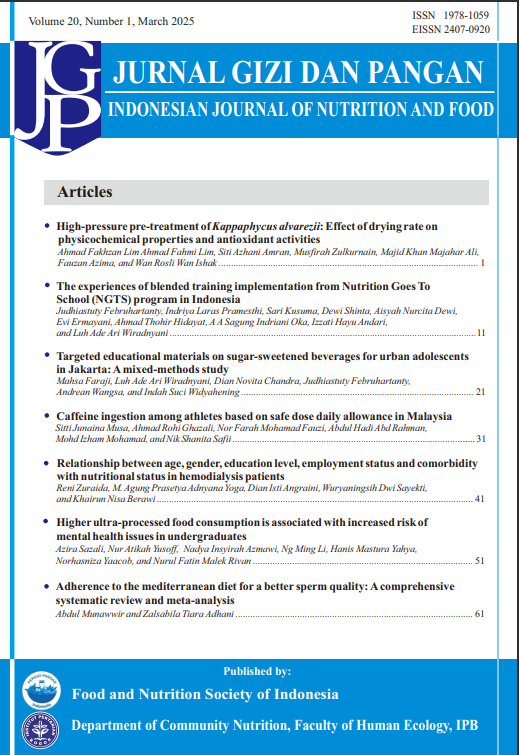
Jurnal Gizi dan Pangan
Journal Title : Jurnal Gizi dan Pangan Abbreviation : J Gizi Pangan Scope : Human nutrition and food sciences, mostly in the context of developing and emerging countries, spanning the fields of nutritional biochemistry; nutrition care process in both clinical and community settings; functional, traditional, and novel foods; healthy diets; and sustainable food and nutrition Type of manuscript : Original Research, Study Protocols, Systematic Reviews, and Case Studies Frequency : March, July, and November Print ISSN : 1978-1059 Online ISSN : 2407-0920 Publisher : Food and Nutrition Society of Indonesia (PERGIZI PANGAN Indonesia) in collaboration with the Faculty of Medicine and Nutrition (FKGiz), IPB University
Language : English Indexed : Web of Science (WoS), Science and Technology Index (SINTA), EBSCO, Garuda, Asean Citation Index (ACI), Dimensions Citation Analysis : Google Scholar Open Access Policy : Creative Commons Attribution (CC BY-SA) Preservation Archiving : PKP PN Jurnal Gizi dan Pangan (Indonesian Journal of Nutrition and Food) is the official publication of PERGIZI PANGAN Indonesia in collaboration with the Department of Community Nutrition, Faculty of Human Ecology, IPB University. PERGIZI PANGAN Indonesia (Food and Nutrition Society of Indonesia) is a multidisciplinary organization that addresses complex nutrition and food issues in Indonesia through a holistic and collaborative approach. Comprising experts in nutrition, medicine, food technology, sociology, and economics, the organization aims to advance scientific development and practical solutions in nutrition and food. Since 1974, PERGIZI PANGAN Indonesia has represented the country in international bodies such as the International Union of Nutritional Sciences (IUNS) and the Federation of Asian Nutrition Societies (FANS). The Department of Community Nutrition, Faculty of Human Ecology, IPB University, is a pioneer of higher education in nutrition science in Indonesia. Currently, the department serves undergraduate, master’s, and doctoral degrees in nutrition science and a professional program in dietetics, with all four programs accredited as “Excellent” by the national accreditation body for higher education in health.
Jurnal Gizi dan Pangan (Indonesian Journal of Nutrition and Food) has been accredited since January 2nd, 2026, by the Ministry of Research, Technology, and Higher Education of the Republic of Indonesia (Decree Number 295/C/C3/KPT/2026). It uses similarity checks to prevent suspected plagiarism and ensure manuscript quality.
Jurnal Gizi dan Pangan (Indonesian Journal of Nutrition and Food) has a competent board of editors specialized in nutrition and food sciences. The board consists of numerous experts from various countries, including Indonesia, Malaysia, Thailand, Japan, and Italy. This Journal is managed by a highly committed editorial team. Lecturers, researchers, and scientists are welcome to publish their scientific articles in this journal.
-
Jurnal Keteknikan Pertanian
JTEP (Jurnal Keteknikan Pertanian) P-ISSN: 2407-0475 E-ISSN: 2338-8439, previously named Agricultural Engineering Bulletin, is an official publication of the Indonesian Society of Agricultural Engineers (ISAE) in collaboration with the Department of Mechanical and Biosystem Engineering, Faculty of Agricultural Technology and Engineering, Bogor Agricultural University (The MoU can be downloaded here). JTEP starting in 2025 will be published four times a year in March, June, September, and December.
JTEP is a peer reviewed journal that has been accredited SINTA 2 by the Ministry of Research, Technology and Higher Education Number 177/E/KPT/2024 which is valid for 5 (five) years since volume 11 issue 2, 2023 to volume 16 issue 1, 2028. JTEP has been registered in Crossref, Indonesian Publication Index (IPI), Google Scholar, and other scientific databases.
JTEP receives manuscripts of research results or scientific review in agricultural engineering related to farm structures and environment, agricultural and biosystem engineering, renewable energy, postharvest technology, food engineering and agricultural information system.The articles sent by the author - must be an original script and is not being considered for publication by other journal or publishers - should be written in accordance with the writing guidelines and submitted online via https://journal.ipb.ac.id/index.php/jtep. Editors can revise the paper without changing the substance and content after a blind review process.
For further information and correspondence, please contact the secretariate of Jurnal Keteknikan Pertanian, Department of Mechanical and Biosystem Engineering, Faculty of Agricultural Technology and Engineering, Bogor Agricultural University, Kampus IPB Darmaga Kotak Pos 220, Bogor 16002; Phone: +62 251 8624503 Fax: +62 251 8623026; E-mail: jtep@apps.ipb.ac.id -
Jurnal Teknologi Industri Pertanian
.jpg) Jurnal Teknologi Industri Pertanian or Journal of Agroindustrial Technology (JTIN), is a peer reviewed and open access journal that publishes significant and important original research results, reviews and policy papers from all area of agroindustry covering process technology, industrial system engineering, and environmental management. It is published 3 times a year (April, August, and December) and has been indexed in Crossreff, Garuda, Sinta, and EBSCO.
Jurnal Teknologi Industri Pertanian or Journal of Agroindustrial Technology (JTIN), is a peer reviewed and open access journal that publishes significant and important original research results, reviews and policy papers from all area of agroindustry covering process technology, industrial system engineering, and environmental management. It is published 3 times a year (April, August, and December) and has been indexed in Crossreff, Garuda, Sinta, and EBSCO.The journal was published by the Division of Agroindustrial Engineering and Technology under the Faculty of Engineering and Technology, IPB University (formerly Department of Agroindustrial Technology, Faculty of Agricultural Technology, Bogor Agricultural University) in collaboration with the Indonesian Agroindustry Association. This journal has been accredited by the National Journal Accreditation (ARJUNA), managed by the Ministry of Higher Education, Science and Technology, Republic of Indonesia, with Second Grade (Peringkat 2, SINTA 2). This latest accreditation is based on the Decree of the Director General of Research and Development, Ministry of Higher Education, Science and Technology, Number 295/C/C3/KPT/2026, dated January 2, 2026.
In its history, Jurnal Teknologi Industri Pertanian used to be named Buletin Penelitian Teknologi Industri (Bulletin of Industrial Technology Research) and published for the first time in 1982 with ISSN 0216-3160. Name change was made in 1991. Due to no changes in its scope and content, then the ISSN code is still in use until now. Since 2012, Jurnal Teknologi Industri Pertanian has certified as accredited journal based on decree No. 56/DIKTI/KEP/2012, and the online version of this journal has published with e-ISSN 2252-3901.
-
Jurnal Entomologi Indonesia
© Perhimpunan Entomologi Indonesia
ISSN: 1829-7722
Online ISSN: 2089-0257
Published since: Vol 1 No 1, September 2004
Scope: Tropical entomologyJurnal Entomologi Indonesia (JEI) publishes original research papers and short communications that covers the basic and applied aspect of insects and mites or other arthropods in agriculture, forestry, human and animal health, and natural resources and environmental management. The journal is published by Perhimpunan Entomologi Indonesia (Entomological Society of Indonesia).
JEI is an open-access, peer reviewed journal that has been Accredited by Directorate General of Higher Education (DGHE), Republic of Indonesia No. 48a/E/KPT/2017 on 30 October 2017.
ANNOUNCEMENTS
Starting Vol 11. No. 3 (2014) Jurnal Entomologi Indonesia has been hosted by Perhimpunan Entomologi Indonesia (PEI). Please visit our NEW WEBSITE at:
-
Jurnal Hortikultura Indonesia
Jurnal Hortikultura Indonesia (JHI), (Indonesian Journal of Horticulture), is an official publication of the Indonesian Society for Horticulture, founded in 2010, first launched and published in National Seminar of Indonesian Horticulture, Udayana University – Bali at 25th November 2010.
The JHI publishes primary research paper, review article, policy analysis and research notes and preliminary results in all areas of horticulture. Manuscripts could be written either in English or in Indonesia. JHI is a triannual publication; April, August, December.
The JHI is published Indonesian Horticulture Society (PERHORTI) in partnership with Department of Agronomy and Horticulture, Faculty of Agriculture, Bogor Agricultural University (IPB)
-
Jurnal Akuakultur Indonesia
Jurnal Akuakultur Indonesia (JAI) is a national scientific journal that publishes research and recent science development in aquaculture. Our focus is on the development of aquaculture field including that related to the health, nutrition, genetics, microbiology, biotechnology, culture systems, and socio-economics of aquaculture.
-
Jurnal Aplikasi Bisnis dan Manajemen
 Jurnal Aplikasi Bisnis dan Manajemen (JABM) or Journal of Applied Business and Management (in English) published articles in the field of business and management applications such as business strategy management, financial management, human resources and organization, business value chain and other issues in the field of business and management. This scientific journal is published by School of Business, IPB University (SB-IPB) associated with the Indonesian Alliance of Magister Management Program (APMMI). JABM began the publication in August 2015 with a frequency of three times a year. Starting in 2016, JABM will be published in January, May, and September.
JABM is a peer-reviewed journal that has been Accredited by the Directorate General of Higher Education (DGHE), Republic of Indonesia No 51/E/KPT/2017 which is valid for 5 (five) years since enacted on 4 December 2017. Base on Directorate General of Research and Development Strengthening, Ministry of Research, Technology and Higher Education of the Republic of Indonesia No 30/E/KPT/2018 JABM get ranked 2 accredited (SINTA 2) status. Base on Director General of Higher Education, Research, and Technology of the Republic of Indonesia 164/E/KPT/2021 JABM get ranked 2 accredited (SINTA 2) status until 2026. JABM has been registered in Crossref, DOAJ, Indonesian Publication Index (IPI), Google Scholar, and other scientific databases.
Editors receive written results of scientific research, both in the form of empirical research in fields related to business and management applications. Editors can revise the paper without changing the substance and content after a blind review process. The articles sent by the author must be an original script and is not being considered for publication by other journal or publishers.
Click for Submissions Guidelines and Author Guidelines [Bahasa] [English]
P-ISSN: 2528-5149
E-ISSN: 2460-7819_________________________________________________
 Starting January 1, 2024, JABM only accepts articles in English
 ______________________________________________________
-
Acta VETERINARIA Indonesiana
 Acta VETERINARIA Indonesiana (Acta Vet Indones.) also known as The Indonesian Veterinary Journal, is an open-access, peer-reviewed, online journal dedicated to the advancement of veterinary and life sciences. To ensure high scientific relevance and novelty, the journal exclusively publishes original manuscripts derived from research conducted within the last five years. Published entirely in English, the journal accepts a range of article formats, including original research papers, comprehensive reviews, clinical case studies, and short communications. Acta VETERINARIA Indonesiana is published by the School of Veterinary Medicine and Biomedical Sciences, IPB University, in prestigious collaboration with the Indonesian Veterinary Medical Association (PDHI). This journal is published since 2013, Starting in 2021, the journal adopted a triannual publication schedule, publishing three issues each year in March, July, and November. P-ISSN 2337-3202, E-ISSN 2337-4373, Accreditation of "SINTA 2" Decree of the Director General of Higher Education, Research, and Technology of the Republic of Indonesia Number 10/C/C3/DT.05.00/2025
All articles published in Acta Vet Indones has been indexed in:
- Sinta
- Garuda
- Google Scholar
- DOAJ
- EBSCO
- and being process for other directory of research journal index
-

Marine Fisheries : Journal of Marine Fisheries Technology and Management
MARINE FISHERIES: Journal of Marine Fisheries Technology and Management is a scientific journal in the field of marine fisheries technology and management. The journal publishes original research articles and reviews covering fishing gear, fishing technologies, fishing vessels and transportation, fisheries port policies and management, as well as marine fisheries systems. This journal has been accredited by the Directorate General of Research, Technology, and Higher Education, Ministry of Research, Technology, and Higher Education of the Republic of Indonesia since 2015. The journal is organized by the Forum for Communication and Partnership in Capture Fisheries in Indonesia and the Department of Fisheries Resource Utilization, Faculty of Fisheries and Marine Sciences, Bogor Agricultural University. Starting with the 2026 issue, the journal will be published three times a year, in March, July, and November.
-
Jurnal Pengelolaan Sumberdaya Alam dan Lingkungan (Journal of Natural Resources and Environmental Management)
Journal Title : Jurnal Pengelolaan Sumberdaya Alam dan Lingkungan (Journal of Natural Resources and Environmental Management) Initials : JPSL Abbreviation : Journal of Nat Res EnvMan Frequency : 6 (January, March, May, July, September, November) DOI : 10.29244/jpsl Print ISSN : 2086-4639 Online ISSN : 2460-5824 Publisher : IPB University Language : English Citation Analysis : Scopus, Google Scholar Open Access Policy : Creative Commons Attribution (CC BY) Study Program of Natural Resources and Environmental Management, Graduate School of IPB University (PS. PSL, SPs. IPB) in collaboration with Center for Environmental Research, IPB University (PPLH-IPB) has been managing JPSL since 2013, with a period of two numbers per year. From 2017 to 2018, JPSL published three issues per year. Since 2019, JPSL has published four issues per year. The Journal of Natural Resources and Environment Management (JPSL) is a scientific periodical that presents scientific articles, conceptual thoughts, reviews, and book reviews on natural and environmental resource management that have tropical characteristics. Reviewers review each manuscript submitted to the Journal of Natural Resources and Environmental Management.
JPSL has been indexed in DOAJ (Directory of Open Access Journal), Google Scholar, Indonesian Publication Index (IPI), and CrossRef. JPSL has also been accredited by Kemenristekdikti as SINTA 1. Valid from Volume 13, Issue 1 (2023) to Volume 17, Issue 4 (2027).
Since October 6, 2023 JPSL has been officially indexed by Scopus. The inclusion of JPSL in Scopus is not merely symbolic; it has practical implications for the journal and its contributors. It means that the scholarly work published in JPSL is now more accessible to researchers, academics, and institutions globally.
Open Access
This journal provides immediate open access to its content on the principle that making research freely available to the public supports a greater global exchange of knowledge.
All articles published Open Access will be immediately and permanently free for everyone to read and download.
Fast Track Publication
This journal does not offer fast track publication. All submitted manuscripts undergo the standard peer-review process to ensure the integrity and quality of scholarly publishing.
-
Jurnal Penyuluhan
Jurnal Penyuluhan is published to communicate research results on improving human resources capacity in various fields in micro, messo as well as macro scopes. The researchers, bussiness actors, policy maker, academicians, extension workers, and those interested in developing sciences and practical aspects in human behaviour transformation. Authors can send their articles to editor for further review by Mitra Bestari.
Jurnal Penyuluhan has been acredited based on SK Dirjen Penguatan Riset dan Pengembangan Kementerian Riset, Teknologi dan Pendidikan Tinggi No. 200/M/KPT/2020 dated on Dec 23th, 2020 until 2024.
-
Sodality: Jurnal Sosiologi Pedesaan
Sodality: Jurnal Sosiologi Pedesaan is a peer-reviewed scientific journal, focusing on Rural Sociological issues with transdisciplinary perspectives. The journal is especially concerned with social conflict and change, agrarian, environmental sustainability, gender, population and migration, food, community development and empowerment, livelihood, resilience, ecotourism, rural poverty, culture, digitalization, youth-intergenerational justice issues, indigenous people and local knowledge, and related issues from all local and global rural areas. This journal also accepts articles written based on critical systematic literature reviews of sociological issues.
Sodality: Jurnal Sosiologi Pedesaan is published by the Department of Communication and Community Development Sciences, Faculty of Human Ecology, IPB University, in association with the Indonesian Sociological Association (Ikatan Sosiologi Indonesia/ISI) and the Indonesian Association of Study Programme of Sociology (Asosiasi Program Studi Sosiologi Indonesia/APPSI).
Sodality: Jurnal Sosiologi Pedesaan is nationally accredited as a Sinta 2 journal in the Science and Technology Index (SINTA), an online scientific portal managed by the Ministry of Higher Education, Science, and Technology, Republic of Indonesia. The certificate can be seen here.
-
Jurnal Ilmu Keluarga dan Konsumen
Jurnal llmu Keluarga & Konsumen (JIKK; p-ISSN: 1907-6037; e-ISSN: 2502-3594) is a scientific journal that publishes research results that can contribute to improving the quality of life for families and consumers. The topics of the research that is published in JIKK such as: family well-being, family resilience, family sociology, family psychology, family resource management, family education, family ecology, family communications, family development, gender relations within the family, human growth and development, childcare and protection, parenting; consumer behavior, consumer education, and consumer protection.
JIKK was first published by Department of Family and Consumer Sciences, Faculty of Human Ecology, Bogor Agricultural University (IPB University) since 2008 and published twice a year in January and August. Since 2013, JIKK published three times a year in January, May, and September. In addition, since 2014, JIKK is jointly published by Department of Family and Consumer Sciences, Faculty of Human Ecology, IPB University. In 2019, JIKK collaborate with the Association of Indonesian Family and Consumer Sciences (ASIKKI).
Based on the Decree of Directorate General of Research and Development Strengthening, Ministry of Research, Technology, and Higher Education of Republic Indonesia No. 2/E/KPT/2015, JIKK has been accredited since December 1, 2015. Base on Directorate General of Higher Education (DGHE), Republic of Indonesia No 36/E/KPT/2019 JIKK get ranked 2 accredited (SINTA 2) status. JIKK has been registered in Crossref, DOAJ, Google Scholar, Garuda, SINTA Rank 2, and other scientific databases.
Editors can revise the paper without changing the substance and content after a blind review process. The articles sent by the author must be an original script and is not being considered for publication by other journal or publishers.
Click for Submissions Guidelines and Author Guidelines
-
Agromet
Agromet is published twice a year by the Indonesian Association of Agricultural Meteorology (PERHIMPI) in collaboration with Department of Geophysics and Meteorology, Faculty of Mathematics and Natural Sciences, IPB University. Agromet publishes original research articles or reviews that have not been published elsewhere. The scope of publication related to weather and climate issues (agriculture, forestry, water resources, environment, ecology, and health as affected by weather and climate variability and change).
-
Journal of Regional and Rural Development Planning (Jurnal Perencanaan Pembangunan Wilayah dan Perdesaan)
Journal of Regional and Rural Development Planning (Jurnal Perencanaan Pembangunan Wilayah dan Perdesaan - JP2WD) is initiated and organized by Center for Regional System Analysis, Planning, and Development (CRESTPENT) of Bogor Agricultural University, Indonesia (IPB), Study Program of Regional and Rural Development Planning Sciences IPB, Study Program of Regional Planning Sciences IPB, and Association of Rural and Regional Development Planning Alumni.
JP2WD is a publication media for original manuscripsts related to regional and rural planning and development written in Bahasa or English.
JP2WD is published three times a year (February, June, and October).
Manuscripts accepted for publication in JP2WD may be results of the latest scientific research (maximum during the past 10 years), policy analysis, research note, and Region/rural profile and issues.
JP2WD covers topics related to regional science, regional and/or rural planning, regional economics, spatial and environmental planning, regional information system, community development, and public policy.
Manuscript received shall never been published before and not in the process of scientific publication in national and/or international publications. Manuscripts shall be written in accordance to the JP2WD manuscript writing guideline.
Manuscripts received by the editorial office will be sent to the editor. Editor will select and shortlist the manuscripts. The editor will ask authors to make improvements/revisions before the manuscript is sent to reviewers.
Shortlisted manuscripts will be reviewed by minimum two experts in the concerned field. Corresponding authors will be informed by e-mail on the progress of their submission.
ISSN : 2549-3922
E-ISSN : 2549-3930
-
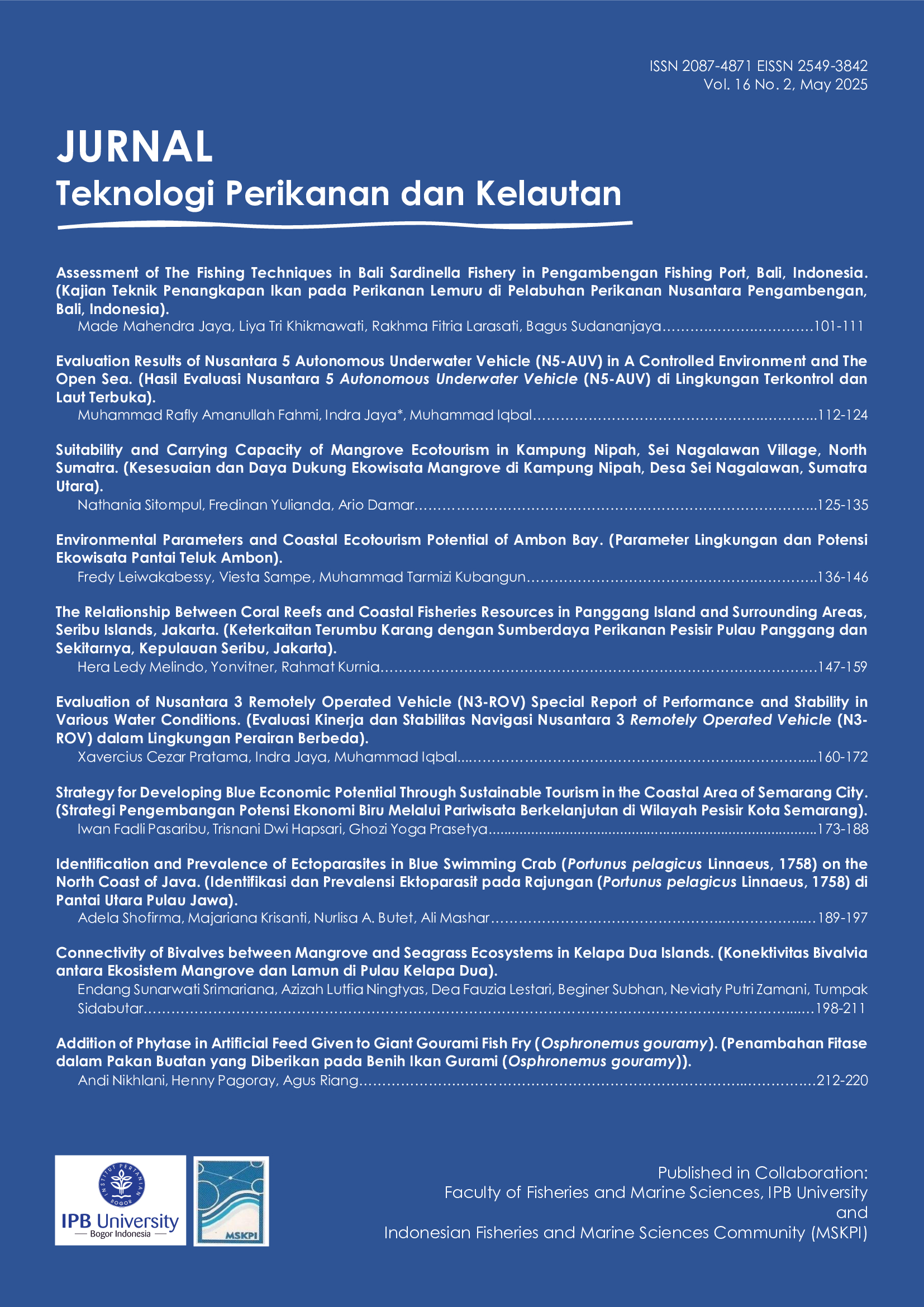
Jurnal Teknologi Perikanan dan Kelautan
Jurnal Teknologi Perikanan dan Kelautan (JTPK), formerly known as Maritek, was established in 1991 and is managed by the Department of Marine Science and Technology, Faculty of Fisheries and Marine Science, IPB University. Since 2010, the publication of JTPK has been jointly managed by the Faculty of Fisheries and Marine Science, IPB University, in collaboration with Indonesian Fisheries and Marine Sciences Community (MSKPI). The letter of agreement can be found here.
JTPK is accredited by the Ministry of Education, Culture, Research, and Technology (KEMENDIKBUDRISTEK) under Decree Number 72/E/KPT/2024, dated April 1, 2024 as "Sinta 2" of Indonesian journal accreditation level (until volume 17 issue 1 2026). Previously, JTPK published articles twice a year until 2023, then in 2024 JTPK published articles three times a year. Beginning with Volume 16 Number 1 (2025), articles are published four times a year (February, May, August, and November), and all articles are published in English.
JTPK articles cover research results in capture fisheries technology, marine technology, fisheries and marine remote sensing, fishery vessel technology, fishery product processing technology, aquaculture technology, marine biotechnology, coastal and marine management techniques, aquatic environment management techniques, and fisheries management related to the tropical resources. -
AL-MUZARA'AH
AL-MUZARA'AH – Journal of Islamic Economics, is a collaborative journal of the Department of Islamic Economics, IPB University with the Indonesian Association of Islamic Economist (IAEI). The aim of the journal is to communicate and as the media of academic socialization by providing a platform for publication of research in the fields of Islamic economics, Islamic finance, Islamic microfinance, Islamic banking, Islamic insurance, Islamic management, Islamic agriculture and environment, halal industry, Islamic social finance and poverty alleviation, Islamic law and sharia issues in economics and finance, Islamic securitization and sukuk, Islamic capital market, Islamic accounting, Islamic development economics, and other topics related to this area.
AL-MUZARA'AH has been Accredited SINTA Rank 2 by Directorate General of Research and Development Strengthening, Ministry of Higher Education, Science and Technology of the Republic of Indonesia (Kemendiktisaintek RI) No 295/C/C3/KPT/2026 which is valid for 5 (five) years since enacted on 3 February 2026. AL-MUZARA'AH has been registered in Google Scholar, Crossref, Garda Rujukan Digital (Garuda), Dimensions, and EBSCO.
-
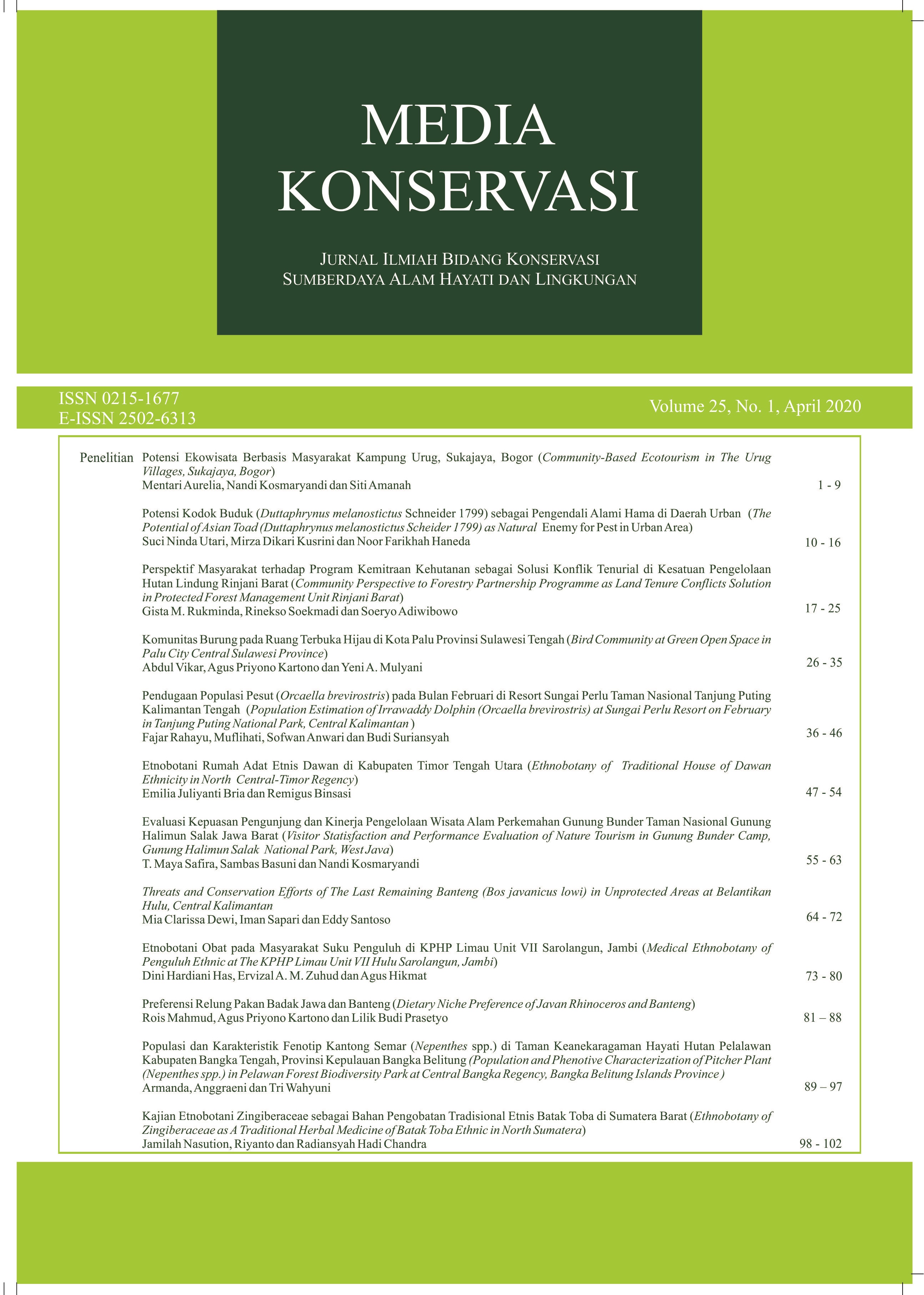
Media Konservasi
Journal Title : Media Konservasi Abbreviation : Medkon Scope : ecology, landscape ecology, in-situ and ex-situ conservation of wildlife, remote sensing and GIS application, sustainable use of plants and wildlife, ethnobotany, bioprospecting, ecotourism, management of conservation & protection areas, urban forests, environmental services and education Type of manuscript : Regular paper, Research notes, Short communication, Technical paper, Book review, Opinion Frequency : 4 (January, April, July, October) DOI : 10.29244/24 Print ISSN : 0215-1677 Online ISSN : 2502-6313 Publisher : IPB University Language : English Citation Analysis : Scopus, Google Scholar Open Access Policy : Creative Commons Attribution (CC BY) Preservation Archiving : PKP PN Media Konservasi is a scientific journal in the field of tropical forest conservation, environment, biodiversity and ecotourism. It is the pioneer journal in Indonesia to discuss conservation issues. The first issue is published in 1987. The Journal was published three times a year in April, August, and December. However, starting from Volume 29 (2024), Media Konservasi is now published in January, May, and September.
Media Konservasi is committed to publish good quality scientific papers. The journal focuses on publications in the field of forest resource conservation, environment, biodiversity and ecotourism in the form of Regular paper, book review, Research Notes/Scientific note/Short Communications, Technical paper and Opinion.
Media Konservasi is accredited and indexed in Sinta (Sinta score = S2) by National Research & Innovation Agency of Indonesia.
Media Konservasi is hosted and managed by Department of Forest Resources Conservation and Ecotourism, Faculty of Forestry and Environment, IPB University and Indonesian Biologist Association (Perhimpunan Biologi Indonesia/PBI). View the agreement here.
Open Access
Media Konservasi provides immediate open access to its content on the principle that making research freely available to the public supports a greater global exchange of knowledge.
All articles published Open Access will be immediately and permanently free for everyone to read and download.
Fast Track Publication
Media Konservasi does not offer fast track publication. All submitted manuscripts undergo the standard peer-review process to ensure the integrity and quality of scholarly publishing.
Reviewer Appreciation
To acknowledge their valuable contributions, reviewers who provide timely and thorough peer-review reports will receive vouchers that can be applied toward the Article Processing Charge (APC) for their next publication in Media Konservasi.
-
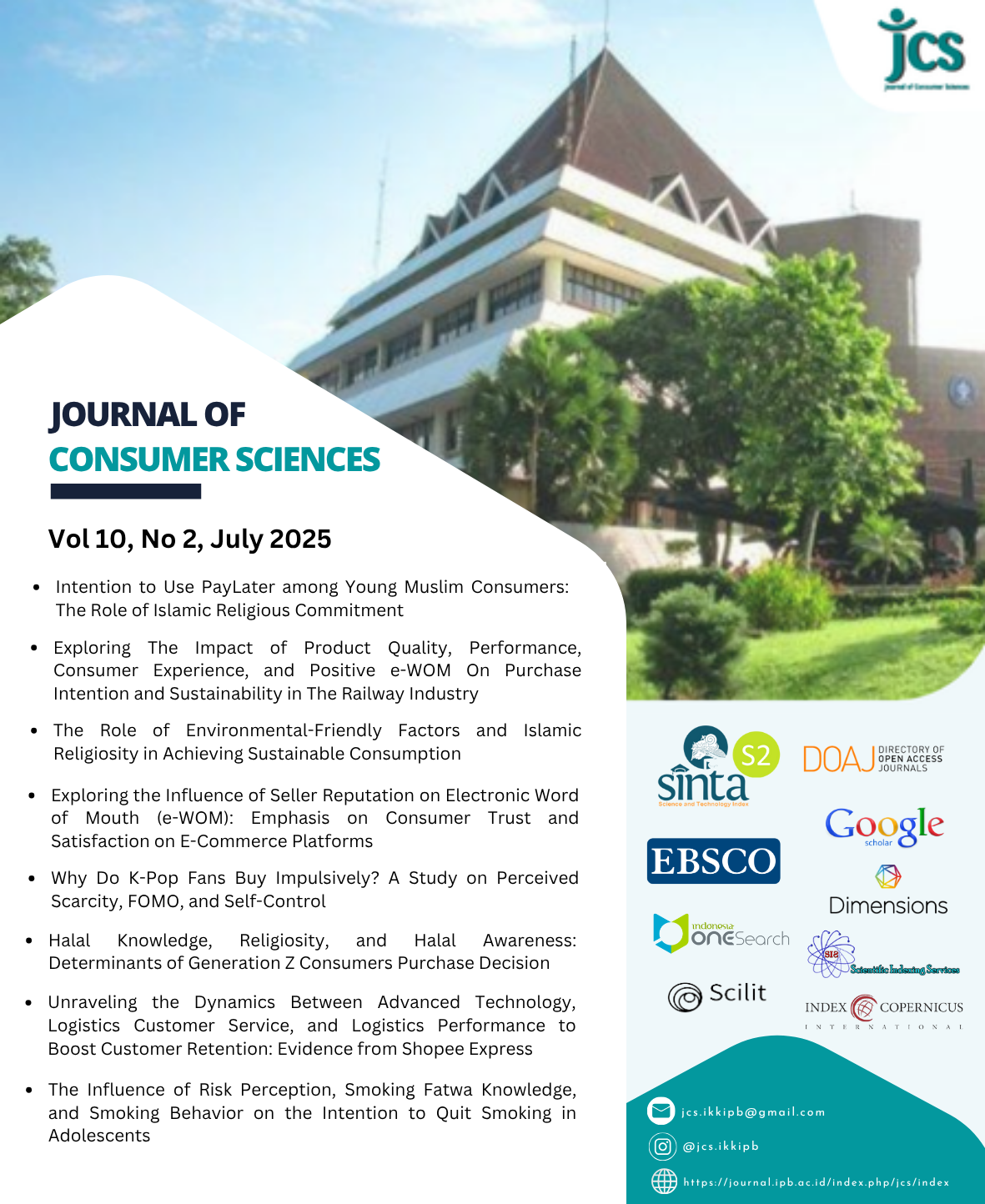
Journal of Consumer Sciences
Journal Title : Journal of Consumer Sciences E-ISSN : 2460-8963 DOI Profile : Prefix 10.29244 by Crossref Editor in Chief : Prof. Dr. Megawati Simanjuntak, SP., M.Si Publisher : Department of Family and Consumer Sciences, Faculty of Social Science and Human Ecology, IPB University Frequency : 3 issues per year (February, July, December) Citation : SINTA || DOAJ || EBSCO || Google Scholar || Garuda || Copernicus The Journal of Consumer Sciences (JCS) is unique because it contains articles on consumer and family economic issues, as well as related to Micro, Small and Medium-Sized Enterprises (MSMEs), which aims to provide important information on sustainable development in the global context of consumer studies. The journal publishes quantitative and qualitative manuscripts in the scope of consumer attitudes, preferences, behavior, decision-making, empowerment, protection, education, family financial management, marketing, social marketing, management, business, finance, and other studies in the consumer sciences. The uniqueness of JCS due that it publishes research on consumer science mostly from Asian countries which have diverse in culture and behavior. The Journal of Consumer Sciences (JCS) is published in collaboration with Asian Association for Consumer Interest and Marketing (AACIM), Indonesian Association of Family and Consumer Sciences (IAFCS), and Association of International Business & Professional Management (AIBPM). In terms of research methods, the accepted articles also include qualitative, quantitative, and mixed-method approaches.
JCS has been Accredited by the Ministry of Research, Technology and Higher Education Number 72/E/KPT/2024 (SINTA-2). It has also been indexed in Crossref, Indonesian Publication Index (IPI), Google Scholar, Moraref, Scilit, Neliti, Scientific Indexing Services (SIS), DOAJ, EBSCO, Index Copernicus International (ICI).













-
Jurnal Sumberdaya Hayati
The "Jurnal Sumberdaya HAYATI" is a peer-reviewed and an open access journal published by Department of Biology, Bogor Agricultural University, Indonesia. The journal publishes significant and important research from all area of biodiversity, biosystematics, ecology, physiology, behavior, genetics and biotechnology. All life forms, ranging from microbes, fungi, plants, animals, and human, including virus.
This journal provides immediate open access to its content on the principle that making research freely available to the public supports a greater global exchange of knowledge. This journal is an open access journal which means that all content is freely available without charge to users or / institution. Users are allowed to read, download, copy, distribute, print, search, or link to full text articles in this journal without asking prior permission from the publisher or author. This is in accordance with Budapest Open Access Initiative.
-

Jurnal Agribisnis Indonesia
 Jurnal Agribisnis Indonesia (Journal of Indonesian Agribusiness) is a periodical scientific journals of agribusiness in Indonesia. This journal is media of information dissemination which is the thinking results and research of lecturers, researchers and practitioners who are interested in agribusiness development. This journal is expected to help the agribusiness practitioners, policy makers, lecturer, students, and other people to get better understanding of the situation and condition of Indonesian agribusiness. Especially, benefit for the Indonesian agribusiness development and generally for improving the welfare of the Indonesian people. This journal is published twice a year (June and December Edition).
 On 06-05-2020 Jurnal Agribisnis Indonesia (Journal of Indonesian Agribusiness) was published under the Department of Agribusiness, Faculty of Economic and management IPB University in associated with Agribusiness association of Indonesia (AAI). It's MOU can be downloaded here.
Jurnal Agribisnis Indonesia (Journal of Indonesian Agribusiness) has been Accredited SINTA Rank 2 by Directorate General of Research and Development Strengthening, Ministry of Research, Technology and Higher Education of the Republic of Indonesia (Kemenristekdikti RI) which is valid for 5 (five) years since November 2024. According to decree No. 177/E/KPT/2024, also Indexed CABI, EBSCO, Google Scholar, Garuda and other scientific databases.
-
Agrokreatif: Jurnal Ilmiah Pengabdian kepada Masyarakat
Agrokreatif: Jurnal Ilmiah Pengabdian kepada Masyarakat sudah terakreditasi KEMENRISTEK DIKTI Nomor 79/E/KPT/2023, 11 Mei 2023. Pertama terbit sampai Tahun 2018 Agrokreatif terbit 2 kali setahun, yaitu pada bulan Mei dan November. Mulai tahun 2019 terbit tiga kali setahun pada bulan Maret, Juli, dan November oleh Lembaga Penelitian dan Pengabdian kepada Masyarakat (LPPM), Institut Pertanian Bogor (IPB). Artikel yang dimuat meliputi hasil-hasil pengabdian kepada masyarakat yang berhubungan dengan biosains, kelautan dan pertanian tropika dalam arti luas; mencakup biologi, klimatologi, agronomi, ilmu tanah, arsitektur lanskap, proteksi tanaman, kedokteran hewan, gizi dan kesehatan masyarakat, keluarga dan konsumen, teknologi industri, teknologi pangan, keteknikan pertanian, peternakan, perikanan, kehutanan, konservasi, lingkungan, sosial-ekonomi, dan kewirausahaan.
-
Jurnal Lanskap Indonesia

Welcome to Jurnal Lanskap Indonesia (JLI). We are a leading Landscape Architectural Journal in Indonesia. The JLI is a periodical scientific peer reviewed publication hosted by Department of Landscape Architecture, Faculty of Agriculture, IPB University collaborate with the Indonesian Society of Landscape Architects (IALI). The journal's aimed to enhance conceptual, scientific understanding and application in developing sustainable landscapes as a solution to landscape change. Various scientific disciplines and perspectives are needed to understand the landscape and harmonize the social and ecological values to ensure landscape sustainability. The articles with themes in Landscape Planning, Design, Management, and Landscape Plants; Planning and Development of urban and rural areas; Ecology and environment; Landscape ecological engineering; The history and culture of the landscape are welcome to submit to this journal. The JLI has also been accredited SINTA 2 by General Higher Education, Research and Tecnology with Decree No. 72/E/KPT/2024 valid from Vol. 15 No. 1 Year 2023 until Vol. 19 No. 2 Year 2027.
-
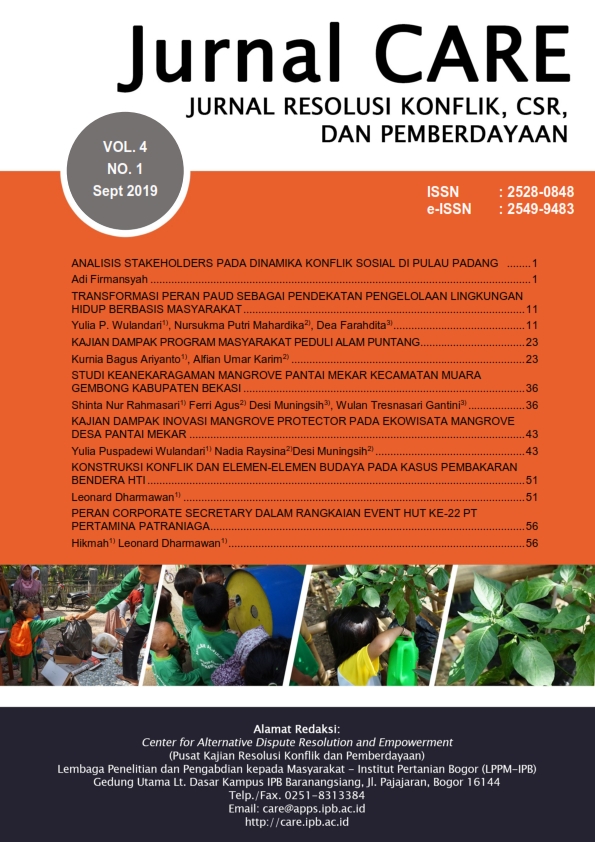
Jurnal Resolusi Konflik, CSR dan Pemberdayaan (CARE)
Jurnal CARE (Jurnal Resolusi Konflik, CSR, dan Pemberdayaan) merupakan jurnal yang berisi artikel-artikel yang meliputi hasil penelitian, analisis kebijakan, dan kajian literatur tentang resolusi konflik, penyuluhan pembangunan, pengembangan masyarakat/CSR, serta hasil pengabdian kepada masyarakat.
-

Jurnal Fisiologi Indonesia
Jurnal Fisiologi Indonesia merupakan jurnal berkala ilmiah yang terbit secara on-line dan menerbitkan artikel atau karya ilmiah hasil penelitian dalam bidang Ilmu faal atau ilmu fisiologi yang mencakup fisiologi manusia, fisiologi kedokteran, faal olah raga, fisiologi hewan, dan fisiologi tumbuhan. Pendekatan klasik maupun modern, seperti biologi molekular juga termasuk ke dalam scope dari jurnal ini. -

Journal of Family Sciences
Journal Title : Journal of Family Sciences E-ISSN : 2460-2329 DOI Profile : Prefix 10.29244 by Crossref Editor in Chief : Dr. Yulina Eva Riany, SP., M.Ed Publisher : Department of Family and Consumer Sciences, Faculty of Social and Human Ecology, IPB University Frequency : 2 issues per year (June, December) Citation : SINTA || EBSCO || Google Scholar || Garuda The Journal of Family Sciences (JFS), published since 2016, is e-journal that provides articles on family and child development issues. It publishes quantitative and qualitative research and encourages manuscripts in various types including research articles, intervention articles, and review articles. The topics of this research that is published in JFS: family functions, family development, interactions and communications in a family, family transition and globalization, gender analysis in family, family coping strategy, family empowerment, family well-being, marital interactions, marital satisfaction, child development in many aspects, child psychology, parenting, and other related topics.
JFS is published by the Department of Family Consumer Sciences, Faculty of Social and Human Ecology, IPB University and collaboration with Indonesian Association of Family and Consumer Sciences (IAFCS). JFS since 2016 and published twice a year in June and December. Based on the Decree of Directorate General of Research and Development Strengthening, Ministry of Research, Technology, and Higher Education of Republic Indonesia No.230/E/KPT/2022 (SINTA-3), JFS has been accredited since December 28, 2022.
Journal Indexing :


_(2)_(1).png)
-

Journal of Agriculture, Resource and Environmental Economics
 Jurnal Ekonomi Pertanian, Sumberdaya dan Lingkungan (JAREE)(Journal of Agriculture, Resource and Environmental Economics)
ISSN : 2088-9364
E-ISSN : 2684-8457
-
ALBACORE Jurnal Penelitian Perikanan Laut
Albacore is a scientific journal of the Department of Fisheries Resource Utilization (PSP), Faculty of Fisheries and Marine Sciences (FPIK), Bogor Agricultural University (IPB). This journal continues the PSP Bulletin, which was launched from 1992 to 2013. From 2017 to 2024, it is scheduled to publish three (3) publications per year (February, June, and October), with ten (10) articles per issue. In 2025, the journal will begin publishing four (4) publications per year (February, May, August, and November), with fifteen (15) articles per issue.
This journal's articles cover the results of fisheries and marine research on aspects of exploitation and exploration technology, shipping and navigation, fishing ports, occupational safety, fish behavior, regulations, legislation, and policies, general fisheries resource management, and maritime transportation.
The manuscripts published in this journal come from research or academic reviews from various universities, government institutions and observers of the problems of managing capture fisheries resources and maritime transportation in Indonesia.
-
E-jurnal Agro-Industri Indonesia
 electronic Journal of Agro-Industry Indonesia
e-JAII Series is a quad-annual national referred journal with the objectives to disseminate, explore, develop, and elucidate the knowledge of engineering design and technology in agro-industrial development issues, to keep practitioners and researchers informed on current issues and best practices, as well as serving as a platform for the exchange of ideas, knowledge, and expertise among academician, technology researchers and practitioners.
e-JAII Series provides an opportunity to share detailed insights from different understandings and practices associated with technology. It provides cross-disciplinary exchange of insights and ideas regarding value and practices for dissemination. e-JAII Series will publish your work to national society of practitioners and researchers with interest in technology design and development from a wide variety of agro-industrial sectors.
e-JAII SeriesDepartment of Agro-Industrial Technology, Faculty of Agricultural Engineering and Technology, Bogor Agricultural University
Kampus IPB Darmaga , Po Box 16002 West Java Indonesia
E-mail: e-jaii@gmail.comWebsite: http://journal.ipb.ac.id/e-jaii
Telp/Fax: +62 – 251-862-2313 -
Jurnal Ilmu Komputer dan Agri-Informatika
Jurnal Ilmu Komputer dan Agri-Informatika is a national journal published biannually in May and November. It is open access and has national and international peer reviewers. Jurnal Ilmu Komputer dan Agri-informatika is managed by the Department of Computer Science, FMIPA IPB University, which was first published in 2012. JIKA is a national scientific journal that publishes scientific articles on research results in computer science and the application of informatics for agricultural development broadly.
Based on Surat Pemberitahuan Hasil Akreditasi Jurnal Ilmiah Periode IV Tahun 2022 Jurnal Ilmu Komputer dan Agri-informatika starting with the issue Volume 7 No. 1 of 2020, JIKA has been SINTA 3 accredited.
-
Jurnal Teknik Sipil dan Lingkungan
Journal title J-Sil (Jurnal Teknik Sipil dan Lingkungan) Initials JSIL Editor-in-chief Prof. Dr. Chusnul Arif, STP, M.Si DOI prefix 10.29244 by Crossref Online ISSN 2549-1407 Publisher Departemen Teknik Sipil dan Lingkungan IPB Citation Analysis Google Scholar| Garuda | Dimensions J-Sil (Jurnal Teknik Sipil dan Lingkungan ) was established in 2016 and managed by the Department of Civil and Environmental Engineering, IPB University (Bogor Agricultural University) collaborated with The Institute of Engineering Indonesia (PII) Bogor. The journal aims to disseminate original and quality academic papers that have the potential to contribute to the advancement of science and technology in the field of civil and environmental engineering to support sustainable developments. The journal covers any scopes within civil and environmental engineering, such as land and water resources, geomatics, infrastructures, structures, and environments. The journal receives original papers from various contributors, such as academicians, scientists, researchers, practitioners, and students worldwide. The paper to be submitted can be written in Indonesian or English, with the abstract being in English only. The submitted paper will be reviewed by at least two independent reviewers. The author submitting the paper is requested to download the available template and follow the instructions.
Starting from Volume 10 (2025), all papers published in JSIL will be in English.
-
Jurnal Ekonomi dan Kebijakan Pembangunan
Jurnal Ekonomi dan Kebijakan Pembangunan (JEKP) is a journal that contains articles that include research results, policy analysis, and opinions related to the currently developing economy both nationally and internationally. JEKP is issued twice every year, namely the period of July and December. Jurnal Ekonomi dan Kebijakan Pembangunan (JEKP) focuses on broad economic topics, which include regional and political economics, industrial economics, agricultural economics, development economics, employment economics, international trade, as well as monetary and banking economics. The articles published in this journal are of high quality and elaborate on the development of economic modeling, and economic policy analysis. JEKP is published by the Department of Economics of the Bogor Agricultural University (FEM IPB) in collaboration with PERHEPI - Perhimpunan Ekonomi Pertanian Indonesia.
JEKP has been Accredited SINTA Rank 3 by Directorate General of Research and Development Strengthening, Ministry of Research, Technology and Higher Education of the Republic of Indonesia (Kemenristekdikti RI) which is valid for 5 (five) years since enacted on March 2023. Jurnal Ekonomi dan Manajemen has been registered in Google Scholar, Crossref, Garda Rujukan Digital (Garuda), Dimensions, Neliti, Base, and EBSCO.
-
Jurnal Komunikasi Pembangunan
p-ISSN: 1693-3699
e-ISSN: 2442-4102
DOI:10.29244/jurnalkmp
Jurnal Komunikasi Pembangunan (Jurnal KMP) is a peer review journal that publishes original research and several literature reviews. Development communication involves the strategic use of communication for the alleviation of social problems in evolving societies through development and social change agents/means. This journal covered individual, small group, community, grass root organization, government, and private sector that works local, national, and global level for the sake of empowerment, development and social change. This journal accepts articles that discuss about a) strategic communication and participatory communication includes ICT for development, communication campaign, corporate social responsibility communication, story telling about development, conciousness raising, advocacy, social entrepreneurship, entertainment education; b) crisis communication and risk communication includes environment communication; c) development journalism and international communication includes radio community, citizen journalism, transnational communication, public diplomacy; d) cultural comunication includes indigenous communication, ritual communication; e) online media and internet; f) conflict and communication; g) health communication; h) communication within SMEs or household level business that focused on its capacity and capability. Jurnal KMP is published twice a year, in February and July by Department of Communication and Community Development Sciences, Faculty of Human Ecology, IPB University and Forum Komunikasi Pembangunan Indonesia (FORKAPI).
-
ARSHI Veterinary Letters
ARSHI Veterinary Letters (ARSHI Vet Lett) is an open-access, peer-reviewed journal in veterinary medicine and animal biomedical sciences.
The journal publishes concise, clinically relevant, and practitioner-oriented articles that support the advancement of veterinary science, clinical decision-making, and animal health practice.
Journal Information
Journal TitleARSHI Veterinary LettersAbbreviationARSHI Vet Lette-ISSN2581-2416Publication FrequencyFour times a yearFebruary, May, August, and NovemberEstablished2017Indonesian AccreditationSINTA 4Decree No. 79/E/KPT/2023, May 11, 2023Publisher
ARSHI Veterinary Letters is published by the School of Veterinary Medicine and Biomedical Sciences, IPB University, formerly the Faculty of Veterinary Medicine based on Rector Letter No. 328.
The journal is published in collaboration with the Indonesian Veterinary Hospital Association (Asosiasi Rumah Sakit Hewan Indonesia / ARSHI).
Focus and Aim
ARSHI Veterinary Letters is dedicated to publishing concise, clinically relevant, and practitioner-oriented articles in the field of veterinary medicine and animal biomedical sciences.
The journal aims to disseminate veterinary knowledge that is scientifically sound and practically applicable, particularly through publications that strengthen the linkage between academic research, diagnostic advancement, and everyday veterinary practice.
The journal emphasizes clinical case-driven, case-based, and practice-oriented contributions, including case reports, case series, short clinical communications, and other applied studies that support evidence-based decision-making in animal health, disease diagnosis, treatment, prevention, and management.
Article Coverage
In addition to clinically focused reports, the journal welcomes studies that contribute to the development of veterinary diagnostics, therapeutic approaches, biomedical applications, and animal health services.
ARSHI Veterinary Letters publishes manuscripts involving companion animals, livestock, poultry, wildlife, exotic animals, laboratory animals, and other animal species of veterinary importance.
Scope of the Journal
The scope of the journal includes, but is not limited to:
Small animal medicine and surgeryLarge animal and production animal medicineTheriogenology and veterinary reproductionDiagnostic imagingClinical pathologyAnatomic pathology and histopathologyParasitology, microbiology, virology, and mycologyInfectious and zoonotic diseasesPharmacology and therapeuticsPreventive medicine and epidemiologyVeterinary public healthWildlife and exotic animal medicineAnimal welfareBiomedical innovations relevant to veterinary science and practiceReadership and Publication Priority
Priority is given to submissions that offer clear clinical relevance, practical value, diagnostic insight, therapeutic novelty, or educational benefit.
The journal serves veterinarians, clinicians, researchers, academics, and veterinary students who are interested in applied veterinary medicine, animal health services, and biomedical science.
Open Access and Indexing
All articles published in ARSHI Veterinary Letters are openly accessible to readers worldwide.
The journal has been indexed in:
Crossref WorldCat Scilit Dimensions EBSCO Lens Scholar Google Scholar Microsoft AcademicThe journal is also under evaluation for inclusion in additional indexing and abstracting services.
Creative Commons Licence
All published works in ARSHI Veterinary Letters are licensed under the Creative Commons Attribution-ShareAlike 4.0 International License (CC BY-SA 4.0) .
ARSHI Veterinary Letters is committed to supporting concise, accessible, and practice-oriented scientific communication for the advancement of veterinary medicine and animal biomedical sciences.
-
Jurnal Mutu Pangan : Indonesian Journal of Food Quality
The Research and Development (R&D) Division in the food industry holds a crucial role in the creation of new food products and addressing any issues related to existing ones. The department becomes particularly active when quality and safety problems arise with food products, when new competitors enter the market, or when similar products are developed. The R&D Division is often considered the backbone of the company to ensure its continued growth. To allow the R&D Department to perform optimally, adequate literature support is imperative. Scientific journals and research publication outputs can serve as a source of inspiration and reference material in solving problems in the food industry.
To address the need for literature, especially for practitioners in the food industry, the Department of Food Science and Technology at Bogor Agricultural University (IPB University), in collaboration with the Indonesian Food and Beverage Producers Association (GAPMMI), the South East Food and Agricultural Science and Technology (SEAFAST) Center, and the Indonesian Food Technologists Association (PATPI), has published open access "Jurnal Mutu Pangan" or "Indonesian Journal of Food Quality". The first journal edition was published in April 2014. The journal has been accredited by the Directorate General of Higher Education (DGHE) in the Republic of Indonesia since 2018, and reaccredited in 2022 (newly classified as SINTA 3, No. 225/E/KPT/2022).
"Jurnal Mutu Pangan" is published twice a year, in April and October, and covers manuscripts of research results and brief communications relevant to the needs of practitioners in the food industry. This includes articles on the development of methods and products, food processing technology, policy studies, food regulation, risk analysis, quality system design, food security, business design, feasibility studies, as well as quality, nutrition, and health. Each article provides a concise overview of the practical applications of the research results and their potential to be used in the food industry.
For further information or inquiries, please reach out to the Editor in Chief of "Jurnal Mutu Pangan" through the Department of Food Science and Technology, Faculty of Agricultural Engineering and Technology, Bogor Agricultural University (IPB University), Dramaga, Bogor 16680; Telephone/Fax: (62-251-8620517; E-mail: jurnalmutupangan@apps.ipb.ac.id
-
-

Journal of Tropical Silviculture
JURNAL SILVIKULTUR TROPIKA (J-SILTROP) atau Journal of Tropical Silviculture adalah jurnal yang terbit tiga kali dalam setahun. J-SILTROP menerbitkan artikel tentang sains dan teknologi silvikultur yang berhubungan dengan hutan tropika seperti botani, fisiologi, ekologi, tanah, genetika, proteksi, patologi, entomologi, kebakaran, daerah aliran sungai, biodiversitas, bioteknologi, agroforestri, reklamasi dan restorasi. Tulisan-tulisan ilmiah diterbitkan dalam bentuk artikel hasil-hasil penelitian (article), ulas balik (reviews), catatan penelitian (notes), hipotesa (hypothesis), maupun komunikasi (communication) di bidang silvikultur hutan tropika.
-

MANAJEMEN IKM: Jurnal Manajemen Pengembangan Industri Kecil Menengah

Perintisan jurnal sebagai berkala ilmiah berwawasan nasional dimulai sejak Februari 2006 dengan nama Jurnal MPI dengan No. ISSN 1907-3127 yang memuat 9 judul artikel pada setiap edisi. Mulai terbitan edisi September 2009, judulnya dirubah menjadi Jurnal Manajemen IKM dengan No. ISSN 2085-8418 dan E-ISSN 2622-9250. Jurnal Manajemen IKM selama ini mampu menjadi sarana penyebarluasan informasi ilmiah kepada para dosen atau peneliti lainnya, maupun masyarakat pengguna, serta sarana pengembangan.
Manajemen IKM (P-ISSN 2085-8418; E-ISSN 2622-9250) merupakan Jurnal Manajemen Pengembangan Industri Kecil Menengah (IKM) yang diterbitkan oleh Program Studi Magister Pengembangan Industri Kecil Menengah (MPI) Sekolah Pascasarjana IPB sejak September 2006, memuat kegiatan dunia usaha kecil menengah (UKM), khususnya IKM beserta instansi yang terkait seperti perbankan, departemen teknis dan usaha swasta besar dan petani/nelayan, dalam Bahasa Indonesia maupun Bahasa Inggris. Manajemen IKM terbit setiap 6 bulan sekali (Februari dan September) dan ditujukan sebagai wadah untuk mengkomunikasikan hasil-hasil penelitian dari kajian tugas akhir mahasiswa MPI, khususnya yang terkait dengan pembinaan dan pengembangan IKM. Namun demikian, tulisan yang diterima Manajemen IKM terbuka bagi berbagai kalangan yang memiliki ketertarikan dalam pembinaan dan pengembangan IKM, baik itu peneliti, penyuluh, maupun pengusaha. Dengan diterbitkannya jurnal ini, maka kedepannya diharapkan lebih dipahami potensi, kendala dan pengembangan IKM melalui pendekatan holistik dan sinergi yang dilihat dari faktor-faktor ekonomi, manajerial dan faktor-faktor lainnya seperti kemitraan.
Manajemen IKM telah terdaftar di Crossref, Indeks Publikasi Indonesia (IPI), SINTA Peringkat 4, Garuda, Google Scholar, EBSCO, Dimensions, dan basis data ilmiah lainnya.
-
Jurnal Oceanologi Indonesia
Jurnal yang berisi karya ilmiah Hasil-hasil Kelautan Indonesia -
Forum Agribisnis
Forum Agribisnis : Agribusiness Forum is a scientific journal as a communication forum between researchers, academics, and policymakers and practitioners in agribusiness scope and other related scopes. Original writings contain empirical analysis or theoretical review and review of recent books. The Agribusiness Forum is managed by the master of science agribusiness in the Agribusiness Department, Faculty of Economics and Management, IPB University. The journal is published twice a year (March and September edition) and has been indexed in Science and Technology Index (SINTA 3) Certificate of Accreditation which is valid for 5 (five) years, started Volume 11 Number 2, 2021 until Volume 16 Number 1, 2026.
Forum Agribisnis : Agribusiness Forum is published under the Master Sciences of Agribusiness (MSA), Faculty of Economics and Management IPB University in association with Agribusiness Association of Indonesia (AAi) with agreement number 240/SP/AAI/XII/2020. The MOU can be downloaded here.
-
Jurnal Pustakawan Indonesia
 JPI merupakan terbitan berkala terbit dua kali setahun yang menyajikan tulisan-tulisan di bidang perpustakaan, dokumentasi, informasi dan komputer; sebagai medium informasi dan komunikasi antar pustakawan dan diterbitkan untuk seluruh pustakawan dan pemerhati bidang perpusdokinfokom di Indonesia
ISSN : 1410-5551
E-ISSN : 2686-1879
-
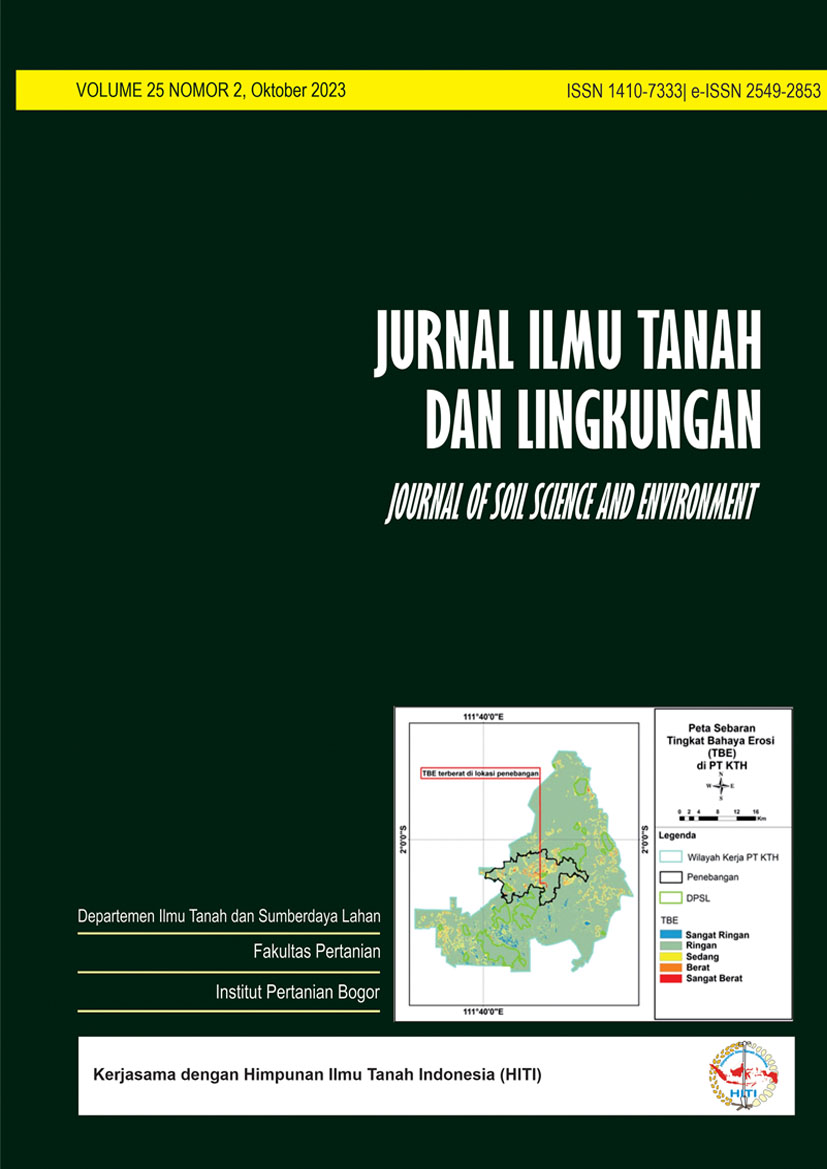
Jurnal Ilmu Tanah dan Lingkungan
 Journal of Soil Science and Environment/Jurnal Ilmu Tanah dan Lingkungan is a continuation of the Journal of Soil and Environment/Jurnal Tanah dan Lingkungan, with P-ISSN 1410–7333 and E-ISSN 2549-2853 published twice a year, in April and October by the Department of Soil Science and Land Resources/Departemen Ilmu Tanah dan Sumberdaya Lahan (a new name from the Department of Soil/Departemen Tanah), Faculty of Agriculture, IPB University. The publication of this journal is also carried out in collaboration with Soil Science Association of Indonesia/Himpunan Ilmu Tanah Indonesia (HITI).
Journal of Soil Science and Environment/Jurnal Ilmu Tanah dan Lingkungan is a media that presents articles on the results of research and studies of the latest developments in the fields of soil, water and environmental sciences as the main study material.
JITL has been accredited by Kemendikbudristek (Sinta 3) with Decree No. 225/E/KPT/2022. Valid from Volume 24 Number 1 Year 2022 to Volume 28 Number 2 Year 2026
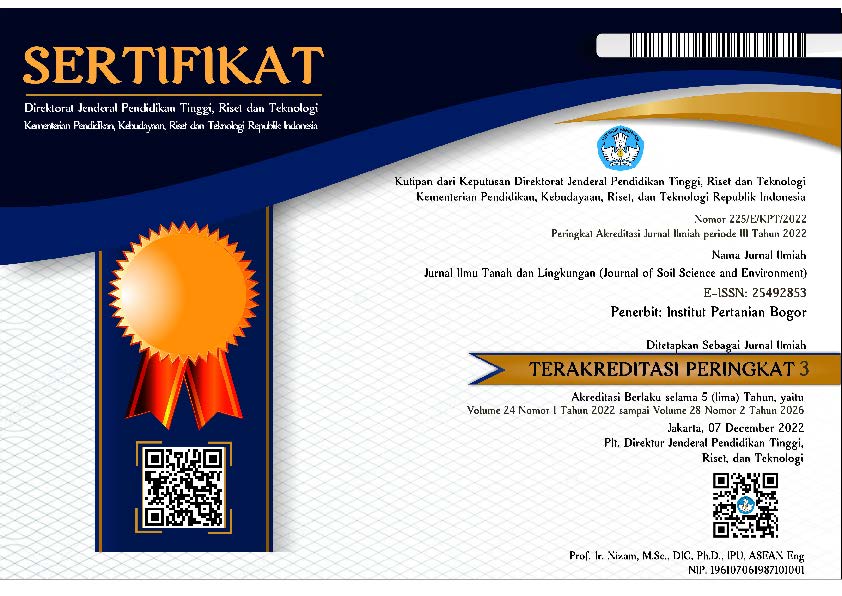
The journal also has been indexed in Mendeley, Crossref, Google Scholar, and Portal Garuda.
JITL citation profile in Google Scholar:
- Indexed article: 268
- Citation: 2356
- h-index: 21
- i10-index: 72Secretariat Address: Departemen Ilmu Tanah dan Sumberdaya Lahan, Fakultas Pertanian, IPB University, Jl. Meranti Wing 12 Lv 4, Kampus IPB Darmaga, Bogor 16680
Website: http://journal.ipb.ac.id/index.php/jtanah
e-mail: jtl_soilipb@yahoo.com; jitl@apps.ipb.ac.id
-
Jurnal Ilmu Fisika
Jurnal Ilmu Fisika dikelola oleh Departemen Fisika, Fakultas Matematika dan Ilmu Pengetahuan Alam. -
Media Gizi dan Keluarga
JURUSAN GIZI MASYARAKAT DAN SUMBERDAYA KELUARGA
FAKULTAS PERTANIAN
INSTITUT PERTANIAN BOGOR -
Buletin Tanah dan Lahan
Buletin Tanah dan Lahan merupakan media yang menyajikan artikel mengenai hasil penelitian dan telaah perkembangan mutakhir dalam bidang ilmu tanah, lahan, dan ilmu wilayah sebagai bahan kajian utama. Buletin Tanah dan Lahan diterbitkan tiga kali setahun yaitu pada bulan Januari, Mei dan September oleh Departemen Ilmu Tanah dan Sumberdaya Lahan.
-
Jurnal Ilmu Nutrisi dan Teknologi Pakan
Jurnal Ilmu Nutrisi dan Teknologi Pakan (Nutrition and Feed Technology Journal) has been published from 1987, under the name Bulletin Makanan Ternak (Bulmater) which can be accessed through http://journal.ipb.ac.id/index.php/bulmater/index. Since 2018, this journal changed its name in purpose to adapt with latest conditions and the publication frequency is three times a year (April, August and December). Jurnal Ilmu Nutrisi dan Teknologi Pakan is published by Department of Nutrition and Feed Technology in collaboration with the Indonesian Association Nutrition and Feed Scientist.
-
Comm AG, Communicationes Agriculturae
Majalah ilmiah ini merupakan sarana pemberitaan hasil-hasil penelitian dan penelaahan perkembangan ilmu pertanian dan ilmu-ilmu lain yang dapat dimanfaatkan dalam bidang pertanian. Naskah yang dapat diterima untuk dimuat dalam majalah ini adalah naskah yang belum pernah diterbitkan pada terbitan lain dan mendapat persetujuan dari Dewan Editor. -
Habitus Aquatica
 Habitus Aquatica : Journal of Aquatic Resources and Fisheries Management (Habitus Aqua J; e-ISSN 2721-1525) is published by Department of Aquatic Resource Management, Faculty of Fisheries and Marine Sciences, IPB University. Habitus Aquatica is published periodically twice a year, containing the peer reviewed publication of basic and applied research articles in a broad range of subject areas relevant to aquatic and fisheries science. The journal publishes articles, short communications, and reviews that contribute to a scientific understanding in the areas of Aquatic Science including and related to structure and dynamics of aquatic ecosystems, impacts and adaptations to pollution and global changes, socio-economical analysis of environmental benefits, impacts and bioconservation, ecosystems restoration and ecological engineering; and Fisheries Science including fisheries biology, aquaculture, environment, chemistry and biochemistry.
 -

Coastal and Ocean Journal (COJ)

Journal Title : Coastal and Ocean Journal Initials : COJ Abbreviation : Coast. Ocean J. Frequency : 2 (June, December) DOI : 10.29244/coj Online ISSN : 2549-8223 Publisher : IPB University, CCMRS, LMS, HAPPI Language : English Citation Analysis : Google Scholar Open Access Policy : Creative Commons Attribution (CC BY) COJ (Coastal and Ocean Journal) has an Online ISSN: 2549-8223 is a journal managed by Center for Coastal and Marine Resources Studies, LRI i-MAR, IPB University, with the aim of disseminating information about scientific developments in coastal and ocean management. The scientific, management, innovation and technological developments in the coastal and marine fields include: Fisheries Management, Marine Product Processing, Marine Biotechnology, Aquatic Resource Management, Coastal and Marine Resource Management, Mapping of Coastal and Marine Areas, Law and Socio-Economics of Coastal and Marine Areas, Coastal and Marine Social and Ecological Systems, Coastal and Marine Ecosystem Services, Coastal and Marine Resource Conservation, Coastal and Marine Environmental Pollution Control, Blue Economy and Blue Carbon, and Marine and Aquatic Invasive Species. Based on the LIPI ISSN Decree that the Coastal and Ocean Journal has been registered in the online ISSN with SK number no. 0005.25498223/JI.3.1/SK.ISSN/2017.03 - March 8, 2017.
AccreditationCOJ is accredited at SINTA 4, based on the results of the Scientific Journal Accreditation for Period IV of 2022 and the issuance of the Decree of the Director General of Higher Education, Research, and Technology Number 230/E/KPT/2022, dated 30 December 2022, concerning the Accreditation Ranking of Scientific Journals for Period IV of 2022.Manuscript Review ProcessManuscripts submitted to COJ will first be checked by the Administration for compliance with the author guidelines. If the manuscript meets the requirements, it will be reviewed by one (1) Editorial Board member and one (1) Peer Reviewer (Mitra Bestari) appointed by the Editor-in-Chief. The final decision on whether a manuscript is accepted or rejected rests with the Editor-in-Chief, based on the recommendations of the Editorial Board member and the Peer Reviewer.Published in June 2017, twice a year.
Electronic ISSN : 2549-8223
Journal Link : https://journal.ipb.ac.id/index.php/coj/index
Email : journal@apps.ipb.ac.id
Address : IPB Baranangsiang Campus, Raya Pajajaran Street, No 1, Bogor 16127 -
Jurnal Ilmu dan Teknologi Hasil Hutan (JITHH)
Jurnal Ilmu dan Teknologi Hasil Hutan (JITHH), Fakultas Kehutanan IPB -
Buletin Agrohorti
Buletin Agrohorti is a scientific publication established in 2013, published by the Indonesian Society of Agronomy (Perhimpunan Agronomi Indonesia), Indonesian Society for Horticulture (Perhimpunan Hortikultura Indonesia) and the Department of Agronomy and Horticulture, IPB University.
Buletin Agrohorti Buletin Agrohorti has been accredited Third Rank (Peringkat 3) by the Ministry of Higher Education, Science, and Technology, Republic of Indonesia (No.10/C/C3/DT.05.00/2025). This accreditation is valid from Vol. 10 No. 3 (September 2022) to Vol. 15 No. 2 (May 2027). Containing original writings related to the fields of agronomy and horticulture in a broad sense including crop production, genetics and plant breeding, plant ecology and physiology, plant biotechnology, and seed science and technology, both in the form of research results, policy analysis, and reviews, in Indonesian and English. Published online in January, May, and September, one issue contains 16 articles.
Buletin Agrohorti is printed on a limited basis and can be obtained by contacting the managing editor via email: buletinagrohorti@apps.ipb.ac.id
-
Jurnal Ilmu Produksi dan Teknologi Hasil Peternakan
Jurnal Ilmu Produksi dan Teknologi Hasil Peternakan
(Journal of Animal Production and Processing Technology)
p-ISSN : 2303-2227
e-ISSN : 2615-594X
Jurnal Ilmu Produksi dan Teknologi Hasil Peternakan is published three times a year in January, June, and October by Department of Animal Production and Technology, Faculty of Animal Science, IPB University in associated with Animal Scientist's Society of Indonesia (HILPI). Jurnal Ilmu Produksi dan Teknologi Hasil Peternakan as the open access journal has been indexed by Science and Technology Index (SINTA), Garuda, Dimensions, Google Scholar, EuroPub, SciSpace, WorldCat, EBSCO, Discovery, AGRIS FAO, and BASE.Jurnal Ilmu Produksi dan Teknologi Hasil Peternakan is currently an accredited journal under SINTA 3 category by National Journal Accreditation (ARJUNA) under Ministry of Research, Technology, and Higher Education, Republic Indonesia as stipulated in the Decree No. 30/E/KPT/2019.
Jurnal Ilmu Produksi dan Teknologi Hasil Peternakan focuses on original research and reviews related to tropical and domesticated animals, including endemic Indonesian species. It emphasizes animal production, reproduction, genetics, welfare, product technology, and livestock socio-economics.
Starting from Volume 11, Issue number 1 (January 2023), all papers are published in English. Authors are required to submit their papers in English.
-
Journal of Child Development Studies
 Journal of Child Development Studies (JCDS) is scientific journal providing researched paper on the subject of child development in many aspects, child psychology, parenting, and any topics related child development published two times a year by the Department of Family and Consumer Sciences, Faculty of Human Ecology, Bogor Agricultural University.
 -
Jurnal Biofisika
 Jurnal Biofisika terbit 2 kali dalam setahun. Dikelola oleh Departemen Fisika, Institut Pertanian Bogor
-
FORUM STATISTIKA DAN KOMPUTASI
 FORUM STATISTIKA DAN KOMPUTASI : Indonesian Journal of Statistics
 Forum Statistika dan Komputasi (ISSN:0853-8115) was published scientific papers in the area of statistical science and the applications. It is issued twice a year. The papers should be research papers with, but not limited to, the following topics: experimental design and analysis, survey methods and analysis, operation research, data mining, statistical modeling, computational statistics, time series and econometrics, and statistics education.
Started from October 2017 edition the name of Forum Statistika dan Komputasi was changed to Indonesian Journal of Statistics and Its Applications and the website was moved to the new website (http://journal.stats.id). Therefore, Authors who will submit new manuscripts should register on the new website.
Meanwhile, the previous editions (up to 2017 edition) will still use Forum Statistika dan Komputasi as the title and could be accessed on the old website (http://journal.ipb.ac.id/index.php/statistika).
-
Buletin PSP
Buletin PSP merupakan jurnal ilmiah dengan jadwal penerbitan 3 kali dalam satu tahun. Jurnal ini menyebarkan informasi ilmiah kepada para peneliti, akademisi, praktisi dan pemerhati mengenai pemanfaatan sumberdaya perikanan di Indonesia yang meliputi berbagai aspek seperti teknologi eksploitasi dan eksplorasi, perkapalan dan navigasi, pelabuhan perikanan, tingkah laku ikan, peraturan dan perundangan serta kebijakan dan pengelolaan sumberdaya perikanan secara umum. Naskah yang dimuat dalam buletin ini berasal dari penelitian atau ulasan staf pengajar/akademisi dari berbagai universitas di Indonesia, lembaga pemerintahan dan pemerhati permasalahan pengelolaan sumberdaya perikanan tangkap di Indonesia. -
Jurnal Pusat Inovasi Masyarakat

Jurnal Pusat Inovasi Masyarakat (JPIM) sudah terakreditasi berdasarkan Surat Keputusan Direktur Jenderal Pendidikan Tinggi, Riset, dan Teknologi No 10/C/C3/DT.05.00/2025 tanggal 21 Maret 2025. JPIM terbit dua kali dalam setahun pada bulan April dan Oktober oleh Direktorat Pengembangan Masyarakat Agromaritim, Institut Pertanian Bogor (IPB). Artikel yang dimuat meliputi hasil kegiatan pengabdian kepada masyarakat yang berupa karya ilmiah yang berisi penerapan hasil penelitian atau pengembangan IPTEKS (inovasi) meliputi deskripsi inovasi, praktik, dan perubahan kondisi dari masyarakat.
e-ISSN; 2721-897X
-
Jurnal Sains Terapan : Wahana Informasi dan Alih Teknologi Pertanian

JURNAL SAINS TERAPAN: WAHANA INFORMASI DAN ALIH TEKNOLOGI PERTANIAN menerbitkan artikel di Bidang Sains Terapan seperti:
- Pertanian Terapan (Pengembangan Produk Pertanian & Pangan, Peternakan & Kesehatan Hewan),
- Teknologi Terapan (Pengelolaan Lingkungan Terintegrasi, Pengembangan Perangkat Keras & Lunak di Bidang Pertanian, Peternakan & Lingkungan).
JST pertama kali diterbitkan pada awal tahun 2011 oleh Sekolah Vokasi, IPB University (SV-IPB) dengan dua kali terbitan dalam satu tahun, yaitu pada bulan Juni dan November. Editor menerima artikel penelitian empiris dan telaah di bidang sains terapan.
JST merupakan peer-reviewed jurnal yang telah terdaftar di Crossref (since 2019), Google Scholar, dan lainnya.
Editor dapat merevisi naskah tanpa mengubah substansi dan isi setelah proses blind-review. Artikel yang dikirim oleh penulis harus merupakan naskah asli dan tidak sedang dalam proses penerbitan di jurnal lain.
-
Buletin Ilmu Makanan Ternak
Artikel yang dipublikasikan pada Buletin Ilmu Makanan Ternak mencakup cakupan luas topik penelitian dalam bidang ilmu nutrisi dan teknologi pakan, termasuk agrostologi, industri dan teknologi pakan, nutrisi ternak unggas, nutrisi ternak pedaging, nutrisi ternak kerja dan olahraga, nutrisi ternak perah, nutrisi satwa harapan dan hewan peliharaan, mikrobiologi rumen, mikrobiologi ternak, fisiologi nutrisi, metabolisme nutrisi, kajian biologi molekuler terkait nutrisi pakan, ternak dan metabolismenya, dan kajian-kajian lain yang relevan dengan topik dan isu terkini dalam bidang ilmu nutrisi dan teknologi pakan.
-
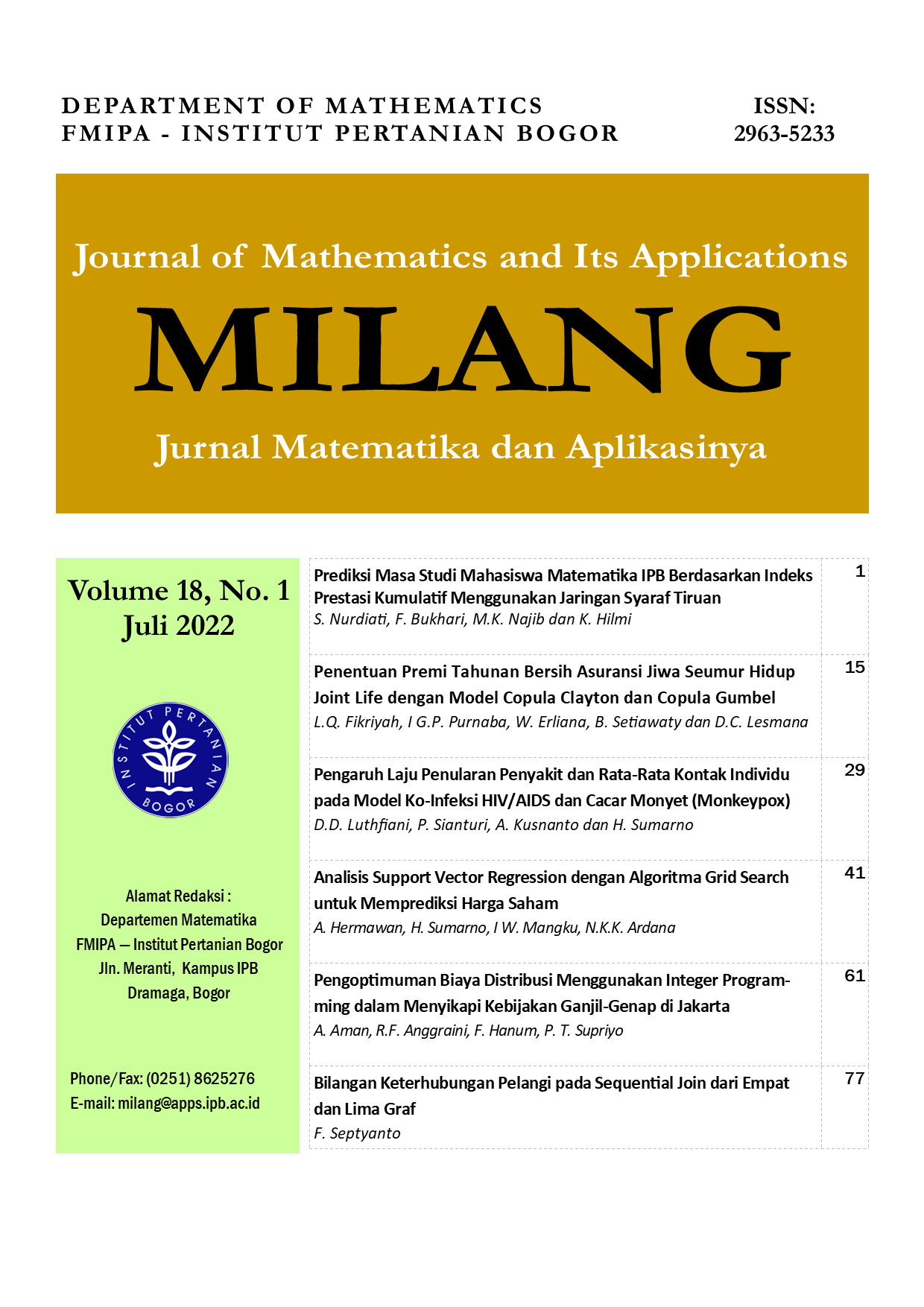
MILANG Journal of Mathematics and Its Applications
"MILANG Journal of Mathematics and Its Applications" merupakan media yang memuat informasi hasil penelitian matematika baik murni maupun terapan, bagi para matematikawan atau para pengguna matematika. Jurnal diterbitkan dua kali (dua nomor) setiap tahun (periode Juni dan Desember).
-
RISALAH KEBIJAKAN PERTANIAN DAN LINGKUNGAN Rumusan Kajian Strategis Bidang Pertanian dan Lingkungan
Jurnal Risalah Kebijakan Pertanian dan Lingkungan: Rumusan Kajian Strategis Bidang Pertanian dan Lingkungan atau biasa disingkat JRKPL merupakan jurnal yang disajikan dengan artikel dalam bentuk risalah kebijakan (policy brief). Hasil-hasil penelitian baik berupa paten, artikel ilmiah, sinopsis, teknologi tepat guna, atau buku perlu disebarluaskan kepada pengambil kebijakan, maupun masyarakat pengguna, termasuk industri yang langsung dapat memanfaatkannya. Pusat Studi Pembangunan Pertanian dan Pedesaan (PSP3) bersama dengan Program Studi Ilmu Pengelolaan Sumberdaya Alam dan Lingkungan (PS-PSL) memandang bahwa mengantarmukakan sains dan kebijakan merupakan tahapan yang sangat penting untuk mewujudkan pembangunan yang berkelanjutan. Memperhatikan hal tersebut, maka peningkatan peran IPB University dalam pengambilan kebijakan pertanian merupakan hal yang amat perlu dilakukan. Untuk itu pula dilakukan kolaborasi bersama dengan Perhimpunan Ekonomi Pertanian Indonesia (PERHEPI).
JRKPL memperoleh Akreditasi Sinta 4 berdasarkan Salinan Surat Keputusan Direktur Jenderal Pendidikan Tinggi, Riset, dan Teknologi Nomor 152/E/KPT/2023 tanggal 25 September 2023 Tentang Peringkat Akreditasi Jurnal Ilmiah Periode II Tahun 2023. Akreditasi Baru Peringkat 4 mulai Volume 8 Nomor 2 Tahun 2021 sampai Volume 13 Nomor 1 Tahun 2026.
-
Jurnal Agribisnis dan Ekonomi Pertanian
 Jurnal Agribisnis dan Ekonomi Pertanian (Agribusiness and Agricultural Economic Journal/ AAE Journal) adalah jurnal ilmiah berkala bidang agribisnis dan ekonomi pertanian di Indonesia. Jurnal ini merupakan media penyebarluasan informasi hasil pemikiran dan penelitian dari dosen, peneliti, dan praktisi yang berminat untuk kemajuan agribisnis dan ekonomi pertanian.
 Lingkup artikel dalam jurnal ini memfokuskan pada kajian agribisnis dari pendekatan makro meliputi aspek sosial ekonomi pertanian sebagai suatu sistem yang komprehensif dan terintegrasi mulai dari kajian subsistem up-stream, subsistem on-farm, subsistem down stream, dan subsistem penunjang serta dampak interelasinya dengan kebijakan pemerintah, perekonomian internasional dan kapitalisasi sumberdaya lahan, petani, dan masyarakat. Adapun dari pendekatan mikro meliputi kajian persoalan-persoalan dalam pengembangan usaha di bidang agribisnis (finansial, kebijakan usaha, dan aspek teknis fungsional).
Jurnal ini dikelola oleh Departemen Agribisnis, Fakultas Ekonomi dan Manajemen, IPB
-
Chemical Bulletin
 Buletin kimia adalah terbitan ilmiah berkala yang diterbitkan oleh Departemen Kimia FMIPA IPB. Buletin Kimia terlah teregistrasi dengan Nomor ISSN 0853 - 425X
Buletin Kimia mempublikasikan naskah dalam bahasa Indonesia dan Inggris di semua bidang yang berkaitan dengan kimia. Naskah dapat berupa laporan terbaru hasil penelitian, penjelasan metode penelitian yang baru, atau pengertian baru dari hasil yang telah ada. Sumbangan teoretis terbaru dapat juga disamakan dengan naskah hasil penelitian. Semua hasil yang ditampilkan dalam naskah sepatutnya lebih mendukung konsep kimia daripada pelaporan fakta. Interpretasi dari kebijakan di atas merupakan wewenang redaksi yang akan memutuskan apakah suatu ajuan naskah memenuhi kriteria atau tidak.
Pengajuan suatu naskah kepada Buletin Kimia mengimplikasikan bahwa naskah yang sama tidak sedang dipublikasikan ataupun dalam pertimbangan untuk publikasi di mana pun. Buletin Kimia dterbitkan setahun dua kali, yaitu bulan Januari dan Juli
-
Indonesian Journal of Tropical Agriculture (IJTA)
The Indonesian Journal of Tropical Agriculture is a scientific publication for articles reporting research findings policy analyses, and opinion related to agriculture in broad sense, i.e., agronomy, soil science, entomology, plant pathology, agricultural social-economics, nutrition food science and technology, biotechnology, agricultural engineering, biometry, biology, agroclimatology, animal Science, veterinary medicine, animal husbandry, fishery and forestry, and related agricultural area. The Publisher of the Journal invites agricultural scientists to send their manuscript in the above field of studies. All manuscripts are subject to critical review by peer group (reviewers) in the subject area and approval by the Editorial Board. Acceptance or rejection is based mostly on their recommendations.
-
Business Review and Case Studies
Business Review and Case Studies (BRCS) receive a variety of Business case studies and Business ideas generated from research that can be used for the education of professionals in the Business field. BRCS publishes papers that contribute to understanding the world of Business and its Developments. The published papers use extensive research methods including statistical analysis, case studies, field research, and various other recent analyses. This journal puts forward articles that provide additional knowledge and information in the field of business in the broadest sense. The journal also aims to disseminate high-quality scholarly works that contribute to academic advancement and provide practical insights for the business community. Hopefully, this Journal contributes to the management and business education. BRCS is published by the School of Business, IPB University (SB-IPB). BRCS was first published at the beginning of 2020 with two times per year in frequency in April and August. Since 2022, brcs has been published 3 times a year, namely April, August and December.
On 09-05-2023 BRCS was published by the School of Business, IPB University (SB-IPB) associated with Asian Association for Consumer Interests and Marketing (AACIM). It's MOU can be downloaded here.
Editors can revise the paper without changing the substance and content after a blind review process. The articles sent by the author must be an original script and is not being considered for publication by other journal or publishers. Base on Director General of Higher Education, Research, and Technology of the Republic of Indonesia 164/E/KPT/2021 BRCS get ranked 3 accredited (SINTA 3) status. Base on Director General of Higher Education, Research and Technology, Ministry of Education, Culture, Research and Technology of the Republic of Indonesia No 72/E/KPT/2024 BRCS get ranked 3 accredited (SINTA 3) status until 2027.
EISSN : 2721-6926
Download Submissions Guidelines
Download Authors Guidelines
-

Journal of Wildlife and Conservation Medicine
Journal of Wildlife and Conservation Medicine (J. Wildl. Conserv. Med., p-ISSN: 3090-5656, e-ISSN: 3109-8436) founded in 2025, is a scientific journal published by the School of Veterinary Medicine and Biomedical Sciences, IPB University in collaboration with the Association of Indonesian Wildlife Aquatic and Exotic Animals Veterinarians (ASLIQEWAN). The Journal accepts manuscripts of original research findings, reviews, case reports, and short communications. Areas of interest include wildlife conservation (both ex-situ and in-situ), biology, evolution, ecology, taxonomy, morphology, physiology, genetics, and medicine in terms of wild animals (terrestrial and aquatic). JWCM is a peer-reviewed scientific journal published twice yearly (June and December).
-
Indonesian Journal of Agricultural Resource and Environmental Economics
Indonesian Journal of Agricultural, Resource and Environmental Economics [EISSN 2962-2328] is published by the Department of Resource and Environmental Economics, Faculty of Economics and Management, IPB University, Indonesia. The journal as the name implies focuses on the publication of scientific papers in the fields of agricultural economics, resources and the environment. This journal has collaborated with the professional association PERHEPI (Indonesian Agricultural Economic Association).
Indexing & Abstracting: Garuda, Dimensions, Google Scholar, Crossref, Base
-
Jurnal Ilmu Gizi dan Dietetik
Jurnal Ilmu Gizi dan Dietetik (J. Gizi Dietetik) or Journal of Nutritional Science and Dietetics is a scholarly publication issued by the Department of Community Nutrition at the Faculty of Human Ecology, IPB University, along with PERGIZI PANGAN Indonesia and the Indonesia Dietetic Association (Asosiasi Dietisien Indonesia - AsDI). It has been in publication since 2022 and is released quarterly in March, June, September, and December. This open-access journal allows readers to freely access all published articles. The journal is available online and has an E-ISSN no. 2830-0890. Jurnal Ilmu Gizi dan Dietetik is accredited as a SINTA 3 journal in the Science and Technology Index (SINTA), an online scientific portal managed by the Ministry of Research, Technology, and Higher Education, Republic of Indonesia. This accreditation is valid from Vol. 1 No. 2 (September 2022) to Vol. 6 No. 1 (March 2027).
Jurnal Ilmu Gizi dan Dietetik invites submissions of original research papers that focus on various aspects of nutrition and dietetics. These include biochemical aspects of nutrition, clinical nutrition, community nutrition, sports nutrition, dietetics, health-related food components, nutritional supplementation and fortification, food security and nutrition, nutrition education and counseling, and the socioeconomic and cultural aspects of nutrition, as well as regulatory and informational aspects of nutrition and dietetics.
All articles undergo a double-blind peer-review process, and the Editorial Board makes the final decision on acceptance based on the reviewers' recommendations.
-
Journal of Child, Family, and Consumer Studies
Journal of Child, Family and Consumer Studies (JCFCS) is a scientific journal that publishes research results. JCFCS is published by the Department of Family Consumer Sciences, Faculty of Human Ecology, IPB University since April 2022 and published third a year in April, July, and December. The scope of this journal is in the field of child, family, and consumer studies, such as human growth and development, child care and protection, parenting; family well-being, family resilience, family sociology, family psychology, family resource management, family education, family ecology, family communications, family development, gender relations within the family; consumer behavior, consumer education, and consumer protection, and consumer empowerment. The articles come from the research in the suitable field.
-
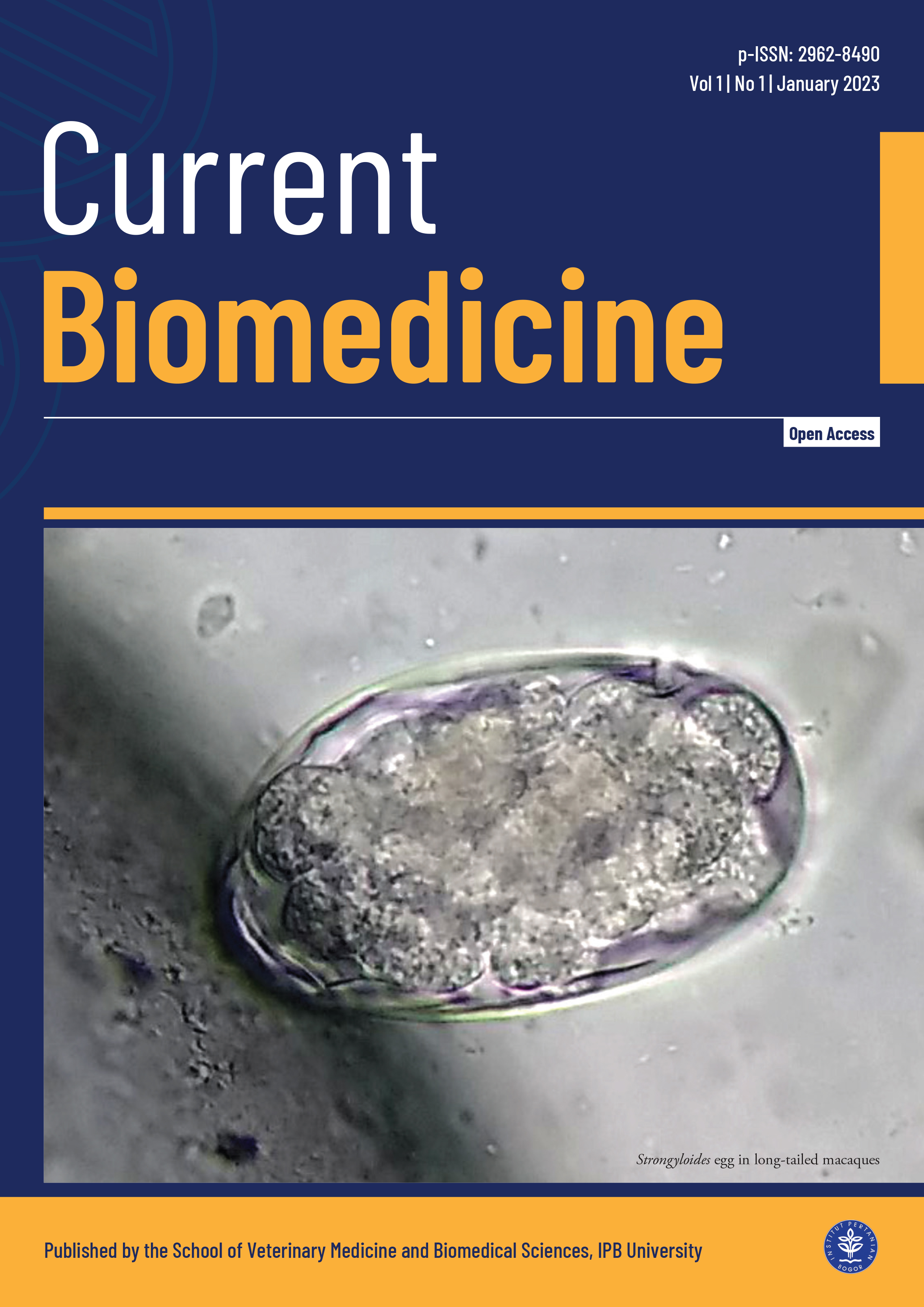
Current Biomedicine
Current Biomedicine (p-ISSN: 2962-8490; e-ISSN: 2985-4784) is an open-access and peer-reviewed scientific journal in the biomedical field, published bi-annually in January and July, accepts articles in Indonesian or English, covers a wide range of life sciences topics, both directly and indirectly related to human and animal health, supporting the One Medicine concept.
Aims. Current Biomedicine aims to rapidly and accurately disseminate good-quality biomedical research, significantly benefiting the society.
Scope. Current Biomedicine covers a wide range of life sciences topics, both directly and indirectly related to human and animal health, supporting the One Medicine concept. These fields include (but are not limited to) anatomy, biochemistry, bioinformatics, biomedical engineering, biostatistics, biotechnology, clinics, cell biology, cytogenetics, embryology, epidemiology, ethnomedicine, experimental surgery, gene therapy, genetics, histology, immunology, laboratory diagnostics, legislation and bioethics, microbiology, molecular biology, nanobiotechnology, one health, parasitology, pathology, pharmacology, pharmacy, physiology, phytopharmaceuticals, public health, radiology and imaging, regenerative medicine, reproduction, surgery, and toxicology.
Article Type. Articles proposed for publication include research, review, case study, and short communication articles. Short communications may come as commentaries, opinions, reply articles, research notes, and correspondences to the editor.
Publication Frequency. Current Biomedicine is published bi-annually, namely in January and July. The first issue was published in January 2023.
Language. Starting 2025, articles will be published entirely in English. Articles submitted in English are preferred. Articles submitted in Indonesian will be translated into English, with the cost will be charged to the author.
Article Processing Charge. Author(s) are charged IDR 250,000,- for Indonesian author(s) or 20 USD for foreign author(s) for each article accepted for publication.
Peer-review process. The peer-review process is carried out in a double-anonymized system. All procedures and decisions are independent, transparent, and accountable. The final decision is up to two months after receipt of a well-formatted manuscript unless additional review is needed or it depends on the author's response or revision.
Publisher. SVMBS IPB University collaborates with the Indonesia Veterinary Medical Association (IVMA/PDHI) to publish Current Biomedicine (Letter No. 001/E/KU/PBPDHI/XII/2022 dated 29 December 2022), and with PT Penerbit IPB Press that supports designing, layout, and printing the journal articles.
-
Jurnal Veteriner dan Biomedis
Jurnal Veteriner dan Biomedis diterbitkan oleh Sekolah Kedokteran Hewan dan Biomedis dalam membantu para akademisi, peneliti dan praktisi untuk menyebarluaskan hasil penelitiannya. Jurnal ini adalah jurnal nasional yang didedikasikan untuk publikasi hasil penelitian dalam lingkup ilmu kedokteran hewan dan ilmu biomedis.
Jurnal Veteriner dan Biomedis menerbitkan paper secara berkala dua kali dalam setahun yaitu pada bulan Maret dan September dengan bebas biaya proses submisi sampai dengan diterbikan.
-
Jurnal Sosial Terapan

JURNAL SOSIAL TERAPAN (JSTR) (E-ISSN 2988-2524) : menerbitkan artikel di bidang sosial terapan seperti sosial ekonomi, hukum, akutansi, ekowisata, agribisnis, komunikasi, manajemen, dan penerapan teknologi di masyarakat. JSTR diterbitkan oleh Sekolah Vokasi, IPB University (SV-IPB). JSTR pertama kali dibuat pada tahun 2023 dengan terbitan dua kali dalam satu tahun yaitu bulan April dan Desember. Editor menerima artikel penelitian empiris dan telaah di bidang sosial terapan.
Redaksi menerima hasil tertulis dari penelitian ilmiah, baik berupa penelitian empiris dalam bidang yang berkaitan dengan Sosial Terapan. Redaksi dapat merevisi makalah tanpa mengubah substansi dan isi setelah melalui proses blind review. Artikel yang dikirimkan oleh penulis harus merupakan naskah asli dan tidak sedang dalam proses penerbitan oleh jurnal atau penerbit lain.
-
Human and Social Capital Journal
Human and Social Capital (HSC) Journal is a blind peer-reviewed journal dedicated to the publication of quality research results in the field of Human Capital and Social Capital. The journal publishes periodically three times a year, namely in April, July and October. The journal is published by the Center for Human Resource Development Institute of Research and Community Service (LPPM) IPB University. All publications in HSC Journal are open, allowing articles to be freely available online without subscription.
The HSC Journal is intended as a medium for scientific study of research results, thoughts and critical-analytic studies regarding Human Capital and Social Capital research. As part of the spirit of disseminating knowledge resulting from research and thoughts for community service and as a source of reference for academics.
HSC Journal accepts scientific articles with the scope of research on Human Capital {(1) Organizational Behavior, (2) Human Resource Management, (3) Entrepreneurship, (4) Business Administration, (5) Human Behavior, (6) Performance Management, (7) Other relevant study topics} and Social Capital {(1) Social interaction, (2) Trust, (3) Shared Vision}
-
Buletin Ilmu Tanah dan Manajemen Lahan
BITML mengundang peneliti, pelajar dan praktisi ilmu tanah dan manajemen lahan untuk mempublikasikan karya ilmiah terkini. Cakupan topik bervariasi, termasuk diantaranya mineralogi dan pembentukan tanah, kimia dan kesuburan tanah, konservasi tanah dan air, biologi dan bioteknologi tanah, pemetaan dan aplikasi penginderaan jauh dan penatagunaan lahan. Artikel terkait implementasi teknologi informasi pada bidang ilmu tanah dan pertanian dapat dipertimbangkan untuk diipublikasikan.
BITML terbit dua kali setahun, pada bulan Juli dan Desember.
Jenis artikel:
- Artikel hasil penelitian (research articles) atau telaah literatur (review articles)
- Tutorial tentang teknik lapangan, pemanfaatan perangkat lunak atau peralatan laboratorium sebagai hasil sampingan penelitian
- Data profil tanah dengan deskripsi peluang pengembangannya
-
Halal Studies and Society
Journal title : Halal Studies and Society Subject : Halal Studies Language : English ISSN : 3031-416X (online) Frequency : 3 issues per year DOI : 10.29244/hass by Crossref Editor-in-chief : Prof. Dr. Anuraga Jayanegara, M.Sc., M.Pd. Publisher : IPB University, Bogor, West Java, Indonesia OAI : https://journal.ipb.ac.id/index.php/hass/oai 
Halal Studies and Society (HaSS) is a multidisciplinary journal and communication media as well as a means of ongoing discussion on relevant issues based on Halal specifications. In a global context, the halal issue is no longer limited to Muslims or certain religions but has become a trend related to lifestyle in general. A halal lifestyle includes the consumption of products and services that comply with the principles of Islamic law (shariah). Therefore, Halal Products are not only limited to food and drinks. But it also covers various sectors including education, tourism, cosmetics, medicine, finance, fashion, arts, slaughther and culture.

CALL FOR PAPERS
Halal Studies and Society (HaSS), a multidisciplinary journal published by the Directorate for Strategic Studies and Academic Reputation, IPB University, announces a call for papers on halal-related themes. We invite submissions of high-quality scientific manuscripts via the online system. To encourage national and international collaboration, HaSS provides publication incentives for accepted articles, namely IDR 2,000,000 for nationally collaborative papers and IDR 4,000,000 for internationally collaborative papers.
Thank you for your attention, we look forward to receiving your manuscripts.
Regards
Editor in Chief
-
Policy Brief Pertanian, Kelautan, dan Biosains Tropika
Policy Brief Pertanian, Kelautan, dan Biosains Tropika (PB PKBT) is a peer-review journal that contains articles covering the results of policy research, policy analysis and opinions related to policy recommendations that are currently developing both nationally and internationally. PB PKBT (ISSN 2828 – 285X) is published four times every year, namely the periods March, June, September and December. This policy brief focuses on broad agro-maritime policy topics, which include the fields of agriculture, one health, fisheries and maritime affairs, animal husbandry, forestry and the environment, agro-maritime industry, tropical bio-science, natural resource and environmental economics, and the social sector, communication and community development. The articles published in this policy brief are articles that are presented concisely to bring science and policy together to support inclusive sustainable development and prosperous society. PB PKBT is published by the Directorate of Strategic Studies and Academic Reputation – IPB University.
-
-

Jurnal ForestrIndo
JURNAL FORESTRINDO (JForIn) atau Journal of Indonesian Forestry adalah jurnal yang terbit dua kali dalam setahun, yaitu setiap bulan Juni dan Desember. JForIn menerbitkan artikel tentang sains dan teknologi pengelolaan hutan tropika, terutama yang berhubungan dengan perencanaan hutan, hidrologi hutan, kebijakan kehutanan, sosial dan ekonomi kehutanan serta pemanfaatan sumber daya hutan. Tulisan-tulisan ilmiah diterbitkan dalam bentuk naskah hasil penelitian (article), ulas balik (reviews), catatan penelitian (notes), hipotesa (hypothesis), maupun komunikasi (communication) di bidang pengelolaan hutan tropika.
-
Journal of Vocational in Aquaculture (JAVA)
The Journal of Vocational in Aquaculture (JAVA) (E-ISSN 3109-7731) is a biannual journal (May & November) that is published by Study Program Technology and Management of Applied Aquaculture, College of Vocational Studies, IPB University in collaboration with Akademisi Profesi Dosen Vokasi Indonesia (APDOVI). JAVA is platform for sharing practical information that is essential for researchers to meet the needs of stakeholders e.g. industry, farm managers, governments to adapt aquaculture theory to achieve sustainable production and economic objectives throughout the world.
This work is licensed under a Creative Commons Attribution 4.0 International License.

-
Jurnal Komunikasi Terapan
Jurnal Komunikasi Terapan is a professionally managed scientific publication issued by the Digital Communication and Media Study Program, Vocational School, IPB University. This journal serves as a platform for academics, researchers, and practitioners to publish their research findings. JKT contains articles that include research results, policy analysis, and literature reviews on applied communication, public relations, journalism, visual communication design, information distribution, and digital communication media. JKT is published twice a year, in June and December.
-
Journal of Social Science and Human Ecology
Journal of Social Science and Human Ecology (JSSHE) is a peer-reviewed scientific journal that publishes multidisciplinary research in the fields of human ecology and social sciences. First published in 2025 by the Faculty of Human Ecology, IPB University, the journal is issued twice a year, in May and November.
Published in electronic format, JSSHE features scholarly articles that contribute to the advancement of scientific knowledge, education, research, and community engagement in Indonesia and other developing countries. The journal aims to foster a deeper understanding of the complex relationships between humans and their social, economic, cultural, and natural environments.
JSSHE welcomes original research articles in the following areas:
1) Nutrition
- Nutrition and food science
- Especially from developing and emerging countries in the areas of nutritional biochemistry
- Nutrition care processes in both clinical and community settings
- Functional, traditional, and novel foods;
- Healthy diets
- Sustainable food and nutrition
2) Family and Consumer Sciences
- Family well-being
- Family resilience
- Psychology
- Family resource management
- Family ecology
- Family communication
- Family development
- Gender partnership
- Human development
- Parenting
- Child protection
- Consumer behavior
- Consumer education
- Consumer protection
3) Communication and Community Development
- Extension education
- Communication for development and social change
- Natural resource governance
- Rural sociology
- Community development
- Migratory population
- Agrarian
- Political ecology
- Human ecology
- Gender
- Social psychology
- Rural development
- Etnicity
- Development communication
- Health communication and education
- Environmental communication and education
Peer Review Process
All submitted manuscripts to the Journal of Social Science and Human Ecology (JSSHE) will undergo a rigorous peer review process to ensure they meet high academic and scientific standards. The peer review is conducted using a double-blind review system, where both the reviewers' and authors' identities are kept confidential throughout the process.
Each submission will be evaluated by expert reviewers (bestari partners) and the JSSHE Editorial Board based on its originality, scientific quality, and relevance to the journal’s scope. After the peer-review process, the Editor-in-Chief, in coordination with the editorial team, will make the final decision to accept, reject, or request revisions for the manuscript. All correspondence with authors is handled by the Editor-in-Chief.
Publication Frequency
The Journal of Social Science and Human Ecology (JSSHE) is published twice a year, in May and November
-
Managing Agricultural Practice and Community Engagement
Managing Agricultural Practices and Community Engagement Journal (MAPACE Journal) is a peer-reviewed journal published by the Study Program of Agricultural Production Technology and Community Development, Vocational School, IPB University. The journal is issued four times a year, in April, June, September, and December. MAPACE serves as a scientific platform for the dissemination of research findings, applied studies, and community engagement activities in the fields of agricultural production technology and agricultural community development. The journal warmly invites researchers, academics, practitioners, and students to submit their original manuscripts for publication and contribute to the advancement of knowledge and sustainable agricultural development.
-
Journal of Maritime Continent
The Journal of Maritime Continent (JMC) is an international, peer-reviewed journal that publishes high-quality research and technological innovations focused on the Indonesian Maritime Continent and surrounding tropical waters. Emphasizing oceanography, ocean-atmosphere dynamics, monsoon systems, and digital marine technologies, JMC highlights the region's role in global climate variability, including ENSO, IODM, and the Indonesian Throughflow.
-
Ma'asy: International Journal of Islamic Economic Thought
Ma'asy is a double-blind peer-reviewed academic journal dedicated to advancing the comprehensive understanding and application of Islamic economic thought. We serve as a leading global platform for scholars, researchers, and practitioners to disseminate original research, critical analyses, and innovative ideas across the vast landscape of Islamic economics. The journal rigorously explores theoretical, empirical, historical, and policy-related dimensions, drawing insights from both classical Islamic heritage and contemporary challenges.is a double-blind peer-reviewed academic journal dedicated to advancing the comprehensive understanding and application of Islamic economic thought. We serve as a leading global platform for scholars, researchers, and practitioners to disseminate original research, critical analyses, and innovative ideas across the vast landscape of Islamic economics. The journal rigorously explores theoretical, empirical, historical, and policy-related dimensions, drawing insights from both classical Islamic heritage and contemporary challenges.
-
Buletin Ilmiah Litbang Perdagangan
 First published in 2007, Buletin Ilmiah Litbang Perdagangan (BILP) is a scientific journal published by the Department of Economics, Faculty of Economics and Management IPB University. Previously this Journal was manage by The National Research and Innovation Agency (BRIN Publishing). Start mid this year (2025), this Journal move to IPB because of the Policy of the Government about research.
This bulletin is expected to be a media of dissemination and analysis of research results to be used as references for academics, practitioners, policy-makers, and the general public. BILP publishes report of research and analysis of trade sector and/or sector-related trade which have not been published in any other journals/scholarly publications, either in Bahasa Indonesia or English. Publishing twice a year in July and December, this Bulletin is directly disseminated to stakeholders in online publication.
Previous Archive of this Journal can be accessed at : https://ejournal.brin.go.id/bilp






Journal Name : Buletin Litbang Ilmiah Perdagangan ISSN (Electronic) : 2528-2751 ISSN (Print) : 1979-9187 Country : Indonesia Language : Indonesia, English Accreditation : Sinta 3 by Kemendikbudristek Publisher : IPB University DOI : Editor In Chief : Tony Irawan Citation Analysis : Google Scholar | Crossref | Garuda Dimensions | OAI : -
Indonesian Journal of Fintech, Banking and Financial Services
The Indonesian Journal of FinTech, Banking, and Financial Services (IJF) is a peer-reviewed academic journal that publishes original research on financial technology, banking, and financial services. The journal focuses on issues related to financial intermediation, digital financial innovation, banking systems, financial markets, insurance and other financial services with particular relevance to Indonesia, Southeast Asia, and other emerging economies.
IJF welcomes theoretical, empirical, and policy-oriented studies, including comparative and crosscountry analyses, covering both conventional and Islamic finance. The journal aims to contribute to the advancement of academic research and informed policy discussions on the evolving structure and performance of financial systems in the digital era -
AI, Big Data and Quantitative Methods in Finance
AI, Big Data and Quantitative Methods in Finance (ABQ) is a peer-reviewed scholarly journal that publishes high-quality research on the application of artificial intelligence, big data analytics, and quantitative methods in the field of finance. The journal serves as an interdisciplinary platform for academics, researchers, and practitioners to disseminate innovative theoretical and empirical studies that advance financial decision-making, risk management, financial markets analysis, and financial technology development.
ABQ welcomes original research articles, review papers, and methodological studies that explore machine learning, data science, econometrics, statistical modeling, optimization techniques, and computational finance applied to banking, investment, corporate finance, insurance, and financial markets. The journal emphasizes rigorous quantitative approaches and data-driven insights that contribute to both academic literature and practical financial solutions.
By integrating emerging digital technologies with advanced quantitative techniques, ABQ aims to foster knowledge exchange, encourage innovation, and support the development of sustainable, efficient, and resilient financial systems at both national and global levels.
-
Indonesian Journal of Accounting, Risk and Governance
Indonesian Journal of Accounting, Risk, and Governance (IJAR) is a peer-reviewed academic journal that serves as an interdisciplinary platform for advancing knowledge and practice at the intersection of accounting, risk, and governance. The journal publishes highquality research that strengthens transparency, accountability, organizational resilience, and sustainability across private, public, and non-profit sectors.
IJARG is positioned as a scholarly forum that integrates three core pillars of organizational accountability: accounting as a system of measurement and disclosure, risk as a framework for managing uncertainty and resilience, and governance as a structure of oversight, control, and ethical responsibility. The journal adopts an international outlook while maintaining strong relevance to emerging economies, particularly Indonesia and Southeast Asia.
By emphasizing the interdependence between accounting information, risk management systems, and governance mechanisms, IJARG promotes integrative and interdisciplinary perspectives that reflect real-world organizational complexity and regulatory dynamics. The journal contributes to the development of theory, practice, and policy by providing empirical evidence and conceptual insights that support better decision-making, stronger regulatory frameworks, and sustainable organizational performance