Diagnosis and treatment of Microsporum canis-induced dermatophytosis in a domestic cat

Downloads
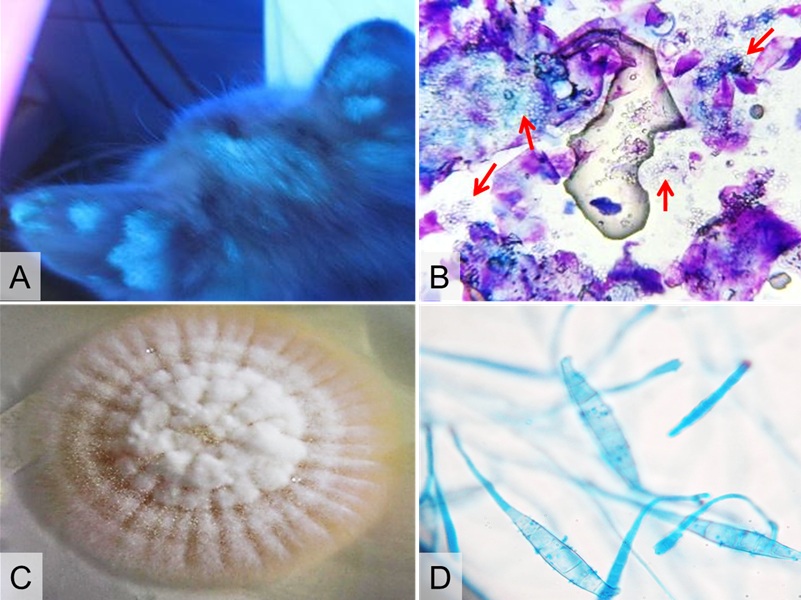
Dermatophytosis is a common superficial fungal infection in cats, particularly those exposed to outdoor environments. This case study reports a 5-month-old domestic cat named Simon, weighing 1.9 kg, presented with erythematous and scaly skin, partial alopecia, and follicular casts on the head and ear regions. The cat was active, had good appetite, and showed no signs of pruritus. Simon was kept in a semi-outdoor environment with potential contact with stray cats. The diagnosis was based on physical examination, Wood’s lamp test, adhesive tape impression cytology, and fungal culture. Macroscopic and microscopic evaluations of the fungal isolate suggested that Microsporum canis was the causative agent. Treatment included topical antifungal shampoo containing econazole nitrate (Sebazole) applied weekly and systemic itraconazole at a dose of 7.5 mg/kg body weight once daily for two weeks. Supportive therapy included liver (Curcuma FCT) and skin (Coatex) supplements. After two weeks of therapy, physical re-evaluation showed resolution of erythema and scaling, with visible hair regrowth in previously alopecic areas.
Bajwa J. 2020. Feline dermatophytosis: clinical features and diagnostic testing. The Canadian Veterinary Journal. 61(11):1217-1220.
Frymus T, Gruffydd-Jones T, Pennisi MG, Addie D, Belák S, Boucraut-Baralon C, Egberink H, Hartmann K, Hosie MJ, Lloret A, Lutz H. 2013. Dermatophytosis in cats: ABCD guidelines on prevention and management. Journal of Feline Medicine and Surgery. 15(7):598-604. https://doi.org/10.1177/1098612X13489222 | PMid:23813824 PMCid:PMC11148949 DOI: https://doi.org/10.1177/1098612X13489222
Gould AP, Coyner KS. 2017. Feline dermatophytosis. Washington, USA, Clinical Notes Elanco [17 Sep 2024] : cn_2017_elanco_september_r-41686-article.pdf (ctfassets.net).
Indrajulianto S, Yanuartono, Purnamaningsih H, Wikansari P, Sakan GYI. 2014. Isolasi dan identifikasi microsporum canis dari anjing penderita dermatofitosis di Yogyakarta. Jurnal Veteriner. 15(2):212-216.
Moriello K. 2014. Feline dermatophytosis, aspect pertinent to disease management in single and multiple cat situations. Journal of Feline Medicine and Surgery. 16(5):419-431. https://doi.org/10.1177/1098612X14530215 | PMid:24794038 PMCid:PMC4361704 DOI: https://doi.org/10.1177/1098612X14530215
Rapti PB, Karafylia A, Tamvakis A, Farmaki R. 2023. Comparison of adhesive tape impression cytology, hair pluck, and fungal culture for the diagnosis of dermatophytosis in dogs and cats. Veterinary Sci-ences. 10(3):183. https://doi.org/10.3390/vetsci10030183 | PMid:36977222 PMCid:PMC10055676 DOI: https://doi.org/10.3390/vetsci10030183
Shipstone M. 2022. Antifungals for integumentary disease in animals. Merck Veterinary Manual [17 Sep 2024]. Antifungals for Integumentary Disease in Animals - Pharmacology - Merck Veterinary Manual (merckvetmanual.com).
All articles published in this journal are licensed under a Creative Commons Attribution-ShareAlike 4.0 International License (CC BY-SA 4.0).
This license permits use, distribution, reproduction, and adaptation in any medium, including for commercial purposes, provided the original work is properly cited, a link to the license is given, and any changes made are indicated. Any derivative work must be distributed under the same license or a compatible license.
How to Cite