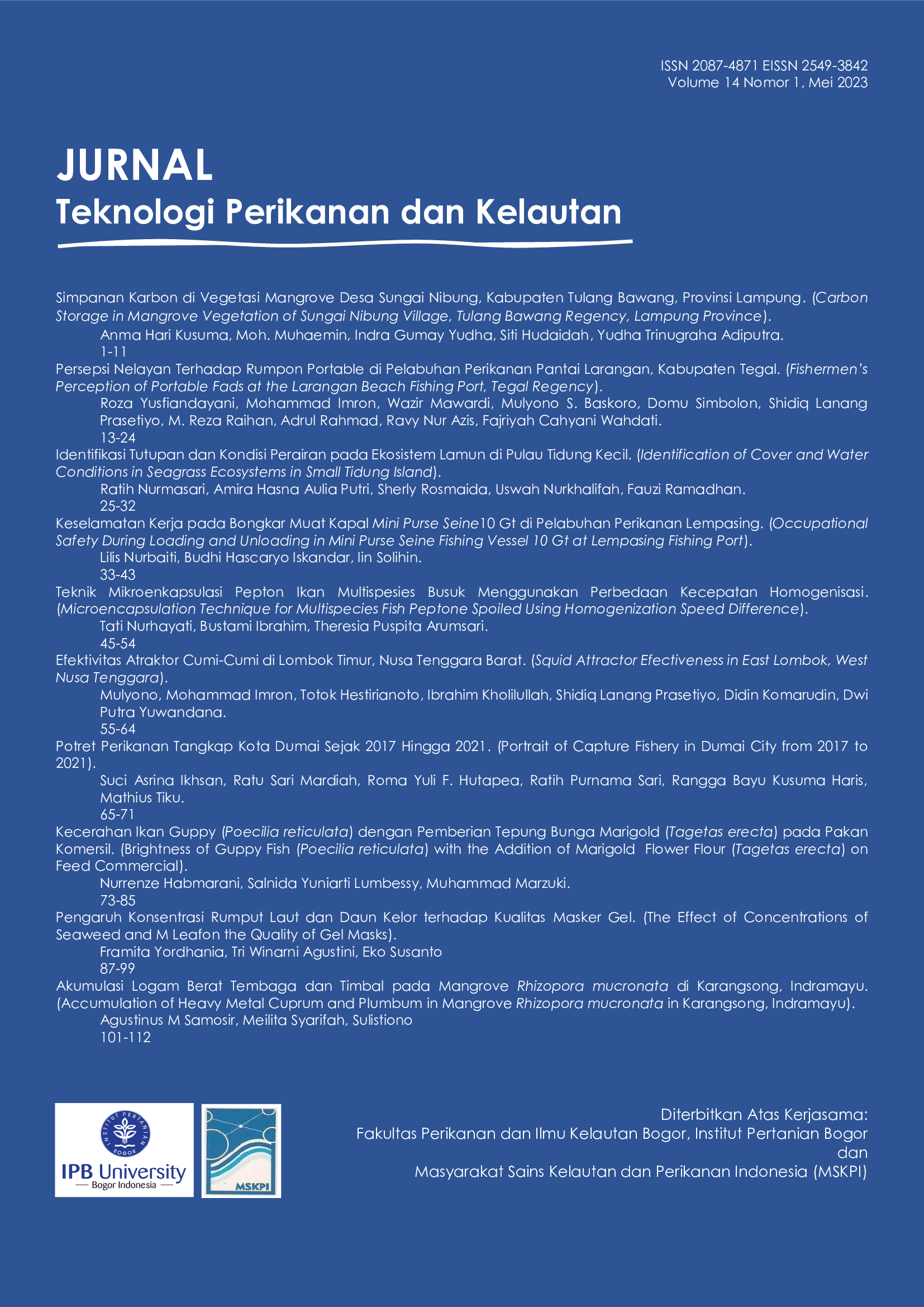
SIMPANAN KARBON DI VEGETASI MANGROVE DESA SUNGAI NIBUNG, KABUPATEN TULANG BAWANG, PROVINSI LAMPUNG
DOI:
https://doi.org/10.24319/jtpk.14.1-11Keywords:
blue carbon, global warming, mangroveAbstract
Increasing the concentration of CO2 in the atmosphere produces the greenhouse gas effect and cause global warming. Blue carbon is the ability of coastal and marine ecosystems to absorb CO2 effectively through photosynthesis which is stored in the form of biomass and sediment. The purpose of this research is to analyze carbon storage in the mangrove vegetation of Sungai Nibung Village. The research was conducted from June to August 2022. The research location was in Sungai Nibung Village, Tulang Bawang Regency, Lampung Province. Measurements of mangrove carbon were conducted in mangrove stands, necromass, and litter using the non-destructive sampling method. The results showed that carbon stored in sediments was greater than carbon stored in the mangrove stands, necromass, and litter. The highest carbon stored in sediments was in coarse clay size sediment because coarse clay can store high nutrients.
Downloads
Downloads
Published
Issue
Section
License
This journal is published under the terms of the Creative Commons Attribution-NonCommercial 4.0 International License. Authors who publish with this journal agree to the following terms: Authors retain copyright and grant the journal right of first publication with the work simultaneously licensed under a Creative Commons Attribution-NonCommercial 4.0 International License. Attribution — You must give appropriate credit, provide a link to the license, and indicate if changes were made. You may do so in any reasonable manner, but not in any way that suggests the licensor endorses you or your use. NonCommercial — You may not use the material for commercial purposes.
How to Cite