
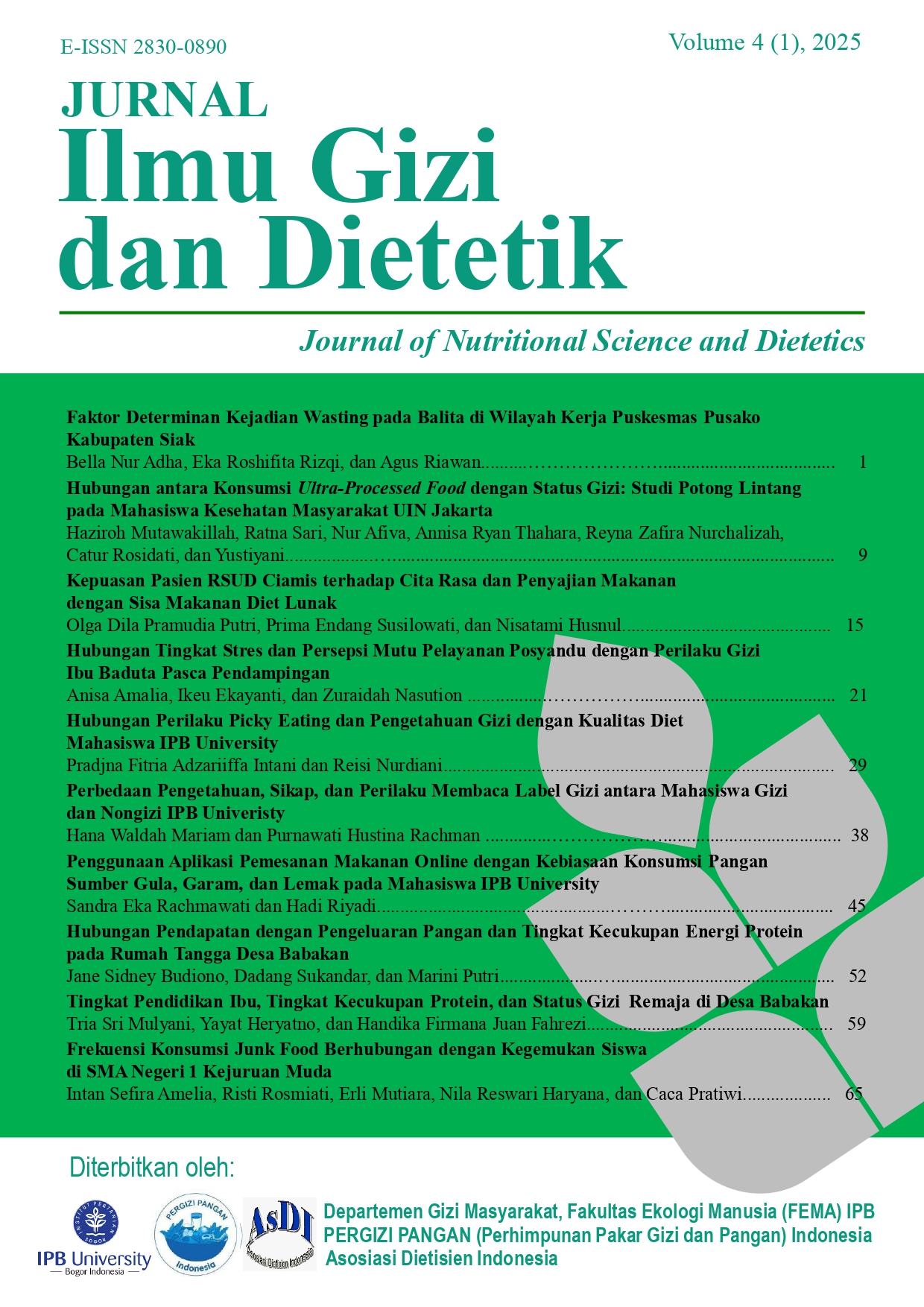
Frekuensi Konsumsi Junk Food Berhubungan dengan Kegemukan Siswa di SMA Negeri 1 Kejuruan Muda
The Frequency of Junk Food Consumption is Associated with Overweight among Students at SMA Negeri 1 Kejuruan Muda
DOI:
https://doi.org/10.25182/jigd.2025.4.1.65-73Keywords:
adolescents, frequency of consumption, junk food, obesity, sociodemographic factorsAbstract
The increasing prevalence of overweight and obesity among adolescents is a global public health concern. This study aims to analyze the relationship between the frequency of junk food consumption and overweight among students at SMA Negeri 1 Kejuruan Muda, controlling for sociodemographic confounding variables. A cross-sectional design was applied, involving 64 students selected through random sampling. Data collection included sociodemographic characteristics, frequency of junk food consumption using the Food Frequency Questionnaire (FFQ), and overweight status measured by Body Mass Index-for-age (BMI/U) using WHO AnthroPlus software. Statistical analysis was conducted using SPSS version 29, with descriptive data presented as mean and standard error for numerical data and frequency and proportion for categorical data. Logistic regression with an etiological framework was used to analyze the association between junk food consumption and overweight. The results revealed a significant association between the frequency of junk food consumption and overweight (p=0.037). Students who consumed junk food more frequently were 3.817 times more likely to be overweight than those with lower consumption frequencies, even after controlling for sociodemographic variables. These findings indicate that frequent junk food consumption is an independent risk factor for overweight among adolescents. It is recommended to implement school-based nutrition education programs to reduce junk food consumption and promote healthier eating habits.












2.png)

