Factors affecting the economic growth of Organization of Islamic Cooperation (OIC) member countries
DOI:
https://doi.org/10.29244/hass.2.2.37-41Keywords:
Economic growth, Oranization of Islamic Cooperation (OIC), Panel data, Population, Working-age populationAbstract
Economic growth is widely used as a macroeconomic indicator for describing economic performance and, by extension, shifts in material living standards. Therefore, this study centers on the Organization of Islamic Cooperation (OIC), an international forum with predominantly Muslim member states, and examines the relationship between selected macroeconomic variables and economic growth across OIC countries from 2000 to 2021, a timeframe marked by two major global economic crises. In order to achieve the stated objective, panel data regression was applied to observations from 34 countries with complete data on inflation, net exports, gross fixed capital formation, real interest rates, working-age population, and total population. Panel regression was estimated under the Common Effects Model (CEM), Fixed Effects Model (FEM), and Random Effects Model (REM), with model selection based on specification tests. The Chow test (F = 167.4303; p = 0.0000) and Hausman test (² = 101.8431; p = 0.0000) consistently support the FEM as the preferred model. FEM results indicate that inflation and the real interest rate negatively and significantly affect GDP (INF: β = 0.007252, p = 0.0000; RIR: β = 0.008265, p = 0.0000), while net exports, gross fixed capital formation, working-age population, and population positively and significantly influence GDP (LnNetExp: β = 0.228393, p = 0.0000; LnGFC: β = 0.321654, p = 0.0000; PAK: β = 0.007255, p = 0.0104; LnPOP: β = 0.790510, p = 0.0000). All variables are jointly significant (F-statistic = 6735.187; p = 0.0000), and the model exhibits very high explanatory power (R² = 0.997722; adjusted R² = 0.997574). The findings underscore the critical role of price stability and real borrowing costs, alongside trade performance, capital accumulation, and demographic–labor dynamics, in shaping growth trajectories across OIC economies.
Introduction
Economic growth is an outcome that typically occurs when gross domestic product rises over time (Gunawan, 2020). This form of growth essentially serves as a useful measure for assessing the welfare of a country’s population. As stated in a prior study, the output of goods and services generated by production factors functions as an indicator for evaluating national productivity performance (Cili & Alkhaliq, 2022). Considering this context, factors of production, including capital accumulation, labor, natural resources, and technology, remain central to explaining economic growth (Mankiw, 2018). Therefore, working-age population, which is used as a proxy for labor within the scope of this investigation, warrants careful examination due to its influence on economic growth.
Based on observation, economic growth only takes place when population expansion generates a skilled workforce prepared for employment. Each country must support this process through deliberate efforts to develop labor skills that are in line with industrial demand, thereby stimulating economic growth. However, it is important to comprehend that population growth can also restrain economic performance when employment opportunities remain limited, labor training policies prove ineffective, or access to education remains uneven (Rinaldi et al., 2017).
Capital accumulation through physical or financial investment, such as gross fixed capital formation, which reflects investment in physical assets, including equipment, machinery, and buildings, constitutes another essential driver of economic growth (Mankiw, 2018). On the flip side, high interest rates can suppress investment activity(D'Adda & Scorcu, 1997);(Hansen & Seshadri, n.d.);(Parakkasi, 2016) because elevated borrowing costs typically discourage firms from expanding production through existing capital. Inflation often underlies this form of interest rate conditions, prompting central banks to respond through restrictive monetary measures.
Considering these insights, countries need to maintain price stability, reflected in controlled inflation rates, as this would invariably lead to the progress of economic growth toward optimal levels without direct inflationary constraints (Aydın et al., 2016).
Globalization is another factor observed to promote economic growth through international trade, and this type of trade typically arises when countries seek to satisfy domestic needs that cannot be fully met internally (Tambunan, 2011). Participation in global trade has been observed to significantly affect national economy as international interconnectedness contributes to improved living standards (Kurniawati, 2021). As a result, identifying quantitative factors remains essential for understanding measurable economic relationships, thereby supporting effective policy formulation (Phillips, 1962). It is also important to comprehend that humans generally show recurring behavioral patterns in economic activity, and this makes examining the relationships among inflation, net exports, gross fixed capital formation, real interest rates, working-age population, and total population essential for explaining variations in national economic growth.
Each country adopts distinct approaches to managing economic challenges. This is primarily because factors such as geographical conditions, cultural contexts, and environmental settings tend to shape national responses to economic pressures in unique ways. International forums provide spaces for countries to exchange experiences and coordinate policy responses grounded in shared learning. A prominent platform within this context is the Organization of Islamic Cooperation (OIC), recognized as the second-largest international organization after the United Nations, comprising 57 member states across four continents with predominantly Muslim populations (Eidoo, 2017). The OIC articulates a collective voice for Muslim countries and works to protect and advance the interests of the Islamic world while upholding principles of global peace.
The OIC and the global economy faced two major economic crises between 2000 and 2021 namely the 2008 subprime mortgage crisis (Umar, 2017) and the COVID-19 pandemic in late 2020. The forum’s economy experienced a stronger post-crisis recovery compared with global performance after the subprime mortgage crisis, while a reverse pattern appeared during the COVID-19 pandemic. Divergent recovery trajectories across these periods prompt closer scrutiny of macroeconomic forces shaping growth patterns within OIC member states. Building on this context, the present study aims to examine whether, and to what degree, inflation, net exports, gross fixed capital formation, real interest rates, working-age population, and total population influence economic growth in OIC countries during the 2000–2021 period.
2. Literature Review
2.1 Economic Growth Theory
A model frequently applied in developing-country contexts is the neoclassical growth framework formulated by Robert Solow. The production function proposed within this framework explains the relationship between output and input utilization (Khan & Reinhart, 1990). Accordingly, the basic specification derived from Solow’s Neoclassical Growth Model, expressed through an aggregated production function, is presented as follows:
\documentclass{article} \usepackage{amsmath} \begin{document} \displaystyle y = Af(K, L, Z) \end{document}
\documentclass{article} \usepackage{amsmath} \begin{document} \displaystyle y = Ae^{\mu t} K^{\alpha} L^{1-\alpha} Z \end{document} (1)
where:
y = Gross Domestic Product
L = labor
K = stock of physical capital and human capital
A = a constant reflecting the baseline level of technology
Z = other factors outside the main inputs
eμt= the rate of technological progress
Differentiating equation (1) with respect to y yields the following growth model:
\documentclass{article} \usepackage{amsmath} \begin{document} \displaystyle \frac{dy}{y} = \left[ \frac{A}{y} \frac{\partial y}{\partial K} dK + \frac{A}{y} \frac{\partial y}{\partial L} dL + \frac{A}{y} \frac{\partial y}{\partial Z} dZ + \frac{dA}{A} \right] \end{document}
After deriving equation (1) with respect to y, equation (2) is obtained,and the estimation of output growth can be developed into the following equation:
\documentclass{article} \usepackage{amsmath} \begin{document} \displaystyle \frac{\Delta y}{y_{t-1}} = \beta_0 + \beta_1 \frac{I}{y_{t-1}} + \beta_2 \frac{\Delta L}{L_{t-1}} + \beta_3 \frac{\Delta Z}{Z_{t-1}} \qquad (3) \end{document}
Where:
\documentclass{article} \usepackage{amsmath} \begin{document} \displaystyle \beta_0 = \frac{dA}{A}, \quad \beta_1 = A \frac{\partial y}{\partial K}, \quad \beta_2 = A \frac{\partial y}{\partial L} \frac{L}{y}, \quad \beta_3 = \frac{\partial y}{\partial Z} \frac{Z}{y}, \quad \text{and } I = dK \end{document}
The constant β0 represents total factor productivity, β1 captures the marginal productivity of capital, β2 expresses the elasticity linking output and labor, and β3 reflects the elasticity associated with factors operating beyond the core structure of the model.
Kremerian growth theory advances the view that welfare can be attained through population expansion. Kremer argues that population increases raise the probability of generating a larger pool of scientists, inventors, and engineers, thereby fostering innovation, particularly within production technology (Makroekonomi, 2007). Regions characterized by substantial population size tend to experience more frequent technological discoveries and advances. From this perspective, a large population functions as a foundational condition for sustained technological progress (Makroekonomi, 2007).
2.2 Organization of Islamic Cooperation (OIC)
The OIC is the second-largest international organization after the United Nations, comprising 57 member states across four continents. The organization serves as a collective platform for Muslim countries, seeking to protect and advance the interests of the Islamic world while promoting cooperation and global peace.
2.3 Working-age Population
The working-age population comprises individuals aged 15–64, commonly classified as the productive age group, who possess the capacity to generate goods and services when labor demand exists and show a willingness to participate in economic activity (Mulyadi, 2014). (Rahman, 2018) reports a positive relationship between the working-age population and economic growth, since expanded labor availability raises the production of goods and services, signaling stronger national productivity. Empirical evidence from South Asia further confirms a positive and statistically significant effect of the working-age population on gross domestic product, consistent with the results documented in related studies (Rahman, 2018); (Kurniawati, 2021); (Saputra & Rusdi, 2024).
2.4 International Trade
The term trade openness is closely related to international trade, referring to the exchange of goods through exports and imports between countries under specific agreements. Many nations leverage international trade, trade policies, and national income to stimulate economic growth as increased trade intensity can contribute positively to development(Jordaan & Eita, 2007);(Ullah et al., 2009);(Raghutla & Chittedi, 2020). A panel-data study focusing on Indonesia, the Philippines, and Malaysia further emphasizes a significant relationship between exports and economicgrowth, with two of the three countries being members of the OIC (Pazim, 2009).
2.5 Population
Population plays an important role in economic growth. This perspective is in line with (Malthus & Stimson, 2018) “Principle of Population,” which posits a bidirectional link between population dynamics and aggregate income. Some studies show that while population growth can positively impact economic expansion, the reverse effect does not always occur(Furuoka, 2013);(Musa, 2015);(Sebikabu et al., 2020). Empirical evidence from the Middle East shows a positive and significant association between population growth and economic performance (Bawazir et al., 2020), a result corroborated by additional study (Cili & Alkhaliq, 2022).
2.6 Real Interest Rate
(Mankiw, 2018) defines the real interest rate as the difference betweenthe nominal interest rate and inflation. The nominal rate reflects growth inthe monetary value of a bank balance, while the real interest rate captures changes in its purchasing power over time. Study by(Sutarjo & S, 2021)shows a negative impact of interest rates on economic growth in Indonesia,a result supported by additional studies reporting similar results (Suciany et al., 2024). Conversely, (Ugochukwu & Chinyere, 2013) observed a negativerelationship that was not statistically significant.
2.7 Gross Fixed Capital
Gross fixed capital (GFC), or gross fixed capital formation, refers toan investment process in which a portion of current income is saved anddirected toward generating future returns (Bakare, 2011). Capital formation contributes to economic development by enabling societies to sustain andenhance their quality of life. Evidence from South Africa shows a positiveand significant relationship between gross fixed capital and economic growth (Ncanywa & Makhenyane, 2016), a result that corresponds withresults from other studies (Ugochukwu & Chinyere, 2013); (Ali, 2015); (Akalpler & Shamadeen, 2017).
2.8 Inflation
Inflation represents a sustained rise in the prices of goods across multiple commodities over time. It influences economic growth throughseveral channels. Study by (Aydın et al., 2016) and (Kusumatrisna et al., 2022) reported that inflation exceeding a certain threshold negatively affected economic growth. Additional studies also documented a negative and significant relationship between inflation and growth(Mamo, 2012);(Sutarjo & S, 2021). On the flip side, some evidence suggests that inflation could positively and significantly impact economic performance (Cili & Alkhaliq, 2022).
3. Methods
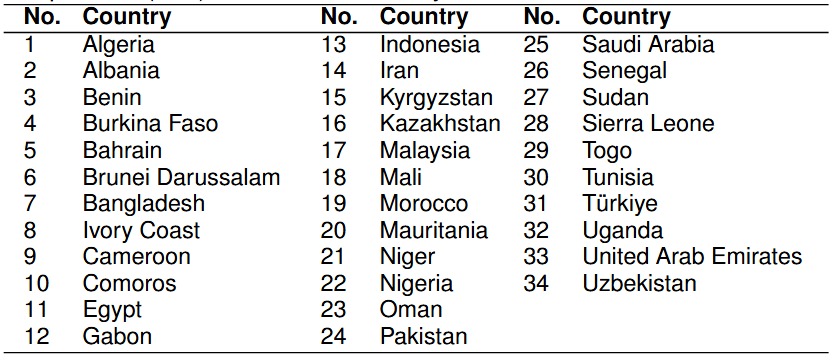
This study utilized quantitative secondary data, analyzed using numerical techniques and contextualized through a review of relevant literature from reputable international journals, books, national journals, conference proceedings, working papers, and other scholarly sources directly related to the topic. Secondary panel data were sourced from official government and organizational websites that provide annual statistics, specifically SESRIC (2022, 2023) and the World Bank’s World Development Indicators (WDI). Furthermore, multiple panel regression was adopted to develop a reliable model and produce comprehensive estimates. Although the OIC officially comprises 57 member states, this study includes only 34 countries due to data availability and completeness across all variables, as detailed in (Table 1).
The data analysis method in this study consists of several stages. First, classical assumption tests are conducted to examine the presence of multicollinearity and heteroskedasticity in the regression model. A linear regression model is considered appropriate when these assumptions are satisfied, as meeting the classical assumptions is essential to obtain unbiased estimations and reliable statistical inferences (Purnomo, 2016). Next, the most suitable estimation model is determined by comparing the Common Effect Model (CEM), Fixed Effect Model (FEM), and Random Effect Model (REM) using the Chow test and the Hausman test to identify the best-fitting model (Widarjono, 2018). After the optimal model is selected, t-tests are performed to assess the partial effects of each independent variable on the dependent variable, while an F-test is employed to examine the simultaneous effect of all independent variables on the dependent variable. Finally, the coefficient of determination (R²) is used to measure the proportion of variation in the dependent variable (GDP) that can be explained by the independent variables, with R² values ranging from 0 to 1; values closer to 1 indicate a greater explanatory power of the independent variables (Sugiyono, 2017).
| No. | Country | No. | Country | No. | Country |
|---|---|---|---|---|---|
| 1 | Algeria | 13 | Indonesia | 25 | Saudi Arabia |
| 2 | Albania | 14 | Iran | 26 | Senegal |
| 3 | Benin | 15 | Kyrgyzstan | 27 | Sudan |
| 4 | Burkina Faso | 16 | Kazakhstan | 28 | Sierra Leone |
| 5 | Bahrain | 17 | Malaysia | 29 | Togo |
| 6 | Brunei Darussalam | 18 | Mali | 30 | Tunisia |
| 7 | Bangladesh | 19 | Morocco | 31 | Türkiye |
| 8 | Ivory Coast | 20 | Mauritania | 32 | Uganda |
| 9 | Cameroon | 21 | Niger | 33 | United Arab Emirates |
| 10 | Comoros | 22 | Nigeria | 34 | Uzbekistan |
| 11 | Egypt | 23 | Oman | ||
| 12 | Gabon | 24 | Pakistan | ||
4. Results and Discussion
4.1 Descriptive Result
Overall, key economic variables such as GDP, exports (EXP), imports (IMP), and gross fixed capital formation (GFC) exhibit a wide range between their minimum and maximum values, reflecting substantial heterogeneity in economic size and trade/investment activities across the sampled countries. In particular, GDP averages 141.75 billion and ranges from 0.65 billion to 1,113.04 billion (Table 2), while exports and imports average 45.19 billion and 45.12 billion, respectively, with quartile patterns indicating that trade volumes are concentrated in a small number of countries—suggesting a potentially skewed distribution. GFC also shows wide dispersion, with a mean of 37.71 billion and values spanning from 0.07 billion to 349.05 billion, highlighting cross-country differences in physical investment capacity and development stages.
The inflation variable (INF) shows high variability, with an average of 7.70% and a range from –25.10% (deflation) to 235.52%, indicating substantial differences in price stability across countries and periods, including extreme inflation episodes. Meanwhile, the real interest rate (RIR) ranges from –34.70% to 43.30% (mean 4.90%), capturing the diversity of monetary conditions and real borrowing costs, including periods of negative real interest rates. In terms of demographic and labor market aspects, PAK and TPOP also display wide dispersion (means of 25.18 million and 41.23 million), suggesting differences in population capacity and labor market size among countries.
Figure 1 presents the evolution of the working-age population rate from 2000 to 2021. The black line indicates a declining trend, while the green line represents an increasing trend. In addition, the red dots denote negative growth rates (below 0%). Based on the observed patterns, 12 countries exhibit an Increasing Return trend, characterized by accelerating growth, whereas 22 countries display a Diminishing Return trend, indicating a decelerating growth pattern.
OIC member countries classified under Increasing Return include Burkina Faso, Mali, Mauritania, Niger, Ivory Costa, Nigeria, Pakistan, Sudan, Senegal, Sierra Leone, Uganda, and Togo. These countries demonstrate a sustained increase in working-age population, reflecting a growing proportion of the working-age population. This condition suggests the availability of abundant productive human resources, commonly associated with the potential for a demographic dividend.
Conversely, OIC member countries categorized as Diminishing Return include Albania, Algeria, Bahrain, Bangladesh, Benin, Brunei Darussalam, Gabon, Indonesia, Iran, Cameroon, Kazakhstan, Comoros, Kyrgyzstan, Malaysia, Morocco, Egypt, Oman, Saudi Arabia, Tunisia, Türkiye, the United Arab Emirates, and Uzbekistan. These countries generally experience a slowdown in working-age population growth. In particular, Algeria, Brunei Darussalam, Indonesia, Malaysia, Egypt, and Tunisia exhibit relatively steady declining trends. Meanwhile, other countries within the Diminishing Return group show more heterogeneous patterns, with some periods of relative stability. Notably, Albania, Bahrain, Oman, and Saudi Arabia record persistent declines that reach negative growth rates, indicating not only a weakening expansion of the working-age population but also a contraction in working-age population dynamics.
| Statistic | GDP (bn USD) | INF (%) | EXP (bn USD) | IMP (bn USD) | GFC (bn USD) | RIR (%) | PAK (million) | TPOP (million) |
|---|---|---|---|---|---|---|---|---|
| Mean | 141.75 | 7.70 | 45.19 | 45.12 | 37.71 | 4.90 | 25.18 | 41.23 |
| Min | 0.65 | -25.10 | 0.05 | 0.15 | 0.07 | -34.70 | 0.21 | 0.33 |
| Q1 | 10.75 | 1.54 | 2.73 | 3.57 | 2.34 | 1.20 | 3.44 | 5.79 |
| Q2 | 38.57 | 4.71 | 12.18 | 11.55 | 7.72 | 4.60 | 9.88 | 17.72 |
| Q3 | 197.89 | 10.74 | 46.80 | 53.04 | 47.87 | 8.34 | 23.16 | 35.93 |
| Max | 1131.04 | 235.52 | 508.03 | 351.95 | 349.05 | 43.30 | 185.45 | 273.75 |
4.2 Classical Assumption Test
Classic assumption tests in this study are conducted to ensure model adequacy and data quality prior to regression estimation. In panel data analysis, not all classical assumption tests are necessarily applied because some tests are considered less relevant. Therefore, this study focuses on multicollinearity and heteroskedasticity tests, which are regarded as the most pertinent for panel data (Basuki & Yuliadi 2015).
The residual normality test is not performed because, with a large sample size, the t- and F-statistics exhibit asymptotic properties such that their distributions closely approximate their theoretical distributions. Accordingly, significance testing remains valid even when the normality assumption of the error term is not explicitly tested (Gujarati & Porter, 2009). This study uses 746 observations, which meets the criterion for a large sample (more than 100 observations).
4.2.1 Heteroskedasticity Test
Heteroskedasticity testing is used to examine a regression model for the presence of unequal error variances across different observations. Heteroskedasticity can be identified using the Glejser test. The output results of the Glejser test are presented in Table 3. The test results indicate that the significance values (t-statistic probabilities) of all independent variables are greater than 0.05. Therefore, it can be concluded that the regression model does not suffer from heteroskedasticity.
In this study, heteroskedasticity was tested using the Glejser test with
the following hypotheses:
H0 : There is no heteroskedasticity problem in the regression model (homoskedasticity).
Ha : There is a heteroskedasticity problem in the regression model (heteroskedasticity).
The testing criteria are defined as follows: H0 is accepted if the significance value (t-statistic probability) of each independent variable is greater than 0.05; conversely, H0 is rejected if the significance value is less than 0.05. Based on the output results, all independent variables have significance values greater than 0.05; thus, H0 is accepted, indicating that there is no heteroskedasticity in the regression model.
| Variable | Prob |
|---|---|
| C | 0.1304 |
| INF | 0.1152 |
| LN_NETEXP | 0.1533 |
| LN_GFC | 0.1261 |
| RIR | 0.0916 |
| PAK | 0.0832 |
| LN_POP | 0.2036 |
| INF \documentclass{article} \usepackage{amsmath} \begin{document} \displaystyle _{it} \end{document} | LN_NETTEXP \documentclass{article} \usepackage{amsmath} \begin{document} \displaystyle _{it} \end{document} | LN_GFC \documentclass{article} \usepackage{amsmath} \begin{document} \displaystyle _{it} \end{document} | RIR \documentclass{article} \usepackage{amsmath} \begin{document} \displaystyle _{it} \end{document} | PAK \documentclass{article} \usepackage{amsmath} \begin{document} \displaystyle _{it} \end{document} | LN_POP \documentclass{article} \usepackage{amsmath} \begin{document} \displaystyle _{it} \end{document} | |
|---|---|---|---|---|---|---|
| INF \documentclass{article} \usepackage{amsmath} \begin{document} \displaystyle _{it} \end{document} | 1 | |||||
| LN_NETTEXP \documentclass{article} \usepackage{amsmath} \begin{document} \displaystyle _{it} \end{document} | -0.0835 | 1 | ||||
| LN_GFC \documentclass{article} \usepackage{amsmath} \begin{document} \displaystyle _{it} \end{document} | 0.1666 | 0.3143 | 1 | |||
| RIR \documentclass{article} \usepackage{amsmath} \begin{document} \displaystyle _{it} \end{document} | -0.7017 | -0.2088 | -0.1807 | 1 | ||
| PAK \documentclass{article} \usepackage{amsmath} \begin{document} \displaystyle _{it} \end{document} | 0.0529 | 0.4283 | 0.4709 | -0.0973 | 1 | |
| LN_POP \documentclass{article} \usepackage{amsmath} \begin{document} \displaystyle _{it} \end{document} | 0.1896 | -0.1196 | 0.7266 | -0.0841 | -0.1438 | 1 |
4.2.2 Multicollinearity Test
To ensure that multicollinearity does not occur among the independent variables in the regression model, this study employs a pairwise correlation test. This test aims to examine whether there are excessively strong relationships among the independent variables that could compromise the stability of the regression estimates.
Hypotheses of the pairwise correlation test:
H0 : There is no multicollinearity among the independent variables in the regression model.
Ha : There is multicollinearity among the independent variables in the regression model.
Based on the pairwise correlation coefficients, the lowest correlation is observed between inflation and working-age population, with a value of 0.0529, while the highest correlation is found between gross fixed capital formation and total population, with a value of 0.726 (Table 4). Therefore, it can be concluded that the model is free from multicollinearity, as none of the pairwise correlation coefficients exceed 0.85.
4.3 Regression Result
The selection of the best model was conducted using model specification tests (Mulyasari 2016). These tests aim to assess the extent to which the independent variables, net exports, inflation, gross fixed capital, the real interest rate, working-age population, and population, affect the dependent variable, namely gross domestic product (GDP). Model evaluation was carried out by considering the results of the Goodness of Fit tests.
Based on the comparison of Goodness of Fit across the three models—Common Effects Model (CEM), Fixed Effect Model (FEM), and Random Effects Model (REM)—the appropriate model was selected through the Chow test and the Hausman test. The Chow test (likelihood ratio test) was employed to compare CEM and FEM, while the Hausman test was used to compare REM and FEM.
The results of the Chow test indicate a cross-section F value of 167.430342 with a probability of 0.0000, which is significant at the 5% level (α = 0.05). Accordingly, the Fixed Effect Model (FEM) was identified as the most appropriate model. This result is further supported by the Hausman test, which yields a test statistic of 101.843074 with a probability of 0.0000, also significant at the 5% level, confirming that FEM is the preferred model. The FEM estimation results are expressed by the following equation: LnGDP = 3.553786 – 0.007252(INF) + 0.228393(LnNetExp) + 0.321654(LnGFC) – 0.008265(RIR) + 0.007255(PAK) + 0.790510(LnPOP) + µi,t. The constant term of 3.553786 implies that, holding all independent variables constant, GDP increases by 3.553786%. The Fixed Effects Model (FEM) estimation shows that, ceteris paribus, macroeconomic stability and real-sector dynamics are key determinants of GDP in OIC member countries. Inflation (INF) exerts a negative influence on economic growth, where a one percentage point increase in inflation reduces GDP by 0.7252%, while the real interest rate (RIR) also has a negative effect, with a one percentage point increase lowering GDP by 0.8265%. These results imply that higher inflationary pressures and tighter real borrowing conditions may constrain investment and weaken output performance.
| Variable | CEM (Common Effects Model) | FEM (Fixed Effects Model) | REM (Random Effects Model) |
|---|---|---|---|
| Constant | 4.079877*** (0.0000) | 3.553786*** (0.0000) | 5.863595*** (0.0000) |
| INF | 0.003851* (0.0703) | -0.007252*** (0.0000) | -0.006097*** (0.0000) |
| LnNettExp | 0.249431*** (0.0000) | 0.228393*** (0.0000) | 0.268747*** (0.0000) |
| LnGFC | 0.740816*** (0.0000) | 0.321654*** (0.0000) | 0.401162*** (0.0000) |
| RIR | 0.000032 (0.9893) | -0.008265*** (0.0000) | -0.006673*** (0.0000) |
| PAK | 0.003337 (0.2834) | 0.007255** (0.0104) | 0.015908*** (0.0000) |
| LnPOP | 0.193177*** (0.0000) | 0.790510*** (0.0000) | 0.511082*** (0.0000) |
| F-statistic | 3521.513*** (0.0000) | 6735.187*** (0.0000) | 695.6355*** (0.0000) |
| Chow Test | 167.430342 (0.0000) | - | - |
| Hausman Test | - | 101.843074 (0.0000) | - |
| R-squared | 0.978285 | 0.997722 | 0.898984 |
| Adj. R² | 0.978007 | 0.997574 | 0.897691 |
| F-statistic | Prob (F-statistic) |
|---|---|
| 6735.187 | 0.000000 |
| R-square | Adjusted (R-square) |
|---|---|
| 0.997722 | 0.997574 |
In contrast, trade and investment variables are positively associated with GDP. A 1% increase in net exports (LnNetExp) is associated with an increase in GDP of 0.228393%, indicating that stronger external sector performance contributes to higher output. Similarly, gross fixed capital formation (LnGFC) shows a positive elasticity, where a 1% increase in investment leads to a 0.321654% increase in GDP, ceteris paribus. This finding is consistent with the neoclassical growth framework, which emphasizes capital accumulation as a central driver of economic growth. Demographic capacity also plays a significant role in explaining GDP variations across OIC countries. The coefficient of the working-age population (PAK), measured in million people, indicates that an increase of one million individuals aged 15–64 raises GDP by 0.7255%, while a 1% increase in total population (LnPOP) increases GDP by 0.790510%, ceteris paribus.
The parameter significance tests reveal an R-squared (R²) value of 0.997722, indicating that 99.7% of the variation in GDP across OIC member countries is explained by inflation, net exports, gross fixed capital, the real interest rate, working-age population, and total population. The remaining approximately 0.3% is attributed to other factors not included in the model.
The partial t-test results show that inflation has a negative and statistically significant effect on GDP (t = –5.348926; p = 0.0000). Net exports exert a positive and significant influence (t = 13.13339; p = 0.0000), as does gross fixed capital (t = 17.74364; p = 0.0000). The real interest rate also has a negative and significant effect on GDP (t = –5.435609; p = 0.0000). working-age population positively and significantly affects GDP (t = 2.574417; p = 0.0104), and population has a positive and statistically significant impact on GDP (t = 14.64378; p = 0.0000) at the 5% significance level.
Next, this study conducts the F-test. According to Mulyasari (2016), the F-test is used to determine whether the independent variables jointly (simultaneously) affect the dependent variable. The test is performed by comparing the calculated F-statistic with the critical F-value, where the numerator degrees of freedom (df1) are 5 (6–1) and the denominator degrees of freedom (df2) are 470 (476–6), resulting in an F-table value of 2.2331 at the 5% significance level (α = 0.05). Based on Table 5, the regression results using the Fixed Effect Model (FEM) yield an F-statistic of 6735.187 with a corresponding probability value of 0.0000. Since the F-statistic exceeds the critical F-value (6735.187 > 2.2331) and the probability value is below 0.05 (Table 6), it can be concluded that inflation, net exports, gross fixed capital, the real interest rate, working-age population, and population jointly (simultaneously) have a significant effect on gross domestic product.
In addition, the adjusted R-squared value of 0.997574 or 99.7574% (Table 7), indicates that the independent variables, such as INF, LN_NETT_EXP, LN_GFC, RIR, PAK, and LN_POP, explain 99.7574% of the variation in LN_Y (economic growth) across OIC member countries, while the remaining 0.2426% is explained by other variables not included in this model.
4.4 The Impact of Inflation on Gross Domestic Product
Based on the data analysis result presented in Table 5, inflation hada negative and significant effect on gross domestic product at the 1%level. These results are in line with those of (Mamo, 2012) and(Suciany et al., 2024). (Mamo, 2012) reported how inflation had a negative andsignificant effect on the gross domestic product of 13 Sub-Saharan African countries, most of which are members of the OIC. This implies that inflationin many OIC member countries exceeds the positive economic threshold (Aydın et al., 2016); (Kusumatrisna et al., 2022). However, the results of thepresent study are inconsistent with the results of (Cili & Alkhaliq, 2022), whofound that inflation had a positive and significant effect in 33 provinces inIndonesia. This observation can be attributed to the fact that there was no hyper inflation during the study period; hence, inflation remained within theboundaries of positive economic growth
4.5 The Influence of Net Exports on Gross Domestic Product
The results presented in Table 5 show that net exports exert a positiveand statistically significant effect on gross domestic product at the 1 percentlevel. These results are consistent with (Sutarjo & S, 2021), who reportedhow exports, imports, and related variables positively and significa ntlyaffected foreign exchange reserves, which in turn contribute to economicgrowth. Similarly, (Akalpler & Shamadeen, 2017) emphasized the directimpact of net exports on economic growth.
4.6 The Influence of Gross Fixed Capital on Gross Domestic Product
Table 5 shows that gross fixed capital exerts a positive and statistically significant effect on gross domestic product at the 1 percent level. These results are consistent with prior study showing that gross fixed capital, as a proxy for investment, positively and significantly influences economic growth across various contexts, including 13 Sub-Saharan African countries (Mamo, 2012), Nigeria (Ugochukwu & Chinyere, 2013), South Africa (Ncanywa & Makhenyane, 2016);(KA, 2019), the United States (Akalpler & Shamadeen, 2017), Pakistan (Ali, 2015), and Indonesia(Kurniawati, 2021);(Sutarjo & S, 2021); (Cili & Alkhaliq, 2022); (Kusumatrisna et al., 2022)). Investments in fixed assets yield productive returns when guided by sound management practices and supported by skilled labor, generating optimal output that strengthens national economic performance.
4.7 The Influence of Real Interest Rate on Gross Domestic Product
Table 5 shows that the real interest rate has a negative and statistically significant effect on gross domestic product at the 1 percent level. These results are consistent with previous studies reporting a negative and significant impact of interest rates on GDP (Sutarjo & S, 2021)(Suciany et al., 2024). In contrast, other study observed a negative but statistically insignificant relationship between the real interest rate and economic growth (Ugochukwu & Chinyere, 2013).
4.8 The Influence of Working-age Population on Gross Domestic Product
The data presented in Table 5 indicates that working-age population exerts a positive and statistically significant effect on gross domestic product at the 5 percent level. These results are in line with other studies reporting a positive and significant impact of working-age population on GDP in Indonesia, an OIC member country that is also included in this study’s sample(Rahman, 2018); (Kurniawati, 2021); (Saputra & Rusdi, 2024).
4.9 The Influence of Total Population on Gross Domestic Product
Based on the data analysis conducted, the total population variable had a positive and significant effect on GDP at the 1% level. This result is consistent with other studies stating that working-age population had a positive and significant effect on gross domestic product in the Middle East (Bawazir et al., 2020) and Indonesia (Cili & Alkhaliq, 2022). This is in line with Kremer’s economic growth theory. Kremer asserts that as the population grows, there are more opportunities for the emergence of scientists, inventors, and engineers who can generate innovations, specifically in production technology (Makroekonomi, 2007). In other words, population growth in the 34 OIC countries has increased the number of scientists and investigators, leading to various technological innovations that are a prerequisite for economic growth.
5 Conclusion and Suggestion
5.1 Conclusion
In conclusion, the analysis conducted in this study, which comprised the gross domestic product of 34 OIC countries from 2000 to 2021 using the Fixed Effect Model (FEM), showed several significant results. Net exports, gross fixed capital, and total population were found to possess positive and statistically significant effects at the 1 percent level. Accordingly, inflation and the real interest rate reflected negative and significant impacts at the 1 percent level, while working-age population showed a positive effect at the 5 percent significance level. The contribution of the total population exceeded that of the working-age population (ages 15–64), emphasizing the importance of enhancing labor productivity through government support, such as industry-specific training, to empower the productive-age workforce. These results also suggest that unpaid workers, family workers, students outside the working-age population, and workers beyond the 15–64 age range played meaningful roles in supporting economic growth across the 34 OIC countries during the study period.
5.2 Suggestion
Future explorations could incorporate more detailed components within the working-age population variable, such as specific age groups (15–24 years, 25–50 years, and 50–64 years) and classifications based on education level and gender. Similarly, the population variable could be refined by distinguishing between “de facto” and “de jure” residents, providing a clearer representation of factors influencing economic growth in OIC countries. This form of detailed analysis would enable policymakers to design more targeted interventions, grounded in the relationships among macroeconomic variables, including inflation, net exports, gross fixed capital, real interest rates, working-age population, and total population, identified in the present study.
Conflict of Interest
The authors declare no conflict of interest.
References
- Akalpler E., Shamadeen B.. The role of net export on economic growth in the United States of America. J Appl Econ Sci. 2017; 12(3):772-781.
- Ali G.. Gross fixed capital formation & economic growth of Pakistan. J Res Humanit Arts Lit Appl. 2015; 1(2):21-30.
- Aydın C., Esen Ö., Bayrak M.. Inflation and economic growth: a dynamic panel threshold analysis for Turkish republics in transition process. Procedia-Social and Behavioral Sciences. 2016; 229:196-205. DOI
- Bakare A.S.. A theoretical analysis of capital formation and growth in Nigeria. Far East Journal of Psychology and Business. 2011; 3(2):11-24.
- Bawazir A.A.A., Aslam M., Osman A.F.B.. Demographic change and economic growth: empirical evidence from the Middle East. Econ Chang Restruct. 2020; 53(3):429-450. DOI
- Cili M.R., Alkhaliq B.. Economic growth and inflation: evidence from Indonesia. Signifikan: Jurnal Ilmu Ekonomi. 2022; 11(1):145-160. DOI
- D'Adda C., Scorcu A.E.. Real interest rate and growth: an empirical note. 1997. Publisher Full Text
- Eidoo S..In: Daun H., Arjmand R.. Handbook of Islamic Education. Springer International Publishing: Springer International Publishing; 2017:1-21. DOI
- Furuoka F.. Population and economic development in Indonesia: a revisit with new data and methods. Acta Oeconomica. 2013; 63(4):451-467. DOI
- Gujarati D.N., Porter D.C.. McGraw-Hill: New York; 2009.
- Gunawan M.H.. Pertumbuhan ekonomi dalam pandangan ekonomi Islam. Jurnal Tahkim. 2020.
- Hansen B.E., Seshadri A.. Uncovering the relationship between real interest rates and economic growth. Michigan Retirement Research Center Research Paper.DOI
- Jordaan A.C., Eita J.H.. Export and economic growth in Namibia: a Granger causality analysis. South African J Econ. 2007; 75(3):540-547. DOI
- Khan M.S., Reinhart C.M.. Private investment and economic growth in developing countries. World Dev. 1990; 18(1):19-27. DOI
- Kurniawati V.. Analysis the impact of net export, investment, labour and exchange rate on economic growth in Indonesia in the year of 2000-2020. Jurnal Akuntansi, Manajemen dan Ekonomi. 2021; 23(2):40-50.
- Kusumatrisna A.L., Sugema I., Pasaribu S.H.. Threshold effect in the relationship between inflation rate and economic growth in Indonesia. Bulletin of Monetary Economics and Banking. 2022; 25(1):117-132. DOI
- Malthus T.R., Stimson S.. Yale University Press: New Haven; 2018. DOI
- Mamo F.T.. Economic growth and inflation: a panel data analysis. Economics. 2012.
- Makroekonomi Mankiw N.G.. Penerbit Erlangga: Jakarta; 2007.
- Mankiw N.G.. Cengage Learning: Boston; 2018.
- KA Meyer D.F.Sanusi. A Causality Analysis Of The Relationships Between Gross Fixed Capital Formation, Economic Growth And Employment In South Africa. Studia Universitatis Babes-Bolyai Oeconomica. 2019; 64(1):33-44. DOI
- Mulyadi. Universitas Gadjah Mada: Yogyakarta; 2014.
- Musa A.. Econometric model on population growth and economic development in India: an empirical analysis. Proceedings of the International Symposium on Emerging Trends in Social Science Research. 2015.
- Ncanywa T., Makhenyane L.. Can investment activities in the form of capital formation influence economic growth in South Africa?. Proceedings of SAAPAM Limpopo Chapter 5th Annual Conference Proceedings. 2016;270-279.
- Parakkasi I.. Analisis dampak suku bunga terhadap pertumbuhan sektor riil dan sektor investasi dalam perspektif syariah di Kota Makassar. LAA MAISYIR: Jurnal Ekonomi Islam. 2016; 7(2):161-180.
- Pazim K.H.. Univ Libr Munich, Ger MPRA Pap. 2009.
- Phillips A.W.H.. Bell: London; 1962. DOI
- Purnomo R.A.. CV. Wade Grup: Ponorogo; 2016.
- Raghutla C., Chittedi K.R.. Is there an export- or import-led growth in emerging countries? A case of BRICS countries. Journal of Public Affairs. 2020; 20(3):1-12. DOI
- Rahman M.M.. Impact of labour force participation on economic growth in South Asian countries. 2018. Publisher Full Text
- Rinaldi M., Jamal A., Seftarita C.. Analisis pengaruh perdagangan internasional dan variabel makro ekonomi terhadap pertumbuhan ekonomi Indonesia. J Ekon dan Kebijak Publik Indones. 2017; 4(1):49-62.
- Saputra R.D., Rusdi M.. Analysis of factors affecting economic growth in Banten Province. EKOMBIS REVIEW: Jurnal Ilmiah Ekonomi dan Bisnis. 2024; 12(1):659-666. DOI
- Sebikabu D.R., Ruvuna E., Ruzima M..In: Das G.G., Johnson R.B.. Rwandan Economy at the Crossroads of Development: Key Macroeconomic and Microeconomic Perspectives. Springer Singapore: Springer Singapore; 2020:73-95. DOI
- Suciany A.D., Damayanti C.R., Darmawan A.. Exchange rate, inflation, interest rate and economic growth: how they interact in ASEAN. Profit: Jurnal Administrasi Bisnis. 2024; 18(2):245-256.
- Sugiyono. CV. Alfabeta: Bandung; 2017.
- Sutarjo Murti W., S Saleh. The effect of export import, inflation, interest rates, and exchange rates against Indonesia's economic growth. International Journal Business, Economics & Management. 2021; 4(2):449-460.
- Tambunan T.. Perekonomian Indonesia: kajian teoritis dan analisis empiris. 2011. Publisher Full Text
- Ugochukwu U.S., Chinyere U.P.. The impact of capital formation on the growth of Nigerian economy. Research Journal of Finance and Accounting. 2013; 4(9):36-43.
- Ullah S., Bedi-uz-Zaman Farooq, M Javed, A.. Cointegration and causality between exports and economic growth in Pakistan. European Journal of Social Science. 2009; 10(2):264-272.
- Umar H.. Dampak krisis sub-prime mortgage terhadap ekonomi makro dan pasar modal di Indonesia. JRB-Jurnal Riset Bisnis. 2017; 1(1):8-18. DOI
- Widarjono. Ekonisia: Yogyakarta; 2018.
Copyright & License
© 2025 Ahmad Fauzan, Mohammad iqbal Irfany.
This work is licensed under a Creative Commons Attribution-ShareAlike 4.0 International License.

References
Akalpler E, Shamadeen B. The role of net export on economic growth in the United States of America. J Appl Econ Sci. 2017;12(3):772-781.
Ali G. Gross fixed capital formation & economic growth of Pakistan. J Res Humanit Arts Lit Appl. 2015;1(2):21-30.
Aydın C, Esen Ö, Bayrak M. Inflation and economic growth: a dynamic panel threshold analysis for Turkish republics in transition process. Procedia-Social and Behavioral Sciences. 2016;229:196-205. https://doi.org/10.1016/j.sbspro.2016.07.129 DOI: https://doi.org/10.1016/j.sbspro.2016.07.129
Bakare AS. A theoretical analysis of capital formation and growth in Nigeria. Far East Journal of Psychology and Business. 2011;3(2):11-24.
Bawazir AAA, Aslam M, Osman AFB. Demographic change and economic growth: empirical evidence from the Middle East. Econ Chang Restruct. 2020;53(3):429-450. https://doi.org/10.1007/s10644-019-09254-8 DOI: https://doi.org/10.1007/s10644-019-09254-8
Cili MR, Alkhaliq B. Economic growth and inflation: evidence from Indonesia. Signifikan: Jurnal Ilmu Ekonomi. 2022;11(1):145-160. https://doi.org/10.15408/sjie.v11i1.19848 DOI: https://doi.org/10.15408/sjie.v11i1.19848
D'Adda C, Scorcu AE. Real interest rate and growth: an empirical note. Bologna: University of Bologna; 1997. Available at: http://amsacta.unibo.it/764/1/276.pdf
Eidoo S. The Organization of Islamic Cooperation, ummah unity and children's rights to education. In: Daun H, Arjmand R, editors. Handbook of Islamic Education. Cham: Springer International Publishing; 2017. pp. 1-21. https://doi.org/10.1007/978-3-319-53620-0_9-1 DOI: https://doi.org/10.1007/978-3-319-53620-0_9-1
Furuoka F. Population and economic development in Indonesia: a revisit with new data and methods. Acta Oeconomica. 2013;63(4):451-467. https://doi.org/10.1556/aoecon.63.2013.4.3 DOI: https://doi.org/10.1556/aoecon.63.2013.4.3
Gujarati DN, Porter DC. Basic Econometrics. 5th ed. New York: McGraw-Hill; 2009.
Gunawan MH. Pertumbuhan ekonomi dalam pandangan ekonomi Islam. Jurnal Tahkim. 2020;XVI(1):117-128.
Hansen BE, Seshadri A. Uncovering the relationship between real interest rates and economic growth. Michigan Retirement Research Center Research Paper No. 2013-303. 2013. https://doi.org/10.2139/ssrn.2391449 DOI: https://doi.org/10.2139/ssrn.2391449
Jordaan AC, Eita JH. Export and economic growth in Namibia: a Granger causality analysis. South African J Econ. 2007;75(3):540-547. https://doi.org/10.1111/j.1813-6982.2007.00132.x DOI: https://doi.org/10.1111/j.1813-6982.2007.00132.x
Khan MS, Reinhart CM. Private investment and economic growth in developing countries. World Dev. 1990;18(1):19-27. https://doi.org/10.1016/0305-750X(90)90100-C DOI: https://doi.org/10.1016/0305-750X(90)90100-C
Kurniawati V. Analysis the impact of net export, investment, labour and exchange rate on economic growth in Indonesia in the year of 2000-2020. Jurnal Akuntansi, Manajemen dan Ekonomi. 2021;23(2):40-50.
Kusumatrisna AL, Sugema I, Pasaribu SH. Threshold effect in the relationship between inflation rate and economic growth in Indonesia. Bulletin of Monetary Economics and Banking. 2022;25(1):117-132. https://doi.org/10.21098/bemp.v25i1.1045 DOI: https://doi.org/10.21098/bemp.v25i1.1045
Malthus TR, Stimson S. An Essay on the Principle of Population. New Haven: Yale University Press; 2018. https://doi.org/10.12987/9780300231892 DOI: https://doi.org/10.12987/9780300231892
Mamo FT. Economic growth and inflation: a panel data analysis. Economics. 2012.
Mankiw NG. Makroekonomi. 6th ed. Jakarta: Penerbit Erlangga; 2007.
Mankiw NG. Principles of Macroeconomics. 8th ed. Boston: Cengage Learning; 2018.
Meyer DF Sanusi KA. A Causality Analysis Of The Relationships Between Gross Fixed Capital Formation, Economic Growth And Employment In South Africa. Studia Universitatis Babes-Bolyai Oeconomica. 2019;64(1):33-44. https://doi.org/10.2478/subboec-2019-0003 DOI: https://doi.org/10.2478/subboec-2019-0003
Mulyadi. Akuntansi Biaya. 5th ed. Yogyakarta: Universitas Gadjah Mada; 2014.
Musa A. Econometric model on population growth and economic development in India: an empirical analysis. Proceedings of the International Symposium on Emerging Trends in Social Science Research, Chennai-India. 2015. pp. 3-5.
Ncanywa T, Makhenyane L. Can investment activities in the form of capital formation influence economic growth in South Africa?. Proceedings of SAAPAM Limpopo Chapter 5th Annual Conference Proceedings. 2016. p. 270-279.
Parakkasi I. Analisis dampak suku bunga terhadap pertumbuhan sektor riil dan sektor investasi dalam perspektif syariah di Kota Makassar. LAA MAISYIR: Jurnal Ekonomi Islam. 2016;7(2):161-180.
Pazim KH. Panel data analysis of "export-led" growth hypothesis in BIMP-EAGA countries. Univ Libr Munich, Ger MPRA Pap. 2009.
Phillips AWH. Employment, inflation and growth. London: Bell; 1962. https://doi.org/10.2307/2601516 DOI: https://doi.org/10.2307/2601516
Purnomo RA. 2016. Analisis statistik ekonomi dan bisnis dengan SPSS. Ambarwati PC, editor. Ponorogo: CV. Wade Grup; 2016.
Raghutla C, Chittedi KR. Is there an export- or import-led growth in emerging countries? A case of BRICS countries. Journal of Public Affairs. 2020;20(3):1-12. https://doi.org/10.1002/pa.2074 DOI: https://doi.org/10.1002/pa.2074
Rahman MM. Impact of labour force participation on economic growth in South Asian countries. United International University; 2018. Available at: https://www.iiste.org
Rinaldi M, Jamal A, Seftarita C. Analisis pengaruh perdagangan internasional dan variabel makro ekonomi terhadap pertumbuhan ekonomi Indonesia. J Ekon dan Kebijak Publik Indones. 2017;4(1):49-62.
Saputra RD, Rusdi M. Analysis of factors affecting economic growth in Banten Province. EKOMBIS REVIEW: Jurnal Ilmiah Ekonomi dan Bisnis. 2024;12(1):659-666. https://doi.org/10.37676/ekombis.v12i1.4998 DOI: https://doi.org/10.37676/ekombis.v12i1.4998
Sebikabu DR, Ruvuna E, Ruzima M. Population growth's effect on economic development in Rwanda. In: Das GG, Johnson RB, editors. Rwandan Economy at the Crossroads of Development: Key Macroeconomic and Microeconomic Perspectives. Singapore: Springer Singapore; 2020. p. 73-95. https://doi.org/10.1007/978-981-15-5046-1_5 DOI: https://doi.org/10.1007/978-981-15-5046-1_5
Suciany AD, Damayanti CR, Darmawan A. Exchange rate, inflation, interest rate and economic growth: how they interact in ASEAN. Profit: Jurnal Administrasi Bisnis. 2024;18(2):245-256.
Sugiyono. Metode Penelitian Kuantitatif, Kualitatif dan R&D. Bandung: CV. Alfabeta; 2017.
Sutarjo, Murti W, Saleh S. The effect of export import, inflation, interest rates, and exchange rates against Indonesia's economic growth. International Journal Business, Economics & Management. 2021;4(2):449-460.
Tambunan T. Perekonomian Indonesia: kajian teoritis dan analisis empiris. Jakarta: Ghalia Indonesia; 2011. Available at: https://books.google.co.id/books?id=M-dAtwAACAAJ
Ugochukwu US, Chinyere UP. The impact of capital formation on the growth of Nigerian economy. Research Journal of Finance and Accounting. 2013;4(9):36-43.
Ullah S, Bedi-uz-Zaman, Farooq M, Javed A. Cointegration and causality between exports and economic growth in Pakistan. European Journal of Social Science. 2009;10(2):264-272.
Umar H. Dampak krisis sub-prime mortgage terhadap ekonomi makro dan pasar modal di Indonesia. JRB-Jurnal Riset Bisnis. 2017;1(1):8-18. https://doi.org/10.35592/jrb.v1i1.4 DOI: https://doi.org/10.35592/jrb.v1i1.4
Widarjono. Ekonometrika Teori dan Aplikasi untuk Ekonomi dan Bisnis. Yogyakarta: Ekonisia; 2018.
Published
Issue
Section
License
Copyright (c) 2025 Ahmad Fauzan, Mohammad iqbal Irfany

This work is licensed under a Creative Commons Attribution-ShareAlike 4.0 International License.
How to Cite