Understanding halal cosmetic purchase intention: A systematic literature review
DOI:
https://doi.org/10.29244/hass.2.1.33-36Keywords:
Attitude, Halal, Halal cosmetic, Purchase intention, Systematic literature reviewAbstract
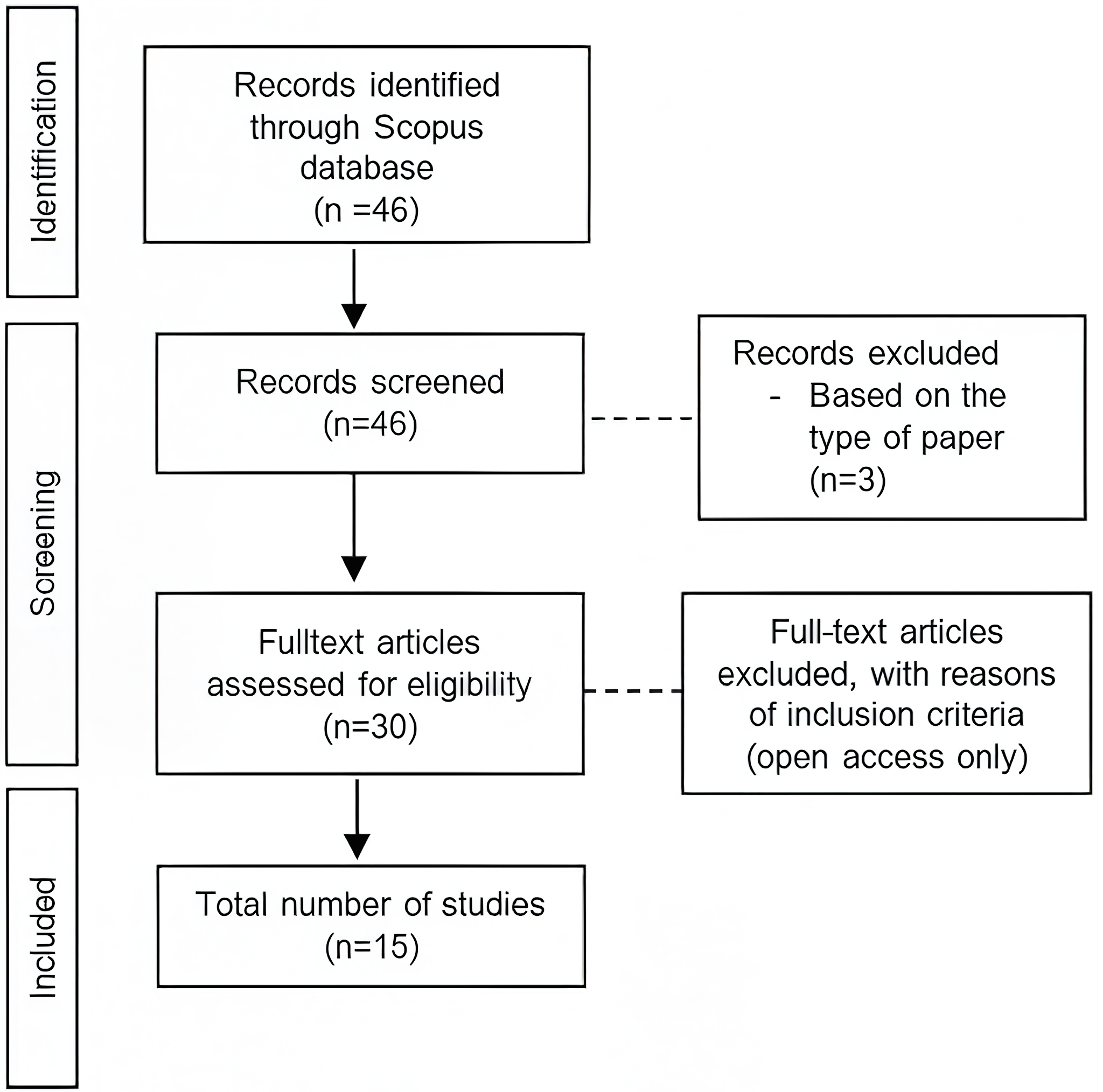
Halal cosmetic industry is widely recognized as a significant global beauty and personal care market segment. Alongside the rapid growth, understanding consumer purchase intention toward products has become a key focus of academic investigations. Therefore, this systematic literature review aims to identify the key determinants of purchase intention and uncover prevailing trends in the context of halal cosmetic. Using the PRISMA principles, a total of 15 relevant studies were collected from the Scopus database. The results showed that purchase intention towards halal cosmetic products was influenced by various key determinants reflecting the interaction between internal and external factors. The most mentioned variables across various studies include religiosity, halal awareness, attitudes towards products, subjective norms, perceived behavioral control, as well as emotional and social values. In addition, external factors such as influencer impact, trust in halal logos, and digital marketing strategies also play a significant role in shaping purchase intention, both among Muslim and non-Muslim consumers. Based on the results, purchase intention towards halal cosmetic products cannot be explained in a single dimension, but rather from a complex dynamic between personal, psychological, social values, and exposure to marketing information. This literature not only identifies the main determinants of purchase intention for halal cosmetic products but also shows the evolving direction of investigation that is increasingly complex, interdisciplinary, and contextual, in line with the changing behaviors and expectations of modern Muslim consumers.
References
Ali A, Xiaoling G, Sherwani M, Ali A. Antecedents of consumers' Halal brand purchase intention: an integrated approach. Management Decision. 2018;56(4):715-735. https://doi.org/10.1108/MD-11-2016-0785 DOI: https://doi.org/10.1108/MD-11-2016-0785
Arbak S, Islam R, Al Rasyid H. Influence of Islamic advertising: Ethic violation on customer purchase intention of halal cosmetic products in Malaysia. Humanities and Social Sciences Reviews. 2019a;7(3):671-682. https://doi.org/10.18510/hssr.2019.7398 DOI: https://doi.org/10.18510/hssr.2019.7398
Arbak S, Islam R, Al Rasyid H. Relationship between advertisement and purchase intention on halal cosmetic products in Malaysia. Humanities & Social Sciences Reviews. 2019b;7(3):683-694. https://doi.org/10.18510/hssr.2019.7399 DOI: https://doi.org/10.18510/hssr.2019.7399
Bhutto MY, Ertz M, Soomro YA, Khan MAA, Ali W. Adoption of halal cosmetic: extending the theory of planned behavior with moderating role of halal literacy (evidence from Pakistan). Journal of Islamic Marketing. 2023;14(6):1488-1505. https://doi.org/10.1108/JIMA-09-2021-0295 DOI: https://doi.org/10.1108/JIMA-09-2021-0295
Briliana V, Mursito N. Exploring antecedents and consequences of Indonesian Muslim youths' attitude towards halal cosmetic products: A case study in Jakarta. Asia Pacific Management Review. 2017;22(4):176-184. https://doi.org/10.1016/j.apmrv.2017.07.012 DOI: https://doi.org/10.1016/j.apmrv.2017.07.012
Fortune Business Insight. Halal Cosmetic Market Size, Share & Industry Impact Analysis, By Type (Skin Care, Hair Care, Makeup, and Others), By Distribution Channel (Store-Based/Offline and Non-store-based/Online), and Regional Forecast, 2025-2032. 2025. Available from: https://www.fortunebusinessinsights.com/halal-cosmetic-market-106602.
Garg P, Joshi R. Purchase intention of "Halal" brands in India: the mediating effect of attitude. Journal of Islamic Marketing. 2018;9(3):683-694. https://doi.org/10.1108/JIMA-11-2017-0125 DOI: https://doi.org/10.1108/JIMA-11-2017-0125
Hasim MA, Harun A, Ibrahim F, Hassan S, Ishak MF. Digital Marketing Strategies and Consumer Behaviour: Insights into Online Purchase Intention for Halal Cosmetic in Malaysia. PaperASIA. 2025;41(1b):93-105. https://doi.org/10.59953/paperasia.v41i1b.359 DOI: https://doi.org/10.59953/paperasia.v41i1b.359
Hashim P, Mat Hashim D. A review of cosmetic and personal care products: Halal perspective and detection of ingredient. Pertanika Journals of Science and Technology. 2013;21(2):281-292.
Ibeabuchi C, Ehido A, Fawehinmi O, Aigbogun O. Determinants of purchase intention towards halalcertified cosmetic products among nonMuslims. Journal of Islamic Marketing. 2024;15(12):3778-3803. https://doi.org/10.1108/JIMA-09-2022-0255 DOI: https://doi.org/10.1108/JIMA-09-2022-0255
Izberk-Bilgin E, Nakata CC. A new look at faith-based marketing: The global halal market. Business horizons. 2016;59(3):285-292. https://doi.org/10.1016/j.bushor.2016.01.005 DOI: https://doi.org/10.1016/j.bushor.2016.01.005
Khan N, Sarwar A, Tan BC. Determinants of purchase intention of halal cosmetic products among Generation Y consumers. Journal of Islamic Marketing. 2021;12(8):1461-1476. https://doi.org/10.1108/JIMA-11-2019-0248 DOI: https://doi.org/10.1108/JIMA-11-2019-0248
Liberati A, Altman DG, Tetzlaff J, Mulrow C, Gøtzsche PC, Ioannidis JP, Moher D. The PRISMA statement for reporting systematic reviews and meta-analyses of studies that evaluate healthcare interventions: explanation and elaboration. Bmj. 2009;339. https://doi.org/10.1136/bmj.b2700 DOI: https://doi.org/10.1136/bmj.b2700
Liew CWS, Ramayah T, Karia N. Consumption value and context-specific attributes: the moderating effect of social class on Halal cosmetic purchase intention. Asia-Pacific Journal of Business Administration. 2025;17(2):447-468. https://doi.org/10.1108/APJBA-04-2024-0177 DOI: https://doi.org/10.1108/APJBA-04-2024-0177
Mahliza F, Aditantri R. Consumption behavior of halal cosmetic products: The mediating role of trust on the effect of halal certification on purchase intention. Journal of Economics, Finance and Management Studies. 2022;5(1):228-239. https://doi.org/10.47191/jefms/v5-i1-28 DOI: https://doi.org/10.47191/jefms/v5-i1-28
Moher D, Liberati A, Tetzlaff J, Altman DG. Preferred reporting items for systematic reviews and meta-analyses: The PRISMA statement. Annals of Internal Medicine. 2009;151:264-269. https://doi.org/10.7326/0003-4819-151-4-200908180-00135 DOI: https://doi.org/10.7326/0003-4819-151-4-200908180-00135
Ngah AH, Gabarre S, Han H, Rahi S, Al-Gasawneh JA, Park SH. Intention to purchase halal cosmetic: do males and females differ? A multigroup analysis. Cosmetic. 2021;8(1):19. https://doi.org/10.3390/cosmetics8010019 DOI: https://doi.org/10.3390/cosmetics8010019
Putri TU, Abdinagoro SB. Response to a New Wave in Digital marketing: Does beauty blogger involvement the most influencing factor in halal cosmetic purchase intention. International Journal of Supply Chain Management. 2018;7(6):446-452.
Putri TU, Mursitama TN, Furinto A, Abdinagoro SB. Does Mui Halal logo matter for young Millenials? An experiment study in cosmetic massmarket brand. International Journal of Scientific and Technology Research. 2019;8(9):888-890.
Sudarsono H, Ikawati R, Azizah SN, Sujono RI, Fitriyani Y. Muslim Generation Z's purchase intention of halal cosmetic products in Indonesia. Innovative Marketing. 2024;20(4):13-24. https://doi.org/10.21511/im.20(4).2024.02 DOI: https://doi.org/10.21511/im.20(4).2024.02
Sugibayashi K, Yusuf E, Todo H, Dahlizar S, Sakdiset P, Arce FJ, See GL. Halal cosmetic: A review on ingredients, production, and testing methods. Cosmetic. 2019;6(3):37. https://doi.org/10.3390/cosmetics6030037 DOI: https://doi.org/10.3390/cosmetics6030037
Suparno C. Online purchase intention of halal cosmetic: SOR framework application. Journal of Islamic Marketing. 2020;12(9):1665-1681. https://doi.org/10.1108/JIMA-09-2019-0192 DOI: https://doi.org/10.1108/JIMA-09-2019-0192
Supriani I, Ninglasari SY, Iswati S. How social media influencers form Muslim consumers' halal cosmetic purchase intention: religiosity concern. Journal of Islamic Marketing. 2025;16(2):502-525. https://doi.org/10.1108/JIMA-02-2024-0085 DOI: https://doi.org/10.1108/JIMA-02-2024-0085
Yusuf E, Yajid MSA. Related topic: Halal cosmetic. Skin Permeation and Disposition of Therapeutic and Cosmeceutical Compounds. 2017:101-107. https://doi.org/10.1007/978-4-431-56526-0_8 DOI: https://doi.org/10.1007/978-4-431-56526-0_8
Downloads
Published
Issue
Section
How to Cite