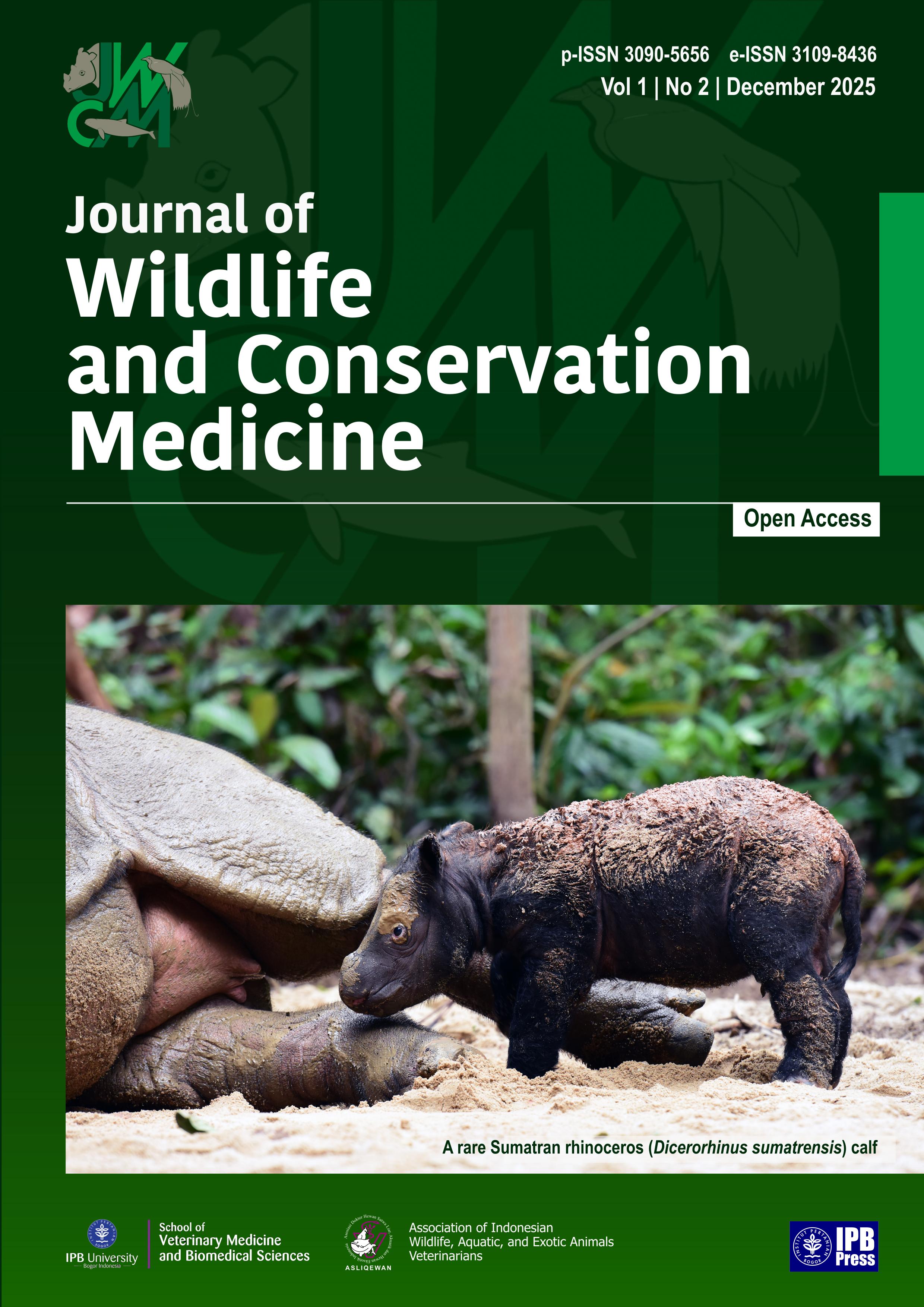
Dystocia management and intensive neonatal care in a Sumatran rhinoceros at the Sumatran Rhino Sanctuary
DOI:
https://doi.org/10.29244/jwcm.1.2.28Keywords:
Sumatran rhinoceros, dystocia, neonatal intensive care, conservation breeding, Sumatran Rhino SanctuaryAbstract
Background The Sumatran rhinoceros (Dicerorhinus sumatrensis) is a Critically Endangered species with an extremely low reproductive rate. Conservation breeding at the Sumatran Rhino Sanctuary (SRS), Lampung, Indonesia, plays a vital role in population recovery, where perinatal complications such as dystocia pose significant risks to both dams and calves.
Objective To report the clinical management of dystocia and subsequent intensive neonatal care in a captive-born Sumatran rhinoceros at the SRS.
Case Description A primiparous female Sumatran rhinoceros delivered a calf on 24 March 2022 following prolonged second-stage labor. The calf was born in posterior presentation with a birth weight of 20 kg, the lowest recorded in captivity. The neonate was weak, immobile, and exhibited signs of perinatal asphyxia with depressed cardiac and respiratory activity.
Treatment Obstetrical traction was performed to assist delivery. Immediate neonatal resuscitation included airway clearance, chest compressions, artificial respiration, and oxygen supplementation. Postnatal management involved intensive physiological monitoring, assisted feeding with maternal colostrum, temporary use of milk replacer, probiotic therapy for digestive disturbances, and training to facilitate direct suckling from the dam.
Conclusion This case demonstrates that timely obstetrical intervention and comprehensive neonatal intensive care can result in successful survival and normal postnatal development in high-risk Sumatran rhinoceros calves.
Downloads