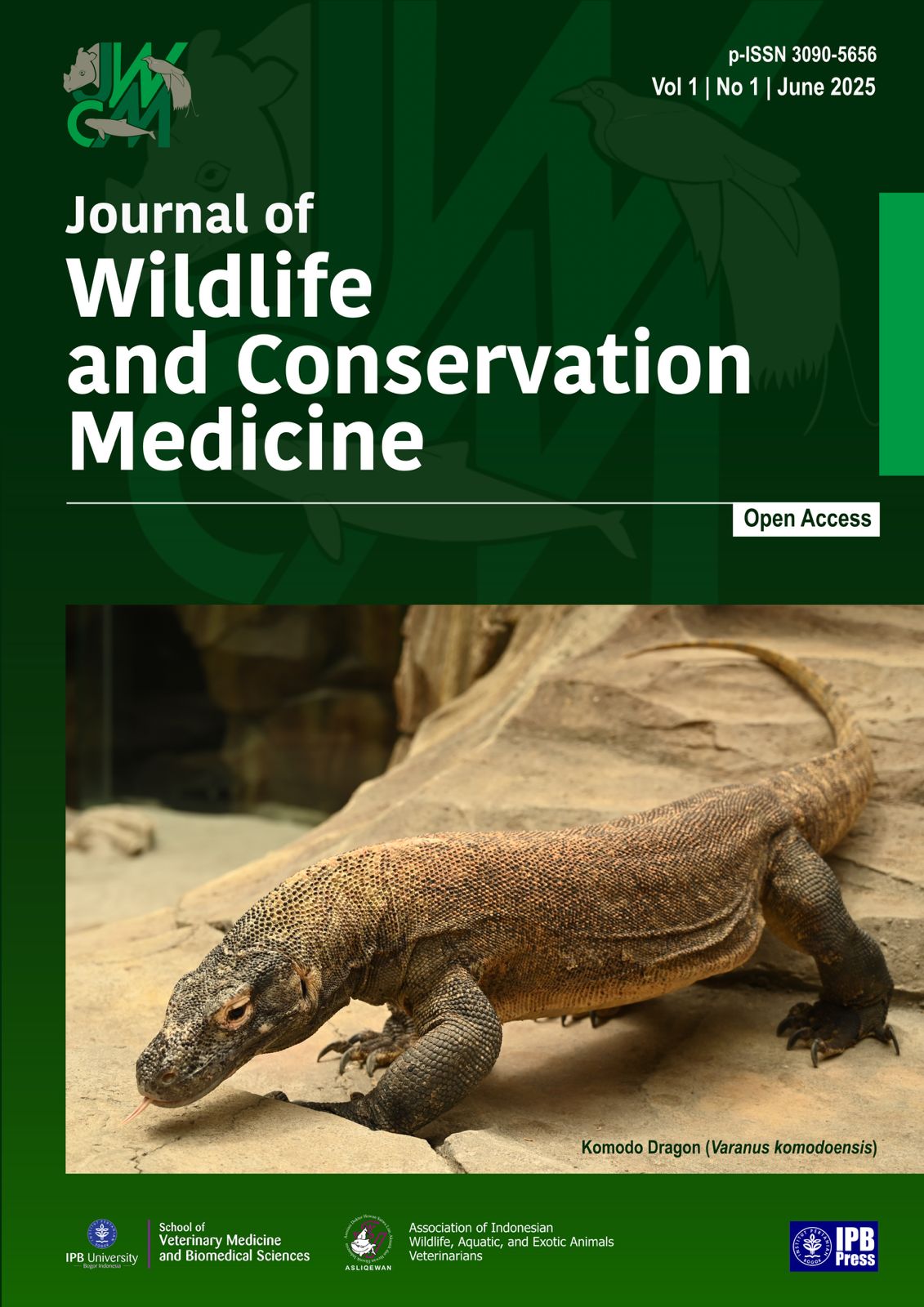
Ultrasound-guided egg aspiration in Komodo dragons (Varanus komodoensis) with chronic egg retention
DOI:
https://doi.org/10.29244/jwcm.1.1.18Keywords:
Egg retention, Komodo dragon, reproductive recovery, ultrasound-guided aspiration, Varanus komodoensisAbstract
Background Komodo dragon (Varanus komodoensis), the world's largest lizard, is endemic to the Indonesian Lesser Sunda Islands. In captivity, egg retention (dystocia) can occur because of suboptimal environmental conditions, poor nutrition, stress, or reproductive abnormalities.
Objective This case study aimed to describe the successful application of ultrasound-guided aspiration for the treatment of chronic egg retention in captive Komodo dragon.
Case A 17-year-old female Komodo dragon was diagnosed as having chronic egg retention. A retained egg was identified in the reproductive tract for seven months without clinical signs or reproductive behavior. Ultrasound imaging revealed an egg measuring 12 cm × 5 cm, positioned longitudinally.
Treatment Ultrasound-guided aspiration was performed to facilitate the expulsion. The dragon was anesthetized with intravenous medetomidine (0.05 mg/kg) and ketamine (5 mg/kg), and anesthesia was maintained using 3 L/min oxygen. The animal remained in left lateral recumbency throughout the procedure. Ultrasound-guided aspiration was performed using MyLab™ Sigma - Esaote with an SP2730 Phased Array Probe and an 18-gauge, 10 cm sterile needle. The aspiration procedure reduced the egg size to 10 cm × 3 cm, and within 10 h, Komodo successfully expelled it. Seven months after treatment, normal reproductive cycling resumed, as indicated by follicular development.
Conclusion This case highlights the efficacy of ultrasound-guided aspiration in managing egg retention in Komodo dragons and ensuring reproductive recovery.
Downloads