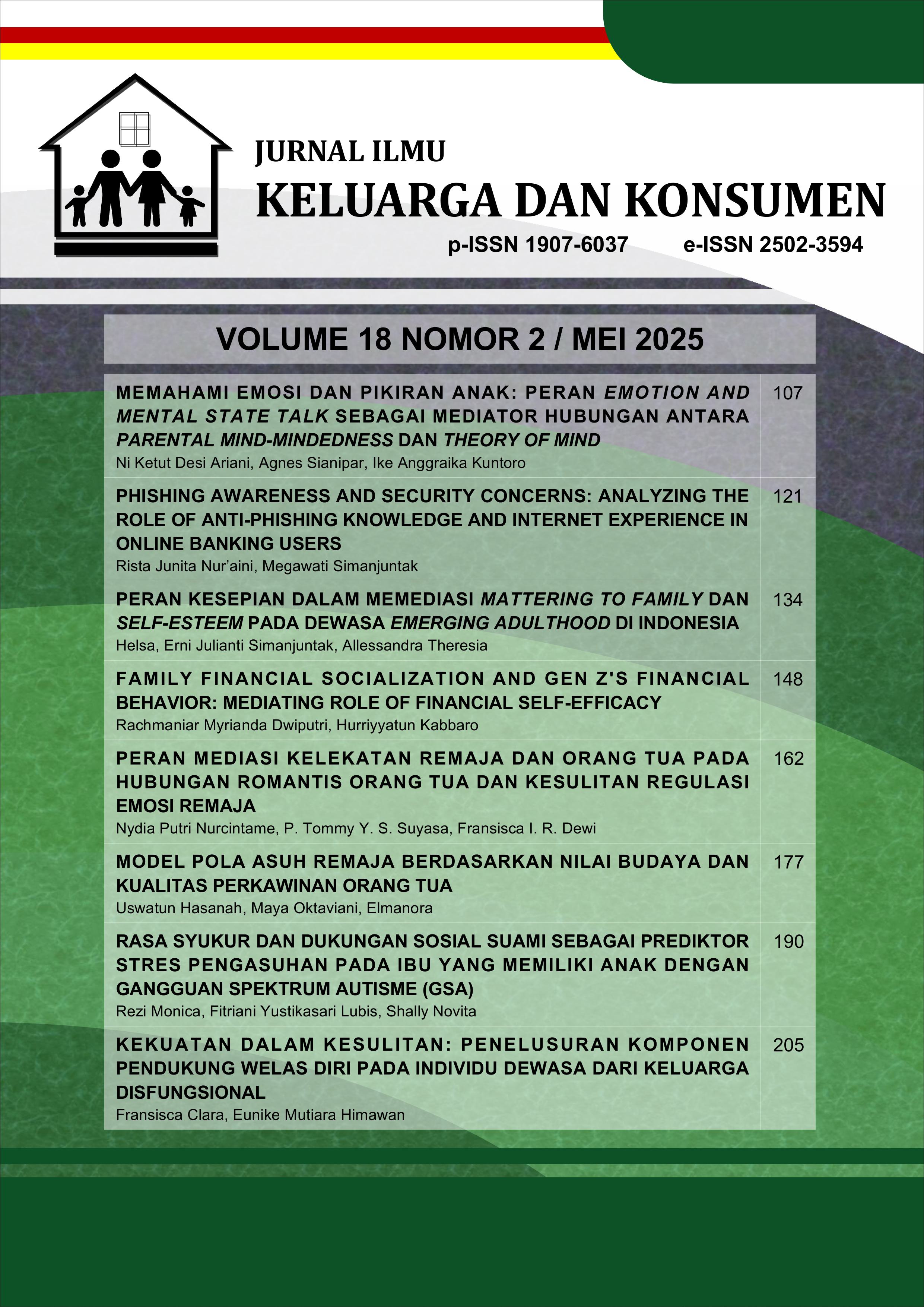
KEKUATAN DALAM KESULITAN: PENELUSURAN KOMPONEN PENDUKUNG WELAS DIRI PADA INDIVIDU DEWASA DARI KELUARGA DISFUNGSIONAL
Strength in Adversity: Exploring The Supporting Components of Self-Compassion in Individuals from Dysfunctional Family
DOI:
https://doi.org/10.24156/jikk.2025.18.2.205Keywords:
keluarga disfungsional, kesehatan mental dewasa, komponen pendukung, penelitian kualitatif, welas diriAbstract
Individu yang tumbuh dalam keluarga disfungsional sering menghadapi berbagai tantangan dalam mengembangkan welas diri akibat pengalaman emosional negatif yang berasal dari kondisi keluarga. Penelitian kualitatif ini bertujuan mengeksplorasi komponen-komponen yang mendukung pengembangan welas diri pada individu dewasa dari keluarga disfungsional. Data diperoleh melalui wawancara semi-terstruktur dan dianalisis dengan teknik analisis tematik untuk mengidentifikasi serta menjelaskan data yang diperoleh. Empat informan dipilih secara purposif berdasarkan hasil pengisian kuesioner Skala Welas Diri (SWD) dengan tingkat welas diri tinggi. Hasil analisis menunjukkan bahwa pengembangan welas diri dipengaruhi oleh komponen internal, seperti pola pikir berkembang dan spiritualitas; komponen eksternal, seperti dukungan sosial dan peristiwa hidup; serta keterlibatan dalam aktivitas yang mendukung kesadaran penuh (mindfulness). Temuan ini menunjukkan adanya pola jawaban yang serupa dalam membangun welas diri pada setiap informan. Penelitian ini diharapkan dapat membantu individu dengan latar belakang keluarga disfungsional untuk mulai mengembangkan welas diri sebagai bagian dari proses pemulihan diri yang lebih baik.
References
Abrorry, L., & Firmansyah, D. A. (2023). Peran mendengarkan musik sebagai self healing dalam penurunan stres pada penyintas Covid-19 di Surabaya. Psycho Aksara Jurnal Psikologi, 1(2), 161–169. https://doi.org/10.28926/pyschoaksara.v1i2.1020
Aini, K., & Wulan, N. (2023). Pengalaman trauma masa kecil dan eksplorasi inner child pada mahasiswa keperawatan Sekolah Tinggi Ilmu Kesehatan Kuningan: studi fenomenologi. Jurnal Ilmu Kesehatan Bhakti Husada: Health Sciences Journal, 14(01), 33–40. https://doi.org/10.34305/jikbh.v14i01.684
Aldyafigama, N. S., Baihiqi, M., & Pujasari, Y. (2018). Self-compassion tunanetra dewasa: Efek koping religius dan rasa syukur. Jurnal Psikologi Insight, 2(1), 78–79. https://ejournal.upi.edu/index.php/insight/article/viewFile/22255/10949
Apsari, D. A., & Utomo, H. B. (2024). Pentingnya self-compassion bagi kesehatan mental individu. Psikodinamika: Jurnal Literasi Psikologi, 4(1), 25–33. https://doi.org/10.36636/psikodinamika.v4i1.4167
Ardhana, A. K., Wijaya, R. P. C., & Manafe, R. P. (2022). “Beta tangguh”: Self-compassion pada penyintas keluarga disfungsional. Journal of Health and Behavioral Science, 5(3), 396–414. https://doi.org/10.35508/jhbs.v5i3.8767
Aulia, C. N., & Rahayu, M. N. M. (2022). Apakah terdapat kaitan antara self-compassion dan life satisfaction pada anak asuh? Psikoborneo: Jurnal Ilmiah Psikologi, 10(4), 732–740. http://doi.org/10.30872/psikoborneo.v10i4.9243
Azra, M. Z. (2022). Hubungan dukungan sosial dengan self-compassion pada mahasiswa di masa pandemi Covid-19. Jurnal Mimbar: Media Intelektual Muslim dan Bimbingan Rohani, 7(2), 186–203. https://doi.org/10.47435/mimbar.v7i1.773
Badan Pusat Statistik Indonesia. (2025, February 14). Statistik demografi dan sosial. Retrieved May 10, 2025, from https://www.bps.go.id/id/statistics-table/3/YVdoU1IwVmlTM2h4YzFoV1psWkViRXhqTlZwRFVUMDkjMyMwMDAw/jumlah-perceraian-menurut-provinsi-dan-faktor-penyebab-perceraian-perkara-.html?year=2024
Baharuddin. (2019). Pengaruh komunikasi orang tua terhadap perilaku anak pada MIN I Lamno Desa Pante Keutapang Aceh Jaya. Jurnal Al-Ijtimaiyyah: Media Kajian Pengembangan Masyarakat Islam, 5(1). http://doi.org/10.22373/al-ijtimaiyyah.v5i1.4207
Bee, H. L. (1996). The journey of adulthood (3rd ed.). Prentice-Hall, Inc.
Braun, V., & Clarke, V. (2006). Using thematic analysis in psychology. Qualitative Research in Psychology, 3(2), 77–101. http://doi.org/10.1191/1478088706qp063oa
Budianto, N., Musawwir, & Zubair, A. G. H. (2024). Gambaran self-compassion pada dewasa awal yang berstatus yatim piatu. Jurnal Psikologi Karakter, 4(2), 387–391. http://doi.org/10.56326/jpk.v4i2.3729
Chairunnisa, A. & Fourianalistyawati, E. (2019). Peran self-compassion dan spiritualitas terhadap depresi pada ibu hamil. Jurnal Psikologi Ulayat, 6(1), 14–36. http://doi.org/10.24854/jpu02019-131
Databoks Indonesia. (2024, February 28). Perselisihan hingga kawin paksa: Ini alasan perceraian di Indonesia pada 2023. Databoks Katadata. https://databoks.katadata.co.id/ekonomi-makro/statistik/8b56b168ba5d81b/perselisihan-hingga-kawin-paksa-ini-alasan-perceraian-di-indonesia-pada-2023
Dweck, C. S. (2006). Mindset: The new psychology of success. Random House.
Fahrunnisa, H., Murad, A., & Hasanuddin, H. (2023). Hubungan empati dan dukungan sosial teman sebaya dengan komunikasi interpersonal pada siswa Madrasah Aliyah Negeri (MAN) Binjai. Tabularasa: Jurnal Ilmiah Magister Psikologi, 5(1), 11–20. https://doi.org/10.31289/tabularasa.v5i1.1595
Fong, M., & Loi, N. M. (2016). The mediating role of self‐compassion in student psychological health. Australian Psychologist, 51(6), 431–441. https://doi.org/10.1111/ap.12185
Haimovitz, K., & Dweck, C. S. (2016). What predicts children’s fixed and growth intelligence mind-sets? Not their parents’ views of intelligence but their parents’ views of failure. Psychological Science, 27(6), 859–869. https://doi.org/10.1177/0956797616639727
Husnullail, M., Risnita, Jailani, M. S., & Asbui. (2024). Teknik pemeriksaan keabsahan data dalam riset ilmiah. Journal Genta Mulia, 15(2), 70–78. https://ejournal.uncm.ac.id/index.php/gm/article/view/1148
Indrawati, E. S., Hyoscyamina, D. E., Qonitatin, N., & Abidin, Z. (2015). Profil keluarga disfungsional pada penyandang masalah sosial di Kota Semarang. Jurnal Psikologi Undip, 13(2), 120–132. https://doi.org/10.14710/jpu.13.2.120-132
Islamy, M. R., Sas, S. F., & Wahidah, F. R. (2023). Peran growth mindset dan self-compassion terhadap subjective well-being pada remaja. Jurnal Ilmiah Penelitian Psikologi: Kajian Empiris & Non-Empiris, 9(2), 1–12. https://doi.org/10.22236/jippuhamka.v9i2.11386
Jannah, M., Hariastuti, R. T., & Nursalim, M. (2023). Negative impact of a dysfunctional family on adolescents: A literature study. Harmoni Sosial: Jurnal Pendidikan IPS, 10(2). https://doi.org/10.21831/hsjpi.v10i2.57527
Kawitri, A. Z., Rahmawati, B. D., Listiyandini, R. A., & Rahmatika, R. (2019). Self-Compassion dan resiliensi pada remaja panti asuhan. Jurnal Psikogenesis, 7(1), 76–83. https://doi.org/10.24854/jps.v7i1.879
Khursheed, M., & Shahnawaz, M. G. (2020). Trauma and post-traumatic growth: Spirituality and self-compassion as mediators among parents who lost their young children in a protracted conflict. Journal of Religion and Health, 59, 2623–2637. https://doi.org/10.1007/s10943-020-00980-2
Komariah, M., Ibrahim, K., Pahria, T., Rahayuwati, L., & Somantri, I. (2023). Effect of mindfulness breathing meditation on depression, anxiety, and stress: A randomized controlled trial among university students. Healthcare, 11(1), Article 26. https://doi.org/10.3390/healthcare11010026
Lau, E. Y. H., Chan, K. K. S., & Lam, C. B. (2018). Social support and adjustment outcomes of first-year university students in Hongkong: Self esteem as a mediator. Journal of College Student Development, 59(1), 129–134. https://doi.org/10.1353/csd.2018.0011
Manna, N. S., Doriza, S., & Oktaviani, M. (2021). Cerai Gugat: Telaah penyebab perceraian pada keluarga di Indonesia. Jurnal Al-Azhar Indonesia Seri Humaniora, 6(1), 11–21. https://doi.org/10.36722/SH.V6I1.443
Matondang, F. S. P., Astuti, N. H., Rokan, N. H., Dewi, A. P., & Andinata, M. P. (2024). Peran dukungan sosial terhadap trauma broken home pada anak. Jurnal Pendidikan Tambusai, 8(2), 26622–26629. https://jptam.org/index.php/jptam/article/view/16517
Mirwani, S., Jannah, L. E., Lestari, T. P., Sholeh, M., Afifah, A., Sabilla, M., Fajriah, A., & Zakiyah, B. (2022). Studi kasus: Dinamika psikologis remaja dalam ruang lingkup keluarga disfungsional. Happiness, Journal of Psychology and Islamic Science, 2(2), 135–144. https://doi.org/10.30762/happiness.v2i2.346
Mohammadian, Y., Asl, I. M., Khanjani, S., & Mahki, B. (2019). The mediating role of self-compassion in the relationship between emotional dyslexia and borderline personality symptoms with non-suicidal self-injurious behavior in soldiers. Journal of Military Medicine, 22(12), 1250–1242. https://doi.org/10.30491/JMM.22.12.1242
Moisă, V. B. (2022). Functional vs dysfunctional in the family system. New Trends in Psychology, 4(2). https://dj.univ-danubius.ro/index.php/NTP/article/view/2101
Mutmainna, N., & Murdiana, S. (2024). Meningkatkan kemampuan memaafkan pada korban perundungan: Efektivitas pelatihan self-compassion dengan teknik ho'oponopono. Psikostudia Jurnal Psikologi, 13(4), 509–515. https://doi.org/10.30872/psikostudia.v13i4.15150
Nafisah, A., Hendriyani, R., & Martiarini, N. (2018). Hubungan antara dukungan keluarga dengan self-compassion remaja di panti asuhan. Intuisi: Jurnal Psikologi Ilmiah, 10(2), 160–166. https://doi.org/10.15294/intuisi.v10i2.17494
Neff, K. D. (2003). Development and validation of a scale to measure self-compassion. Self and Identity, 2, 223–250. https://doi.org/10.1080/15298860309027
Neff, K., & Germer, C. (2017). Self-compassion and psychological well-being. In E. M. Seppälä, E. Simon-Thomas, S. L. Brown, M. C. Worline, C. D. Cameron, & J. R. Doty (Eds.), The Oxford handbook of compassion science (pp. 371–385). Oxford University Press.
Neff, K. D., & McGehee, P. (2010). Self-compassion and psychological resilience among adolescents and young adults. Self and Identity, 9(3), 225–240. https://doi.org/10.1080/15298860902979307
Neff, K. D., & Pommier, E. (2013). The relationship between self-compassion and other-focused concern among college undergraduates, community adults, and practicing meditators. Self and Identity, 12(2), 160–176. https://doi.org/10.1080/15298868.2011.649546
Neff, K. D., & Vonk, R. (2009). Self‐ compassion versus global self‐ esteem: Two different ways of relating to oneself. Journal of Personality, 77(1), 23–50. https://doi.org/10.1111/j.1467-6494.2008.00537.x
Priasmoro, D. P. (2017). Pengaruh kemampuan personal terhadap resiliensi (Studi pada orang tua yang memiliki anak down syndrome). Jurnal Kesehatan Hesti Wira Sakti, 5(1), 7–11. https://doi.org/10.55606/jikg.v2i1.2108
Rabon, J. K., Sirois, F. M., & Hirsch, J. K. (2017). Self-compassion and suicidal behavior in college students: Serial indirect effects via depression and wellness behaviors. Journal of American College Health, 66(2), 114–122. https://doi.org/10.1080/07448481.2017.1382498
Rahayu, T. A., & Ediati, A. (2022). Self-compassion dan resiliensi pada mahasiswa di era adaptasi kehidupan baru. Jurnal Empati, 10(5), 362–367. https://doi.org/10.14710/empati.2021.32939
Rahmawati, A. M., Jauhar, M., & Suwandi, E, W. (2021). Intervensi mindfulness meningkatkan kesejahteraan psikologis di krisis pandemi COVID-19: Jurnal Perawat Indonesia, 6(2), 30–42. http://doi.org/10.26751/ijp.v6i2.1314
Safitri, N., & Munawaroh, E. (2022). Effect of self compassion and social support on youth resilience orphanage in gunungpati district pendahuluan. Jurnal Bimbingan dan Konseling Indonesia, 7(2). https://ejournal2.undiksha.ac.id/index.php/jurnal_bk/article/download/1449/809/
Sarafino, E. P. (2002). Health psychology: Biopsychosocial interactions. John Wiley & Sons.
Sari, A., Herlina, & Elita, V. (2022). Hubungan pola komunikasi keluarga terhadap tingkat kesepian (loneliness) pada lansia. Caring: Jurnal Keperawatan, 11(1), 7–15. https://doi.org/10.29238/caring.v11i1.1238
Sari, M. A. A., & Santosa, R. P. (2025). Pengaruh self-compassion terhadap suicidal ideation pada dewasa awal yang mengalami perceraian orang tua. Character Jurnal Penelitian Psikologi, 12(1), 314–322. https://doi.org/10.26740/cjpp.v12n01.p314-322
Shonin, E., & Van Gordon, W. (2016). The mechanisms of mindfulness in the treatment of mental illness and addiction. International Journal of Mental Health and Addiction, 14(5), 844–84. https://doi.org/10.1007/s11469-016-9653-7
Situmorang, Z. R. D., & Latifah, M. (2014). Pengaruh dukungan sosial, konsep diri, dan strategi pengaturan diri dalam belajar terhadap prestasi akademik. Jurnal Ilmu Keluarga dan Konsumen, 7(3), 154–163. https://doi.org/10.24156/jikk.2014.7.3.154
Sugianto, D., Suwartono, C., & Sutanto, S. H. (2020). Reliabilitas dan validitas Self-Compassion Scale versi Bahasa Indonesia. Jurnal Psikologi Ulayat, 7(2), 177–191. http://doi.org/10.24854/jpu02020-337
Sukarno, B. & Fatimah, N. S. (2021). Pentingnya komunikasi interpersonal dalam membangun keluarga ideal. Intelektiva: Jurnal Ekonomi, Sosial & Humaniora, 2(8), 80–86. https://www.jurnalintelektiva.com/index.php/jurnal/article/view/517
Underwood, L. G., & Teresi, J. A. (2002). The daily spiritual experience scale: Development, theoretical description, reliability, exploratory factor analysis, and preliminary construct validity using health-related data. Annals of Behavioral Medicine, 24(1), 22–33. https://doi.org/10.1207/S15324796ABM2401_04
Widiyarini, A., Rifqoh, F., Nismara, N. A., & Nurmala, L. (2024). Analisa dampak novel dewasa terhadap daya pikir remaja di MTS Sunan Pandanaran. Arus Jurnal Sosial dan Humaniora, 4(2), 486–493. https://doi.org/10.57250/ajsh.v4i2.454
Widyasari, F., Dahlan, T. H., & Baihaqi, M. (2024). Asosiasi faktor sosiodemografis, penerimaan orang tua, dan welas diri dengan kesejahteraan subjektif emerging adults: Sociodemographic factors, parental acceptance, and self-compassion associated with emerging adults’ subjective well-being. Jurnal Ilmu Keluarga dan Konsumen, 17(1), 77–89. https://doi.org/10.24156/jikk.2024.17.1.77
Wilson, J. M., Weiss, A., & Shook, N. J. (2020). Mindfulness, self-compassion, and savoring: Factors that explain the relation between perceived social support and well-being. Personality and Individual Differences, 152, Article 109568. https://doi.org/10.1016/j.paid.2019.109568
Yarnell, L. M., Stafford, R. E., Neff, K. D., Reilly, E. D., Knox, M. C., & Mullarkey, M. (2015). Meta-analysis of gender differences in self-compassion. Self and Identity, 14(5), 499–520. https://doi.org/10.1080/15298868.2015.1029966
Yusanto, Y. (2019). Ragam pendekatan penelitian kualitatif. Journal of Scientific Communication, 1(1), 1–13. https://doi.org/10.31506/jsc.v1i1.7764
Zeller, M., Yuval, K., Nitzan-Assayag, Y., & Bernstein, A. (2015). Self-compassion in recovery following potentially traumatic stress: Longitudinal study of at-risk youth. Journal of Abnormal Child Psychology, 43, 645–653. https://doi.org/10.1007/s10802-014-9937-y
Downloads
Published
Issue
Section
License
Copyright (c) 2025 Jurnal Ilmu Keluarga dan Konsumen

This work is licensed under a Creative Commons Attribution-ShareAlike 4.0 International License.














 This work is licensed under a