Comparing halal certification pathways in Japan: Muslim Professional Japan Association (MPJA), Halal Japan Corporation (HJC), and Halal International Trust Organization (HITO)
DOI:
https://doi.org/10.29244/hass.3.2.21-26Keywords:
Diaspora-based certification, Global halal ecosystem, Halal lifestyle economy, Non-state halal governance, SME-oriented halal pathwaysAbstract
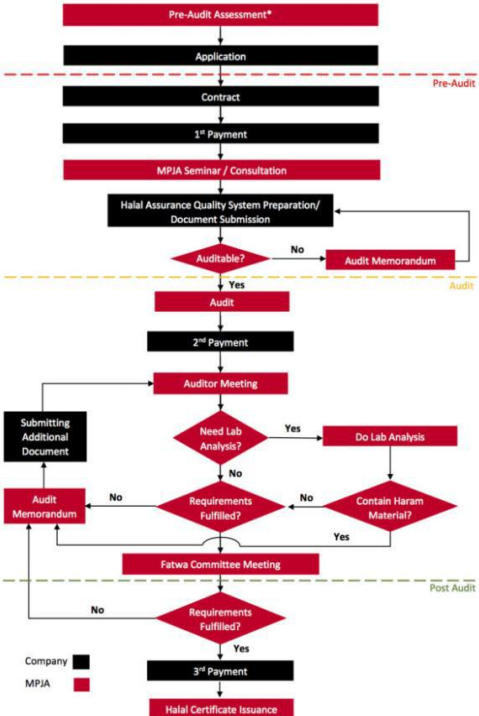
Japan’s expanding halal lifestyle market has grown alongside increasing numbers of Indonesian migrants and tourists, though governance remains fragmented in the absence of a national halal standard and dependence on multiple non-state certifiers. This study offers a document-based comparative analysis of three key halal certification bodies in Japan, namely the Muslim Professional Japan Association (MPJA), Halal Japan Corporation (HJC), and the community-based Halal International Trust Organization (HITO), to understand how the application mechanisms of each institution shape everyday access to halal products and services. Drawing on market intelligence reports, institutional documents, and official websites, the study maps differences in application flows, documentary requirements, cost profiles, and bases of shariah authority across the three outlined institutions. The results obtained from the analysis showed that MPJA functions as an independent certifier with transnational recognition, connecting Japanese firms to Southeast Asian halal food and tourism markets. HJC was observed to operate as a corporate intermediary that structures graded labels from JAKIM halal certification to Muslim-friendly schemes. Meanwhile, HITO was found to embed halal authority within Indonesian diaspora networks through an SME-oriented, digitally mediated pathway that lowers informational and financial barriers. The present study argues that these divergent certification logics co-produce an uneven, potentially complementary non-state halal ecosystem, where export-oriented firms and community-based SMEs access distinct routes to religious legitimacy and integration into Japan’s halal lifestyle economy. It concludes by outlining implications for standard harmonization, mutual recognition with Indonesian authorities, and policy support for community-based certifiers as part of the broader development of the global halal ecosystem.
References
Adidaya YA. Halal in Japan: History, issues and problems, the effect of the "halal boom" phenomenon on Japanese society and industry. Master's thesis. University of Oslo. 2016.
Gandhi P, Hidayat MM, Hapsari KF. Establishment of a community-based halal certification body: A case study of Halal International Trust Organization (HITO) in Japan. Halal Studies and Society. 2025a;2(1):25-28. https://doi.org/10.29244/hass.2.1.25-28
Gandhi P, Nasir M, Triyanto T. Digital halal ecosystem development: Applications and institutions in Japan, 2010-2025. Halal Studies and Society. 2025b;2(3):26-29. https://doi.org/10.29244/hass.2.3.26-29
Gandhi P, Triyanto T. Islamic finance integration in the halal wagyu global value chain: Sharia-compliant instruments, governance, and policy implications. Current Advanced Research on Sharia Finance and Economic Worldwide. 2026;5(1):36-52.
Hasnan N, Kohda Y. Halal supply chain: Challenges of halal certification in Japan. European Proceedings of Social and Behavioural Sciences. 2023:764-778. https://doi.org/10.15405/epsbs.2023.11.02.60
ITPC Osaka. Market intelligent: Langkah membuka bisnis restoran di Jepang. Indonesian Trade Promotion Center, Osaka. 2020;1:1-60.
Kamila C. Peran sertifikasi halal dalam memenuhi kebutuhan makanan: Studi kasus Muslim Indonesia di Jepang. Skripsi. Universitas Darma Persada. 2024.
Marzuki WW, Triyono T. Pengaruh religiusitas, sertifikasi halal, dan bahan produk terhadap keputusan pembelian. Value Added: Majalah Ekonomi dan Bisnis. 2021;17(2). https://doi.org/10.26714/vameb.v17i2.7885
Mulyadi B. Eksistensi industri halal food di Jepang. Kiryoku. 2023;7(1):107-116.
Nabila F, Dompak T, Khairina E. Perbandingan implementasi kebijakan pariwisata halal di Indonesia dan Jepang. Prosiding Seminar Nasional Ilmu Sosial dan Teknologi (SNISTEK). 2024;6:41-48.
Pangestu AD, Attas SG. Fenomena restoran Jepang halal: Perspektif agama dan ekonomi. Community Development Journal: Jurnal Pengabdian Masyarakat. 2022;3(3):1892-1899. https://doi.org/10.31004/cdj.v3i3.9339
Pratiwi R. Alasan pemerintah Jepang memberlakukan kebijakan sertifikasi makanan halal (2013-2019). Skripsi. Universitas Muhammadiyah Yogyakarta. 2019.
Ramadhani IJ. Pengaruh sertifikasi halal, religiusitas, kesan harga, kualitas pelayanan dan gaya hidup terhadap keputusan pembelian konsumen Muslim (studi kasus pada restoran Jepang Yoshinoya di Semarang). Skripsi. Fakultas Ekonomika dan Bisnis, Universitas Diponegoro. 2024.
Yamaguchi HK. The potential and challenge of halal foods in Japan. Journal of Asian Rural Studies. 2019;3(1):1-16. https://doi.org/10.20956/jars.v3i1.1712
Yusof SM, Shutto N. The development of halal food market in Japan: An exploratory study. Procedia - Social and Behavioral Sciences. 2014;121:253-261. https://doi.org/10.1016/j.sbspro.2014.01.1126
Downloads
Published
Issue
Section
License
Copyright (c) 2026 Prima Gandhi, Achmad Prawira Singawinata, Triyanto Triyanto

This work is licensed under a Creative Commons Attribution-ShareAlike 4.0 International License.
How to Cite