
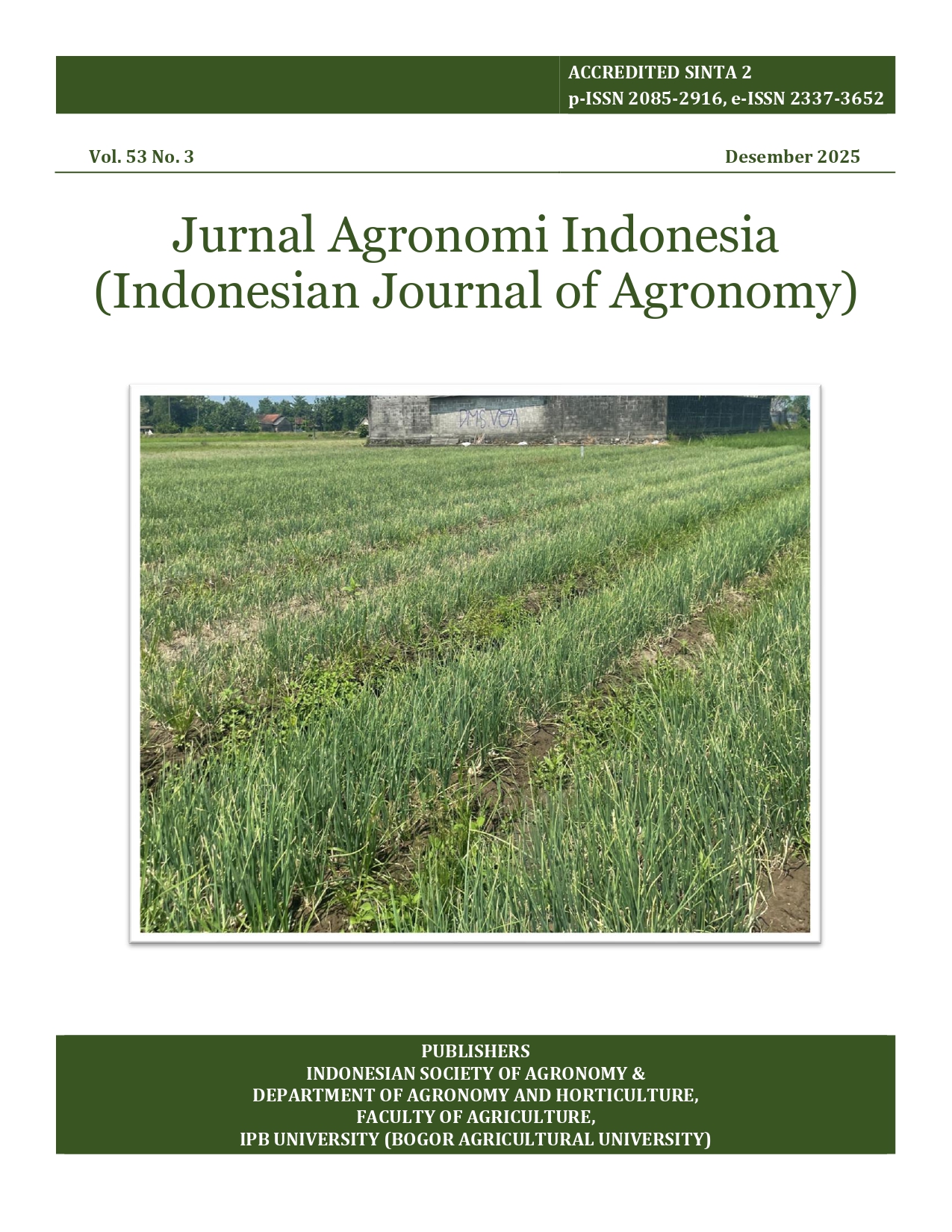
Growth, yield, and nitrogen use efficiency of shallots with plant growth-promoting rhizobacteria and cattle manure
Article Sidebar
Main Article Content
Abstract
Continuous and excessive application of inorganic-N fertilizer leads to accumulation of chemical residues in soils, as plants typically utilize only about 50% of the applied nitrogen, which can further lead to environmental pollution. Resolve the low nitrogen uptake and fertilizer use efficiency, organic amendments, and beneficial microorganisms provide viable alternatives. The objective of this research was to evaluate the effects of different PGPR concentrations and cattle manure doses on nitrogen uptake dynamics and nitrogen use efficiency parameters (NUpE, NUtE, and NUE), as well as shallot growth and yield, to determine the most efficient treatment that supports nutrient efficiency and sustainable agronomic practices. The experiment used a constant nitrogen inorganic fertilizer of 100 kg ha-1. A factorial randomized block design was employed, consisting of four PGPR concentrations: 0, 10, 20, and 30 mL L-1. The second factor was cattle manure dosage consisted of 0, 10, and 30 ton ha-1. Observation variables included plant growth, yield components, nitrogen uptake dynamics, nitrogen uptake efficiency (NUpE), nitrogen utilization efficiency (NUtE), and nitrogen use efficiency (NUE). The results indicated significant interactions between PGPR and cattle manure in the number of tillers at 8 weeks after planting (WAP), crop growth rate (CGR) at 6–8 WAP, chlorophyll index, fresh and dry weight, and bulb weight. The treatment combining 30 mL L-1 PGPR with 30 t ha-1 cattle manure significantly increased average bulb weight by 136.6% compared to without PGPR + without cattle manure. This treatment also achieved the highest nitrogen uptake across all growth stages, peaking at 1 kg ha-1 per day at 56 DAP and recorded the highest NUpE from 41.90% to 64.50%, and reduced soil nitrogen losses by 22.6%. Consistent improvements in NUpE, NUtE, and NUE indicate that this integration enhances nitrogen translocation into shallot bulbs, leading to more efficient nutrient use, supporting higher productivity, and sustainable nutrient management.
Keywords: Allium ascalonicum; NUE; NUpE; NUtE; organic fertilizer
Article Details
Section

This work is licensed under a Creative Commons Attribution 4.0 International License.