Determinants of household cigarette and alcohol consumption in Indonesia: An islamic economics perspective using Had Kifayah framework with interpretable machine learning and econometric approaches
DOI:
https://doi.org/10.29244/hass.3.1.14-17Keywords:
Double-Hurdle model, Had Kifayah, Interpretable machine learning, Islamic economics, MustahikAbstract
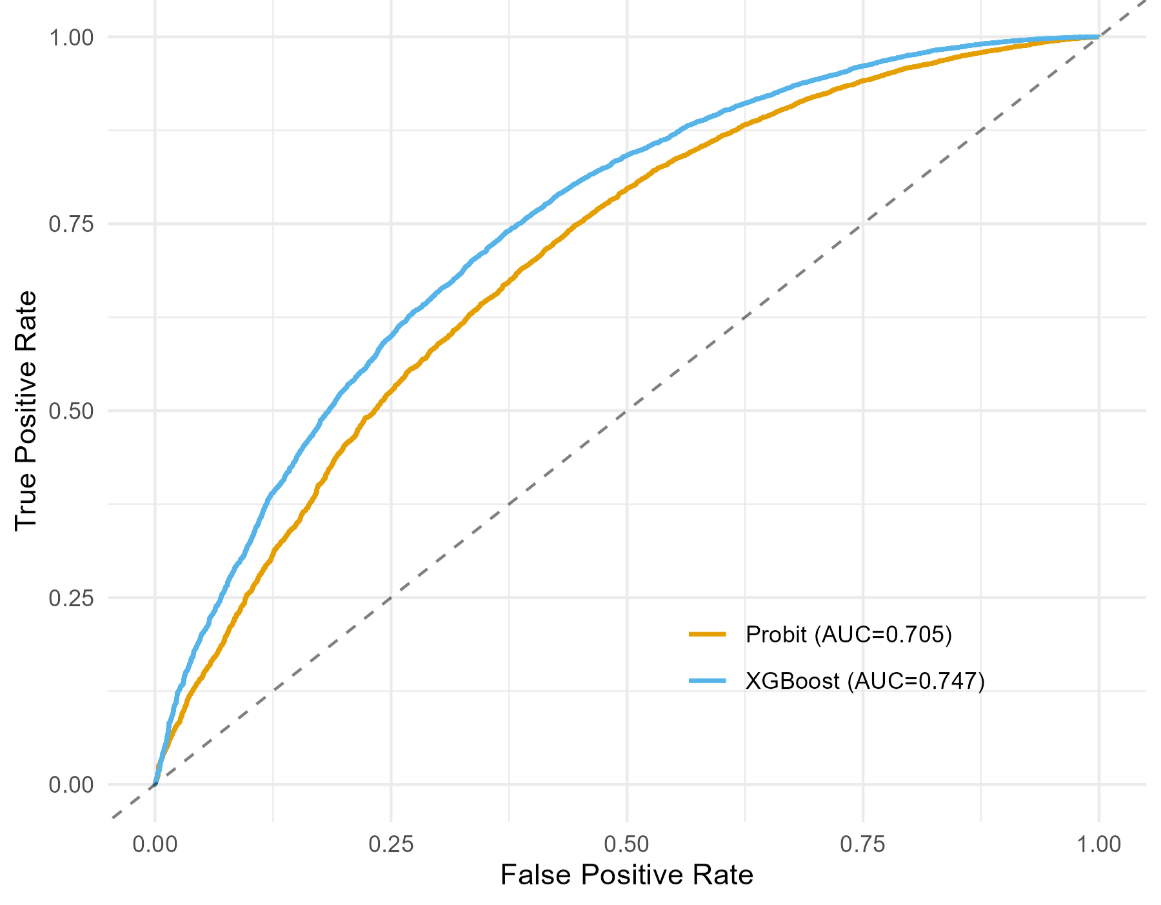
The present study is focused on analyzing the determinants of household cigarette and alcohol consumption in Indonesia through an Islamic economics perspective using the Had Kifayah (minimum sufficiency threshold) framework. The incorporation of nationally representative household microdata from SUSENAS March 2024 enabled the classification of households into Mustahik (zakat-eligible) and Muzaki (zakat-paying) groups based on provincial Islamic sufficiency thresholds. In addition, a Double-Hurdle framework alongside interpretable machine learning (XGBoost with SHAP values) was also adopted. The results showed near-universal smoking prevalence, with Mustahik households allocating a larger budget share to cigarettes despite respective lower absolute expenditure. The income elasticities for cigarettes were higher among Mustahik households. Meanwhile, the alcohol income elasticity exceeded unity, which resulted in the classification of alcohol as a luxury good. The XGBoost framework outperformed probit specifications. Furthermore, SHAP analysis identified urbanization, education, and food expenditure share as the leading predictors of participation. These results collectively supported progressive excise taxation combined with targeted zakat distribution mechanisms consistent with maqasid al-shariah.
References
Adioetomo SM, Djutaharta T, Hendratno H. Cigarette consumption, taxation, and household income: Indonesia case study. Economics of Tobacco Control Paper No. 26. Washington, DC: World Bank; 2005:1-47. https://doi.org/10.1596/13737
Ahsan A, Wiyono NH, Setyonaluri D, Dennison J. Cigarette expenditure and its crowding-out effect on consumption among Indonesian households. Jurnal Ekonomi Kesehatan Indonesia. 2022;7(1):45-62.
Alkire S, Foster J. Counting and multidimensional poverty measurement. Journal of Public Economics. 2011;95(7-8):476-487. https://doi.org/10.1016/j.jpubeco.2010.11.006
Al-Qardawi Y. Fiqh al-zakah: A comparative study. Jeddah: Scientific Publishing Centre, King Abdulaziz University; 2000.
Auda J. Maqasid al-shariah as philosophy of Islamic law: A systems approach. London: IIIT; 2008. https://doi.org/10.2307/j.ctvkc67tg
Azman AR, Salleh H, Sayed M. Penentuan Had Kifayah zakat berdasarkan maqasid syariah. Jurnal Sains Insani. 2017;2(1):1-9. https://doi.org/10.33102/sainsinsani.vol2no1.50
BAZNAS. Standar Had Kifayah Nasional: Pedoman penetapan batas kecukupan Mustahik. Jakarta: BAZNAS; 2024.
Becker GS, Murphy KM. A theory of rational addiction. Journal of Political Economy. 1988;96(4):675-700. https://doi.org/10.1086/261558
Beik IS, Pratama C. Zakat impact on poverty and welfare of mustahik: a CIBEST model approach. Journal of Islamic Monetary Economics and Finance. 2016;1(2):141-160. https://doi.org/10.21098/jimf.v1i2.524
Block S, Webb P. Up in smoke: tobacco use, expenditure on food, and child malnutrition in developing countries. Economic Development and Cultural Change. 2009;58(1):1-23. https://doi.org/10.1086/605207
BPS-Statistics Indonesia. Survei Sosial Ekonomi Nasional (SUSENAS) Maret 2024. Jakarta: BPS; 2024.
Chaloupka FJ, Powell LM, Warner KE. The use of excise taxes to reduce tobacco, alcohol, and sugary beverage consumption. Annual Review of Public Health. 2019;40:187-201. https://doi.org/10.1146/annurev-publhealth-040218-043816
Chapra MU. The future of economics: An Islamic perspective. Leicester: Islamic Foundation; 2000.
Chen T, Guestrin C. XGBoost: a scalable tree boosting system. In: Proceedings of the 22nd ACM SIGKDD. 2016:785-794. https://doi.org/10.1145/2939672.2939785
Cragg JG. Some statistical models for limited dependent variables with application to the demand for durable goods. Econometrica. 1971;39(5):829-844. https://doi.org/10.2307/1909582
Deaton A. The analysis of household surveys: A microeconometric approach to development policy. Baltimore: Johns Hopkins University Press; 1997. https://doi.org/10.1596/0-8018-5254-4
Gruber J, Köszegi B. Is addiction "rational"? Theory and evidence. Quarterly Journal of Economics. 2001;116(4):1261-1303. https://doi.org/10.1162/003355301753265570
Jones AM. A double-hurdle model of cigarette consumption. Journal of Applied Econometrics. 1989;4(1):23-39. https://doi.org/10.1002/jae.3950040103
Kahf M. Islamic economics: The challenges ahead. Leicester: Islamic Foundation; 2014.
Kamali MH. Maqasid al-Shariah made simple. IIIT Occasional Papers Series. 2008;(13). https://doi.org/10.2307/j.ctvkc67vz
Liu Y, Rao K, Hu TW, Sun Q, Mao Z. Cigarette smoking and poverty in China. Social Science & Medicine. 2006;63(11):2784-2790. https://doi.org/10.1016/j.socscimed.2006.06.019
Lundberg SM, Lee SI. A unified approach to interpreting model predictions. In: Advances in Neural Information Processing Systems. 2017:4765-4774.
Mullainathan S, Spiess J. Machine learning: an applied econometric approach. Journal of Economic Perspectives. 2017;31(2):87-106. https://doi.org/10.1257/jep.31.2.87
Prasetyo AD, Setyawan D. Tobacco excise and its impact on illicit cigarette consumption in Indonesia. Tobacco Control. 2022;31(s1)-s51.
PUSKAS BAZNAS. Kajian Had Kifayah. Jakarta: Pusat Kajian Strategis BAZNAS; 2018.
Ross H, Chaloupka FJ. The effect of cigarette prices on youth smoking. Health Economics. 2003;12(3):217-230. https://doi.org/10.1002/hec.709
Semba RD, Kalm LM, De Pee S, Ricks MO, Sari M, Bloem MW. Paternal smoking is associated with increased risk of child malnutrition among poor urban families in Indonesia. Public Health Nutrition. 2007;10(1):7-15. https://doi.org/10.1017/S136898000722292X
Shapley LS. A value for n-person games. Contributions to the Theory of Games. 1953;2:307-317. https://doi.org/10.1515/9781400881970-018
Wahab NA, Rahman ARA. Zakat distribution efficiency: a review and way forward. Journal of Islamic Accounting and Business Research. 2023;14(4):612-632.
World Health Organization. WHO report on the global tobacco epidemic 2023: Protect people from tobacco smoke. Geneva: WHO; 2023.
Downloads
Published
Issue
Section
License
Copyright (c) 2026 Deri Siswara, Nafisa Berliana Indah Pratiwi

This work is licensed under a Creative Commons Attribution-ShareAlike 4.0 International License.
How to Cite