Regulations and academic culture of halal dress in Islamic Coastal Java University from the Imam Madhhab perspective
DOI:
https://doi.org/10.29244/hass.2.2.27-30Keywords:
Female students, Halal dress, Islamic academic culture, Madhhab Imams, UNISSULAAbstract
This study aims to examine how university regulations and academic culture shape halal dress awareness among female students as an expression of Islamic values within the academic sphere. Halal dressing is conceptualized not merely as adherence to sharia but also a symbol of Islamic identity and academic ethics in Islamic higher education institutions. In this study, a qualitative method was used with a phenomenological and descriptive-analytical approach. Data were obtained through interviews with female students, lecturers, and university administrators, as well as direct observations of dressing culture, and a review of regulatory documents concerning Islamic dress codes. Subsequently, data analysis was conducted through reduction, thematic categorization, and interpretation of the fiqh values of the four major Sunni schools of thought, namely Hanafi, Maliki, Shafi‘i, and Hanbali, to identify the meeting point between Islamic legal norms and modern academic culture. The results showed that halal dress regulations at UIN Walisongo and UNISSULA were inclusive, educational, and morally nurturing rather than coercive. According to Imam al-Shafi‘i and Hanbali, complete covering of the aurat represents honor and obedience to sharia, while the Hanafi and Maliki schools provide room for adaptation to local socio-cultural contexts. The academic culture at both universities reflects a synthesis of piety, professionalism, and freedom of expression within the framework of Islamic ethics. The dress code regulations are normative-educational in nature, integrating sharia-based values with academic ethics to foster an awareness of dressing that is not only halal in a legal sense but also thayyib in a moral sense. The success of the halal dress culture in Islamic coastal Java university is determined by the synergy between regulations, spiritual awareness, cross-madhhab fiqh understanding, and the internalization of maq ¯as. id al-syar¯ı‘ah in academic life. In conclusion, this study contributes to developing a model of Islamic academic culture that is moderate, contextual, and characteristic of Islamic coastal Java university.
1. Introduction
The phenomenon of halal dress in Islamic higher education institutions along the northern coast of Java reflects the ongoing socio-religious dynamics shaped by modernity and globalization. In Semarang, two major Islamic universities, UIN Walisongo and Universitas Islam Sultan Agung (UNISSULA), provide illustrative contexts in which female students dressing practices serve as a reflection of the internalization of Islamic values within academic culture. UIN Walisongo is grounded in an inclusive Islamic tradition based on pesantren (Islamic boarding schools) and Sufi orders (Walisongo, 2025). Meanwhile, UNISSULA emphasizes the spirit of Islam rahmatan lil 'alamin (Islam as a mercy for all creation) with a focus on professionalism and social ethics.
Halal dressing is not only conceptualized as obedience to sharia butalso an expression of morality and Islamic identity(A. & N, 2024).In Islamic jurisprudence, Imams al-Shafi‘i and Hanbali emphasize coveringthe entire body except for the face and hands as a form of honor andobedience to sharia. Conversely, Imams Hanafi and Maliki allow room foradaptation to social and cultural contexts, provided the principles of modestyare not violated. This diversity of perspectives reflects the flexibility ofIslam in responding to social changes, including within modern academicenvironments (Tren dan Perkembangan Fashion Syariah pada Era Modern di Kota Bandung", 2024).
In Islamic university, dress regulations often encounter a dialecticbetween normative idealism and the social realities of students livingin the digital and global era.The regulations at UIN Walisongo and UNISSULA emphasize modesty, ethics, and self-respect, whileprioritizing an educational rather than a coercive approach. These policiesdemonstrate that Islamic academic culture constitutes more than theregulations of clothing styles, substantively promoting the spiritual and moralawareness of female students (R. & I, 2024).
Previous studies on Islamic dress in higher education have largely emphasized normative juridical debates or individual religious compliance, while offering limited attention to the interaction between institutional regulations, academic culture, and cross-madhhab fiqh interpretations. Empirical studies that conceptualize halal dress as a lived academic practice shaped by educational policies, moral awareness, and socio-cultural contexts, particularly within Islamic university in coastal Java, remainscarce, leaving the ethical and pedagogical functions of dress regulations under-theorized beyond coercive frameworks. Therefore, this study aims to analyze how university regulations and academic culture collaboratively shape halal dress awareness among female students at UIN Walisongo and UNISSULA through the perspectives of the four Sunni madhhabs by examining lived experiences, regulatory structures, and the internalization of maq ās . id al-sharī'ah values, to formulate a contextual and moderate model of Islamic academic culture that integrates sharia principles with contemporary academic ethics. The novelty is grounded in the integration of cross-madhhab fiqh with the analysis of Islamic academic culture.
Previous studies have tended to focus more on the normative aspects of dress law, while this study views halal dressing as a social and spiritual phenomenon that shapes the habitus of Muslim female students in coastal university environments. By comparatively examining UIN Walisongo and UNISSULA, the results show a synthesis between personal piety, intellectual openness, and social awareness within the framework of maq ās . id al-syarī'ah-particularly the preservation of honor (h . ifz . al-'ird . ') and religion (h.ifz.al-d ̄ın). Conceptually, this study offers a model of Islamic academic culture that is moderate, contextual, and civilized, linking classical fiqh texts, university regulations, and contemporary social realities. Therefore, halal dressing in Islamic coastal Java university is not merely a symbol of sharia compliance but also a reflection of academic ethics and modern Muslim female spirituality.
2. Methods
This study employed a qualitative approach using a phenomenologicaldesign (Z. et al., 2021). The approach was selected because the focuswas to understand the subjective meanings experienced by female studentsand the academic community in interpreting and implementing halal dressregulations within Islamic university environments. The phenomenologicalapproach allows the exploration of the informants experiences in depth,to understand how sharia values, academic culture, and madhhab-basedfiqh interpretations shape dressing behavior(E. et al., 2020).Thisqualitative study was also descriptive-analytical in nature, examining socialphenomena and analyzing based on the theories and jurisprudential viewsof the four Imams of the madhhab, namely Hanafi, Maliki, Shafi‘i, and Hanbali(Unknown Author, 2008).
The purpose was not to generalize but to uncover the meanings,patterns, and values that exist within the social context of Islamicuniversity along the northern coast of Java. The study was conductedat two Islamic higher education institutions in the coastal region ofCentral Java, namely Universitas Islam Negeri (UIN) Walisongo Semarang,characterized by an inclusive, moderate, and pesantren-based traditionwith the spirit of Islam wasathiyyah, as well as Universitas Islam SultanAgung (UNISSULA) Semarang, which emphasizes modern professionalismthrough the integration of Islam rahmatan lil ‘alamin values within itsacademic culture (Unissula, 2024). These two universities were selectedbecause both have explicit Islamic dress regulations applied within differentcultural and academic styles, demonstrating an interesting representationof the dynamics of halal dress in the coastal communities of Java.
The data sources for this study consist of two types. Primary data wereobtained directly through interviews, observations, and field documentationof 32 key informants, comprising 14 active female students representingvarious faculties, 6 lecturers teaching Islamic studies and university ethicscourses, 6 university administrative officials from student affairs, religiousaffairs, and disciplinary divisions, as well as 6 female student organizationactivists drawn from activity units, Islamic student organizations, executivebodies, and university hijab communities
Secondary data were collected from written documents, includingrector regulations and student codes of conduct related to Islamic dress,guidelines for academic community dress ethics, as well as books, journals,articles, and scholarly works relevant to the themes of halal dressing,Islamic academic culture, and madhhab-based fiqh (Tata TertibMahasiswa Perguruan Tinggi Keagamaan Islam Negeri, 2021). To obtain in-depth and comprehensivedata, three main techniques were used, namely in-depth interviews,non-participant observation, and systematic field documentation.
Data analysis was carried out continuously from the data collection tothe conclusion stage using the interactive analysis model of (B. et al., 2014), which consists of three main stages. The first stage was datareduction. This process consists of selecting, focusing, and simplifyingraw data obtained from interviews, observations, and documentation.Relevant data were grouped according to themes such as understanding ofhalal dress, university regulations, differences among madhhabs, and thedynamics of academic culture. The second stage was data display, wherethe reduced data were presented in the form of thematic narratives, tables,or interview excerpts, allowing comprehensive observation of relationshippatterns between categories and social meanings. The final stage wasconclusion drawing and verification. This phase comprised interpreting theresults, confirming data consistency, and drawing conclusions that reflectthe overall meaning of the studied phenomena (B. et al., 2014).
Data validation was conducted to ensure the validity and credibilityof the results.Triangulation techniques were applied following Milesand Huberman framework, including source triangulation, which requiredcomparing data obtained from various informants. Technique triangulationwas carried out by testing data validity through comparison of the resultsof interviews, observations, and documentation of the same phenomenon.Finally, time triangulation was implemented by conducting the study inseveral stages.Using a qualitative phenomenological method, femalestudents and the university environment were positioned as active subjectswho construct the meaning of halal dress.Through the triangulationapproach of Miles and Huberman, an in-depth understanding was gainedregarding the relationship between regulations, academic culture, andcross-madhhab fiqh perspectives in shaping Islamic dress awarenessamong students at Islamic university along the northern coast of Java.
3. Results and Discussion
3.1 Meaning of the Hijab in the Modern Academic Context
The hijab in the context of Islamic university along the northern coast of Java no longer serves merely as a fulfillment of religious obligation but has experienced a transformation of meaning into a symbol of academic, social, and even political identity. In modern academic settings such as UIN Walisongo and UNISSULA, the hijab functions within three main dimensions, namely personal spirituality, intellectual expression, and institutional cultural representation(Said, 2021).
The dimension of personal spirituality is reflected in the awareness among female students that wearing the hijab is an act of obedience to Allah command and an expression of submission to Islamic moral values. During the interviews, several informants stated that "the hijab is not just a piece of cloth covering the head, but a reminder to maintain proper behavior." This perspective is also consistent with the statement of Imam Al-Ghazali, who emphasized that outward religious symbols must be accompanied by inner moral discipline, as true modesty is reflected not only in appearance but also in conduct and character. This view indicates that the hijab is understood as an internal ethical system governing conduct and social interaction. Meanwhile, in the intellectual dimension, the hijab becomes part of academic ethics. Female students who wear the hijab modestly are perceived as demonstrating moral maturity and scholarly integrity. In classrooms and academic forums, Islamic dress serves as a symbol of respect for knowledge and academic authority. This phenomenon shows that Islamic dress culture does not stand apart from the culture of scholarship but rather complements it in building an intellectual habitus grounded in piety. In the dimension of institutional culture, the hijab serves as a symbolic identity of Islamic university (Indonesia, 2015). At UNISSULA, the long hijab and modest dress (gamis) are often associated with moral purity and the character of khaira ummah (the best community). On the other hand, at UIN Walisongo, the hijab represents a form of moderate Islam that is open to cultural dialogue. Both universities perceive the hijab not merely as a symbol of uniformity but a cultural strategy for shaping an image of Islam that is courteous and scholarly in the eyes of the wider society (Nurjanah, 2022).
The significance of the hijab in modern academic spaces is alsoinseparable from the challenges of globalization and fashion trends. Somefemale students combine sharia-based values with contemporary fashionstyles as a form of new identity for modern Muslim women.Thisphenomenon reflects a shift from a normative paradigm to an expressiveone, where the hijab becomes a space for negotiation between piety andself-actualization. In this context, Islamic University play a dual role, namelyupholding the principles of sharia while accommodating students needs forpersonal expression in the modern era. Therefore, the hijab in the modernacademic environment of coastal Java university serves as a spiritual,moral, and cultural symbol that represents the harmony between religiosityand intellectuality among Muslim women in higher education (M. et al., 2019).
3.2 Regulations and Academic Culture of Islamic Dressing atUNISSULA, Central Java
Sultan Agung Islamic University (UNISSULA), as a leading Islamic institution on the northern coast of Central Java, possesses a strong academic character that integrates Islamic values into all aspects of life, including dress codes. The regulations on wearing the hijab for female students are not merely administrative but serve as a manifestation of the internalization of Sharia values in shaping a holistic Islamic academic culture (A, 2023).
UNISSULA requires all female students to wear Islamic dress thatcovers the aurat in accordance with Islamic Sharia principles. This provisionis stated in the student handbook, academic code of conduct, and rectorregulations, using an educational and persuasive approach.Femalestudents are guided to understand that the hijab is not merely a symbolof identity, but a manifestation of the values of ‘iffah (honor) and haya’(commendable modesty) as an expression of submission to Allah SWT(S. et al., 2002).
The academic culture of wearing the hijab at UNISSULA has developedin line with the university vision of “building Islamic civilization toward akhaira ummah society.” Islamic values are internalized through activitiessuch as Islamic lectures, spiritual mentoring, university religious studies,and programs organized by the Islamic Spiritual Bureau (BKI), all of whichfoster a religious habitus among female students.In interviews, bothlecturers and students emphasized that wearing the hijab is based onreligious awareness rather than coercion.The exemplary conduct oflecturers plays a crucial role in instilling the values of Islamic etiquette andmoral dress among students (Sudarto, 2020).
From a fiqh perspective, UNISSULA policy is consistent with the views of the four major schools of Islamic law. The Shafi'i school, predominant in Indonesia, believes that a woman aurat (parts of the body that must be covered) includes the entire body except the face and hands. The Hanafi and Maliki schools share similar views, while the Hanbali school is more stringent, requiring the covering of the entire body. This shared principle affirms that wearing the hijab is both an act of ta'abbudi (devotional obedience) and akhlaqiyyah (Islamic moral conduct) (Said, 2021).
In practice, the synergy between institutional regulations and individual awareness creates a balance between normative guidance and university spirituality. UNISSULA emphasizes not only intellectual intelligence but also nurtures spiritual and moral intelligence. Although globalization and modern fashion trends present challenges, the university responds through creative dakwah initiatives such as Muslimah fashion competitions, seminars on digital Muslimah identity, and training programs in halal fashion design (A. et al., 2025). Therefore, the hijab culture at UNISSULA represents the university vision of shaping individuals with Islamic character. The dress code serves as an instrument of tarbiyah, a comprehensive education that integrates intellectual, moral, and spiritual dimensions, to nurture Muslim women who are knowledgeable, virtuous, and prepared to contribute to the development of a khaira ummah (a noble community).
3.3 System and Academic Culture of Dressing at UIN WalisongoUniversity, Central Java
The State Islamic University (UIN) Walisongo Semarang, as an Islamic higher education institution located on the northern coast of Java, plays a strategic role in integrating knowledge and Islamic values. As a state Islamic institution, UIN Walisongo is committed to implementing the principles of Islam rahmatan lil 'alamin in all aspects of academic life, including dress practices. The regulations and culture of wearing the jilbab in university are based on institutional norms as well as theological and social awareness that grows within the academic environment. Institutionally, the dress code is regulated in the Rector Regulations on Student Ethics and Discipline, which emphasizes the importance of dressing modestly, neatly, and in a manner that reflects the identity of an Islamic university. The wearing of the jilbab by female students serves as a symbol of Islamic identity and academic morality. This policy is not coercive but is developed through institutional guidance and awareness-based approaches, implemented through formal warnings, structured counseling, and continuous mentoring by academic advisors and student affairs units. Therefore, the jilbab is conceptualized as a reflection of piety, moral intelligence, and exemplary character (S. et al., 2024).
The culture of wearing the jilbab at UIN Walisongo has developed historically and culturally since the institution transformation from IAIN to UIN. The university integrates ul ūm al-dīn (Islamic sciences) and ul ūm al-ins āniyyah (human sciences), thereby shaping a religious academic habitus. Activities such as student orientation, religious studies, and programs organized by the University Da'wah Institute (LDK) strengthen the internalization of Islamic values. Interviews show that most female students view the jilbab as an expression of personal devotion and moral professionalism. Meanwhile, lecturers regard it as a form of respect toward knowledge and a positive reflection of the university image.
From the perspective of Islamic jurisprudence (fiqh), the obligation for women to cover aurat is agreed upon by all four schools of thought. The Shafi'i school, which is predominant in Indonesia, views a woman aurat as the entire body except for the face and hands. The Hanafi and Maliki schools hold similar opinions with slight contextual variations, while the Hanbali school adopts a stricter stance, requiring women to cover the entire body in the presence of non-mahram (Maktabat al-Riy ̄ad al-H.ad ̄ıthah, 1983). The principles of the four schools of thought affirm that wearing the jilbab is a ta'abbudi obligation and a symbol of akhlaqiyyah (moral conduct) aimed at preserving the dignity of Muslim women (O. et al., 2025).
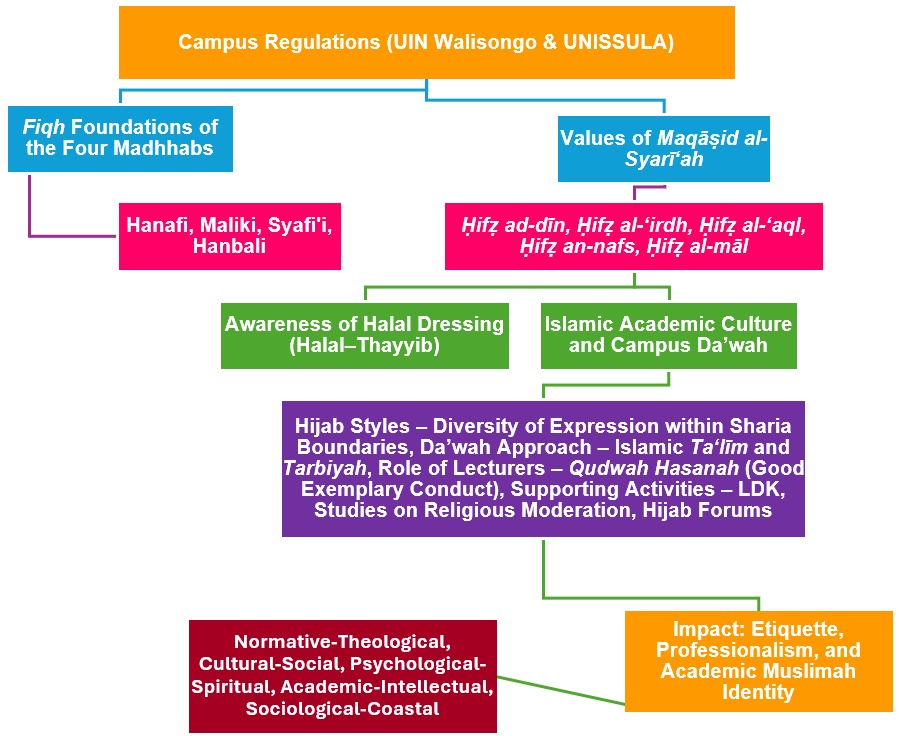
Figure 1.University regulations chart (UIN Walisongo & UNISSULA)
In the academic context, UIN Walisongo implements a synergy between institutional regulations and spiritual development. Student organizations such as the Islamic Da'wah Organization (LDK), the Center for Gender Studies, and other associations actively organize educational programs on the attire and role of modern Muslim women. This makes the culture of wearing the jilbab not merely ritualistic, but also ideological and intellectual in nature. The regulations and culture of jilbab at UIN Walisongo reflect the paradigm of wasathiyyah Islamiyyah, a form of moderate Islam that balances academic freedom and social responsibility. The jilbab is not a tool of distinction but an expression of spirituality and academic ethics. The religious university environment acts as an agent of cultural transformation, encouraging female students who were previously not wearing the jilbab to adapt through social influence and religious activities (R. & I, 2024). Therefore, the policy and culture represent a dialectic between the values of sharia, individual awareness, and the cultural dynamics of student life. The jilbab functions as a symbol of scientific ethics and academic spirituality that affirms the identity of an Islamic university, while also strengthening the role of Muslim female students as knowledgeable, ethical, and empowered agents of civilization in modern society.
3.4 Values and Academic Culture of Wearing the Hijab from the Perspective of the Imam of the Madhhab
The phenomenon of halal dressing at UIN Walisongo and UNISSULA reflects the interaction between institutional regulations, the religious awareness of female students, and the Islamic values as formulated by the imam of the madhhabs. Both universities emphasize the principle of "modest and Islamic dress," but adopt different ideological approaches. UIN Walisongo regulates dress through Academic and Student Code of Conduct regulations, emphasizing ethics and neatness, while UNISSULA more strictly requires the hijab as an implementation of the vision, "Building the Generation of Khaira Ummah." These regulations are not merely administrative but serve as a means of internalizing Islamic values within academic life (Lifestyle, 2023).
In social practice, UIN Walisongo has a diversity of hijab styles, ranging from sharia-compliant to modern modest, provided that the aurat is properly covered. In contrast, at UNISSULA, compliance is more uniform, with female students tending to wear long hijabs as a symbol of piety and loyalty to university values. This demonstrates a dialectic between normative regulations and social interpretation. At UIN Walisongo, the hijab is understood as academic ethics, and at UNISSULA, it is an expression of faith and moral commitment. As previously discussed, the four major madhhabs agree that covering the aurat for women is obligatory (fardh), based on QS. An-Nur [24]:31 and QS. Al-Ahzab [33]:59b(Ihy ̄a’ ‘Ul ̄um al-D ̄ın, 2005). The Hanafi school permits the face and hands to remain uncovered, provided it does not lead to fitnah (temptation). The Maliki school considers the entire body as aurat except for parts that are difficult to cover, and the Shafi'i school, predominant in Indonesia, allows the face and hands to be uncovered, provided there is no tabarruj (excessive display). Meanwhile, the Hanbali school requires the entire body to be covered, including the face (Al-K ās ānī A ibn A, 2005). These differences in opinion provide a basis for flexibility in dress practices on university. Both institutions apply a wasathiyyah (moderate) approach, balancing sharia norms with the cultural dynamics of modern students (Al-K ̄as ̄an ̄ı A ibn A. Bad ̄a’i‘ al-S.an ̄a’i‘ f ̄ı Tart ̄ıb al-Syar ̄a’i‘.Vol.5.D ̄ar al-Kutubal-‘Ilmiyyah, 2000). The dress regulations emphasize modesty, appropriateness, and Islamic identity without coercion, in line with the spirit of etiquette and intention in the Shafi'i school. The religious and open social environment of coastal Java also helps shape a diverse dressing culture that remains within the framework of Islamic values (A. et al., 2024).
In the context of globalization and the digitalization of fashion (Secularism, 2025), the university functions as a moral fortress and a social laboratory that instills the awareness of halal dress as a means of covering the aurat and also reflecting decorum, professionalism, and scholarly morality. Therefore, the dynamics of regulations and Islamic academic culture regarding halal dressing at UIN Walisongo and UNISSULA demonstrate compliance with rules and constitute a part of the process of Islamic character education (A. & N, 2024). Through the synergy of classical fiqh, institutional policies, and students moral awareness, the jilbab is considered a symbol of identity, spirituality, and modern Islamic civilization thriving within the coastal communities of Java.
4. Conclusion
In conclusion, the dynamics of regulations and Islamic academic culture regarding halal dress for female students at Islamic university on the northern coast of Java, particularly UIN Walisongo and UNISSULA, showed a harmonization between sharia norms, institutional policies, and individual religious awareness. Dress regulations at both universities are not merely administrative but form part of an Islamic character education strategy that grounds academic ethics and scholarly identity in sharia values. Through educational and persuasive approaches, halal dressing is conceptualized not only as a legal obligation but also an expression of spirituality and moral integrity for Muslim women. From a fiqh perspective, the views of the Shafi'i, Hanafi, Maliki, and Hanbali schools affirm the obligation for women to cover the aurat, with differences in contextual application. The general principle is that the jilbab serves as an act of obedience to Allah SWT and a protector of women honor and dignity. A moderate understanding of these views forms the basis for university policies that are contextualized to the lives of modern students. Culturally, the hijab culture at both universities develops through the internalization of Islamic values rather than structural pressure. Religious environments, da'wah activities, and lecturers exemplary conduct strengthen students moral and spiritual awareness.
Both universities present a model of religiosity that is moderate and adaptive to modernity. Therefore, the implementation of halal dress at Islamic university along the northern coast of Java represents an actualization of maq ās . id al-syarī'ah within the academic dimension. Halal dress is a symbol of Muslim women identity while serving as a means to cultivate etiquette, professionalism, and scholarly integrity. It also reinforces the role of Islamic university as centers of civilization and in shaping knowledgeable and virtuous generations of Muslim women. This study contributes theoretically by enriching the discourse on Islamic university culture through the integration of fiqh, maq ās . id al-syarī'ah, and socio-cultural perspectives in understanding halal dress practices within higher education. Empirically, it provides contextual evidence from UIN Walisongo and UNISSULA, demonstrating how the internalization of Islamic values shapes students religious consciousness and identity formation. Practically, the results offer a reference for Islamic higher education institutions in designing modest dress policies that emphasize guidance, moral education, and exemplary leadership, thereby fostering professionalism, ethical conduct, and academic integrity among Muslim women students.
Conflict of Interest
The authors declare no conflict of interest.
References
- Z. Abdussamad, Penelitian Metode, Kualitatif. 2021.
- Secularism, and Economic Integration: A Comparative Analysis of Legal Pluralism in Contemporary Systems. 2025; 1
- Bad ā'i' al-S . an ā'i' fī Tartīb al-Syar ā'i. 2005.
- Ihy ̄a’ ‘Ul ̄um al-D ̄ın. 2005; 3
- Al-K ̄as ̄an ̄ı A ibn A. Bad ̄a’i‘ al-S.an ̄a’i‘ f ̄ı Tart ̄ıb al-Syar ̄a’i‘.Vol.5.D ̄ar al-Kutubal-‘Ilmiyyah. 2000.
- S. Al-Nawawī Y.Ibn, Sharh Al-Majm Ū.', Al-Muhadzdzab. 2002.
- A. Azwar, N Nasir M.. Muslim Fashion Development Strategy in the H . al āl Industry in Indonesia: Some Notes from the Quran and Hadith. Al-Irsyad: Journal of Islamic and Contemporary Issues. 2024; 9(1)
- Lifestyle Baslan I.Pengaruh Halal. Halal Awareness dan Halal Branding terhadap Keputusan dengan Halal Literacy sebagai Variabel Moderating Pascasarjana Universitas Islam Negeri (UIN. Alauddin Makassar. 2023.
- M. Bayusman, L. Peter, Berger. Jilbab sebagai Gaya Hidup Modern di Kalangan Mahasiswi UIN Maulana Malik Ibrahim Malang Perspektif Teori Konstruksi Sosial. 2019.
- Indonesia F.M.U.I.]"Fatwa Majelis Ulama. Fatwa Nomor 111 Tahun 2015 tentang Busana Muslimah Sesuai Syariat Islam. MUI. 2015.
- Maktabat al-Riy ̄ad al-H.ad ̄ıthah. 1983; 1
- 2008.
- Tata TertibMahasiswa Perguruan Tinggi Keagamaan Islam Negeri Direktorat Pendidikan Tinggi Keagamaan IslamPanduan Etika. 2021.
- B. Miles M., M. Huberman A., J Saldaña. Terjemahan Tjetjep Rohindi Rohidi. 2014.
- E. Murdiyanto, Penelitian Metode, Kualitatif Kualitatif Sistematika Penelitian. 2020.
- Nurjanah N.. Konstruksi makna cadar bagi santri putri bercadar Al-Fatah Desa Temboro: analisis konstruksi sosial Peter L. 2022.
- O. Page, R. Tifa, P. Tasya, C Astuti N.. Proposed Social Media Marketing Strategy to Increase Brand Awareness and Purchase Intention for Indonesia Muslim Brand (Case of Local Brand Irna La Perle). Journal of Applied Business, Taxation and Economics Research (JABTER. 2025; 5(1)
- S. Pane G., J. Wati, S. Rizki, U. Syekh, A. Hasan, A Padangsidimpuan A.. Tren Jilbab Turban sebagai Fashion Muslimah di Era Kontemporer. Hikmah. 2024; 18
- A. Pranata A., M. Masyhuri, U. Julaihah, N. Asnawi, M Meldona. Kajian Makanan Halal dan Industri Fashion dalam Tinjauan Konsumsi Islam. Dialektika: Jurnal Ekonomi dan Ilmu Sosial. 2025; 10(1)
- R. Rahman, I Indra. The influence of halal fashion, lifestyle, and brand image on Gen Z's hijab fashion preferences in Indonesia. Journal of Islamic Economics Lariba. 2024; 10(1)
- A Riqza N.. Persepsi Mahasiswa Program Sarjana Fakultas Agama Islam Universitas Islam Indonesia terhadap Pandangan Quraish Shihab tentang Batasan Aurat Wanita (dalam Buku Jilbab Pakaian Wanita Muslimah Karya M. Quraish Shihab. 2023; 75
- Said S.F.. Jilbab dalam Pandangan M. Quraish Shihab (Sebuah Tinjauan Filosofis).Pharmacognosy Magazine. 2021; 75(17):399-405.
- Tren dan Perkembangan Fashion Syariah pada Era Modern di Kota Bandung. Jurnal Ilmiah Ekonomi Islam. 2024; 10(1)
- Sudarto S.. Budaya Akademik Islami di Universitas Islam Sultan Agung Semarang dalam perspektif islamisasi ilmu. Ta'dibuna: Jurnal Pendidikan Islam. 2020; 9
- Walisongo Uin. UIN Walisongo Semarang; 2025.
- Unissula. Budaya Akademik Islami (BudAI. 2024.
- A. Yudha, N. Huda, Maksum Sherawali, I Wijayanti. The Moderating Effect of Religiosity on Fashion Uniqueness and Consciousness in Halal Fashion Purchase. Indonesian Journal of Halal Research. 2024; 6(2)
Copyright & License
© 2025.
This is an Open Access article under the terms of the Creative Commons Attribution-ShareAlike 4.0 International License (CC BY-SA 4.0), which permits unrestricted use, distribution and reproduction in any medium, provided the original work is properly cited.

References
Abdussamad Z. Metode Penelitian Kualitatif. Syakir Media Press, Makassar. 2021. https://doi.org/10.31219/osf.io/juwxn DOI: https://doi.org/10.31219/osf.io/juwxn
Ahmed E, E-sor A. Sharia, Secularism, and Economic Integration: A Comparative Analysis of Legal Pluralism in Contemporary Systems. 2025;1(1).
Al-Dardīr A ibn A. Al-Sharḥ al-Kabīr 'alā Mukhtaṣar Khalīl. Vol. 2. Dār al-Fikr. 1997.
Al-Ghazālī AH. Ihyā' 'Ulūm al-Dīn. Vol. 3. Dār al-Kutub al-'Ilmiyyah. 2005.
Al-Kāsānī A ibn A. Badā'i' al-Ṣanā'i' fī Tartīb al-Syarā'i'. Vol. 5. Dār al-Kutub al-'Ilmiyyah. 2000.
Al-Nawawī Y ibn S. Al-Majmū' Sharḥ al-Muhadzdzab. Dār al-Fikr. 2002.
Azwar A, Nasir MN. Muslim Fashion Development Strategy in the Ḥalāl Industry in Indonesia: Some Notes from the Quran and Hadith. Al-Irsyad: Journal of Islamic and Contemporary Issues. 2024;9(1):1272-1291. https://doi.org/10.53840/alirsyad.v9i1.444 DOI: https://doi.org/10.53840/alirsyad.v9i1.444
Baslan I. Pengaruh Halal Lifestyle, Halal Awareness dan Halal Branding terhadap Keputusan dengan Halal Literacy sebagai Variabel Moderating Pascasarjana Universitas Islam Negeri (UIN) Alauddin Makassar. 2023.
Bayusman ME. Jilbab sebagai Gaya Hidup Modern di Kalangan Mahasiswi UIN Maulana Malik Ibrahim Malang Perspektif Teori Konstruksi Sosial Peter L. Berger. 2019.
[FMUI] Fatwa Majelis Ulama Indonesia. Fatwa Nomor 111 Tahun 2015 tentang Busana Muslimah Sesuai Syariat Islam. MUI. 2015.
Ibn Qudāmah A. Al-Mughnī. Vol. 1. Maktabat al-Riyāḍ al-Ḥadīthah. 1983.
Imam al-Syāfi'i M ibn I. Al-Umm. Dār al-Kutub al-'Ilmiyyah. 2008.
Direktorat Pendidikan Tinggi Keagamaan Islam. Panduan Etika dan Tata Tertib Mahasiswa Perguruan Tinggi Keagamaan Islam Negeri. 2021.
Miles MB, Huberman AM, Saldaña J. Qualitative Data Analysis: A Methods Sourcebook. Sage Publications. 2014. Terjemahan Tjetjep Rohindi Rohidi, UI-Press.
Murdiyanto E. Metode Penelitian Kualitatif (Sistematika Penelitian Kualitatif). Yogyakarta Press. 2020.
Nurjanah N. Konstruksi makna cadar bagi santri putri bercadar Al-Fatah Desa Temboro: analisis konstruksi sosial Peter L. Berger. 2022.
Page O, Tifa R, Tasya P, Astuti NC. Proposed Social Media Marketing Strategy to Increase Brand Awareness and Purchase Intention for Indonesia Muslim Brand (Case of Local Brand Irna La Perle). Journal of Applied Business, Taxation and Economics Research (JABTER). 2025;5(1):85-98. https://doi.org/10.54408/jabter.v5i1.462 DOI: https://doi.org/10.54408/jabter.v5i1.462
Pane GS, Wati J, Rizki S, Syekh U, Hasan A, Padangsidimpuan AA. Tren Jilbab Turban sebagai Fashion Muslimah di Era Kontemporer. Hikmah. 2024;18(Desember):181-198. https://doi.org/10.24952/hik.v18i2.13761 DOI: https://doi.org/10.24952/hik.v18i2.13761
Pranata AA, Masyhuri M, Julaihah U, Asnawi N, Meldona M. Kajian Makanan Halal dan Industri Fashion dalam Tinjauan Konsumsi Islam. Dialektika: Jurnal Ekonomi dan Ilmu Sosial. 2025;10(1):36-45. https://doi.org/10.36636/dialektika.v10i1.4670 DOI: https://doi.org/10.36636/dialektika.v10i1.4670
Rahman R, Indra I. The influence of halal fashion, lifestyle, and brand image on Gen Z's hijab fashion preferences in Indonesia. Journal of Islamic Economics Lariba. 2024;10(1):251-270. https://doi.org/10.20885/jielariba.vol10.iss1.art14 DOI: https://doi.org/10.20885/jielariba.vol10.iss1.art14
Riqza NA. Persepsi Mahasiswa Program Sarjana Fakultas Agama Islam Universitas Islam Indonesia terhadap Pandangan Quraish Shihab tentang Batasan Aurat Wanita (dalam Buku Jilbab Pakaian Wanita Muslimah Karya M. Quraish Shihab). 2023.
Said SF. Jilbab dalam Pandangan M. Quraish Shihab (Sebuah Tinjauan Filosofis). Pharmacognosy Magazine. 2021;75(17):399-405.
Srisusilawati P, Prasetyo SN, Nur Hamidah SA, Rihhadatull 'Aisy RA, Oktavia R. Tren dan Perkembangan Fashion Syariah pada Era Modern di Kota Bandung. Jurnal Ilmiah Ekonomi Islam. 2024;10(1):953. https://doi.org/10.29040/jiei.v10i1.12319 DOI: https://doi.org/10.29040/jiei.v10i1.12319
Sudarto S. Budaya Akademik Islami di Universitas Islam Sultan Agung Semarang dalam perspektif islamisasi ilmu. Ta'dibuna: Jurnal Pendidikan Islam. 2020;9(2):267. https://doi.org/10.32832/tadibuna.v9i2.3526 DOI: https://doi.org/10.32832/tadibuna.v9i2.3526
UIN Walisongo. Tri Etika Kampus & Tata Tertib Mahasiswa. UIN Walisongo Semarang. 2025. https://fisika.walisongo.ac.id/tri-etika-kampus/
Unissula. Budaya Akademik Islami (BudAI). 8 November 2024.
Yudha ATRC, Huda N, Maksum, Sherawali, Wijayanti I. The Moderating Effect of Religiosity on Fashion Uniqueness and Consciousness in Halal Fashion Purchase. Indonesian Journal of Halal Research. 2024;6(2):70-83. https://doi.org/10.15575/ijhar.v6i2.34614 DOI: https://doi.org/10.15575/ijhar.v6i2.34614
Published
Issue
Section
License
Copyright (c) 2025 Hidayatus Sholihah, Umi Faizah, Alfath Mukhlasin, A.Zaenurrosyid

This work is licensed under a Creative Commons Attribution-ShareAlike 4.0 International License.
How to Cite