Canine monocytic Ehrlichiosis in Alaskan Malamute dog in GloriaVet Pet Health Solution, Bandung, Indonesia
DOI:
https://doi.org/10.29244/currbiomed.4.1.24Keywords:
blood transfusion, crossmatch, dog, Ehrlichiosis, clinical manifestationAbstract
Background Ehrlichiosis is an infection caused by the bacterium Ehrlichia canis, which attacks monocytes. Ehrlichiosis is characterized by anemia, lethargy, lameness, pancytopenia, hemorrhage, and weight loss.
Objective This study aimed to describe the clinical findings and treatment of a dog diagnosed with Ehrlichia canis infection.
Case A 5-year-old female Alaskan Malamute dog named Salt was brought to the clinic of GloriaVet Pet Health Solution, Bandung, Indonesia, with lameness and weakness, accompanied by high fever and very pale mucous membranes (pallor).
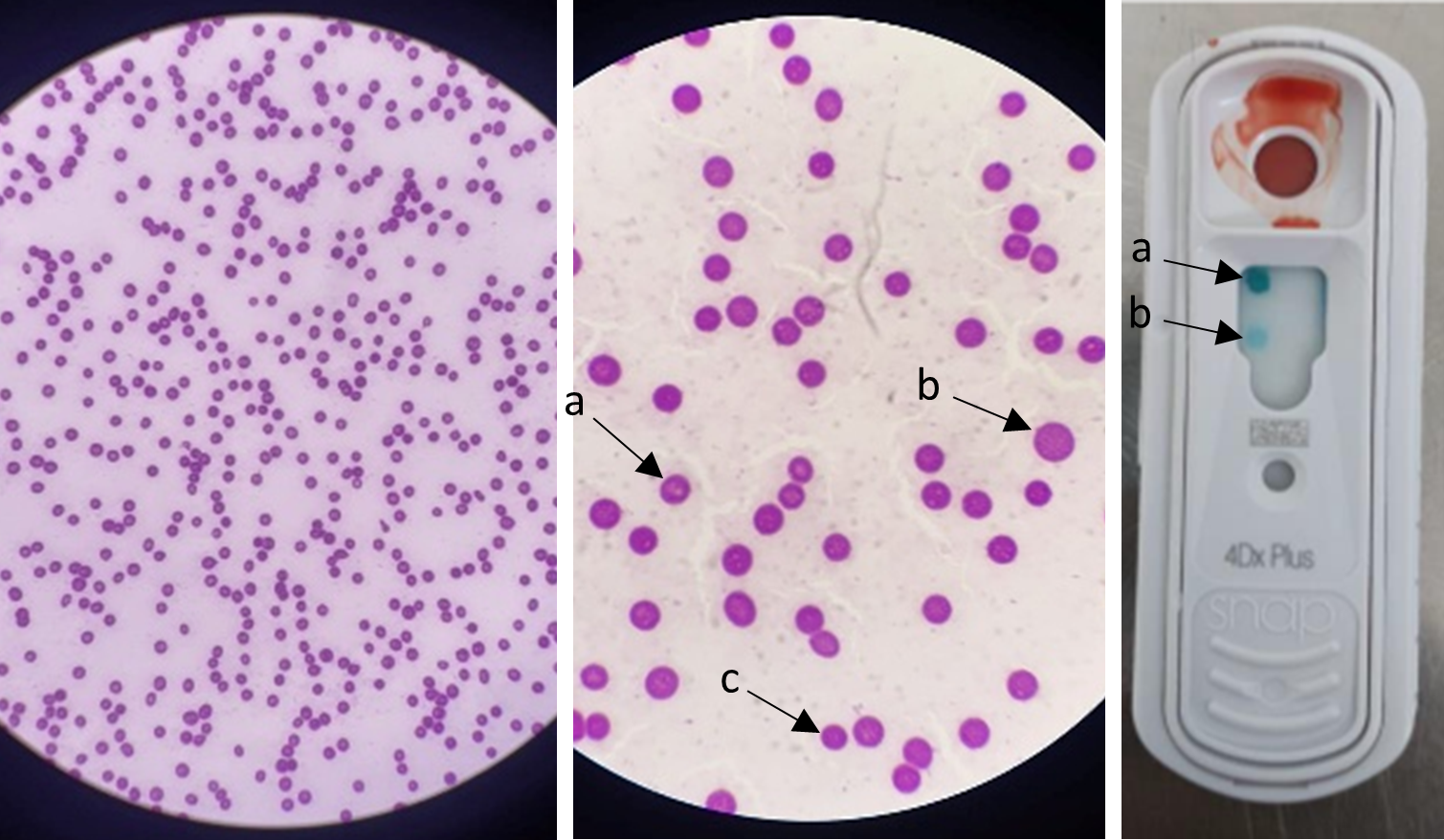
Examination and treatments Dog was examined using a general examination, hematology test, biochemistry test, native smear, and IDExx SNAP© 4dx test kit. The examinations showed a positive result for Ehrlichia canis infection, along with severe pancytopenia, hyperglobulinemia, and thrombocytopenia. Diagnosis heavily relied on serology and clinical manifestation, and further PCR testing was not performed. The treatment consisted of doxycycline 10 mg/kg/day for 28 days, a 0.75% ketamine drip infusion, darbepoetin alfa, and a blood transfusion.
Conclusion Dog was infected with chronic ehrlichiosis with several clinical symptoms including severe anemia. Treatment with doxycycline as the treatment of choice for ehrlichiosis infection and a blood transfusion for treating severe anemia showed signs of improvement, but were ultimately ineffective due to the poor prognosis associated with chronic ehrlichiosis and severe pancytopenia.
Downloads
Downloads
Published
Issue
Section
License
Copyright (c) 2026 Aqila Zata Amani, Kinanti Dwi Rahma, Aryani Sismin Satyaningtijas, Ivan Satriawan, Nurul Nadelia, Sus Derthi Widhyari

This work is licensed under a Creative Commons Attribution 4.0 International License.
This journal is published under a Creative Commons Attribution (CC BY 4.0) International License. This license enables reusers to distribute, remix, adapt, and build upon the material in any medium or format, so long as attribution is given to the creator.

How to Cite