
Isolation and Biochemical Characterisation of Long-Tailed Macaque Aerobic Gut Bacteria from Tinjil Island, Indonesia

Article Sidebar
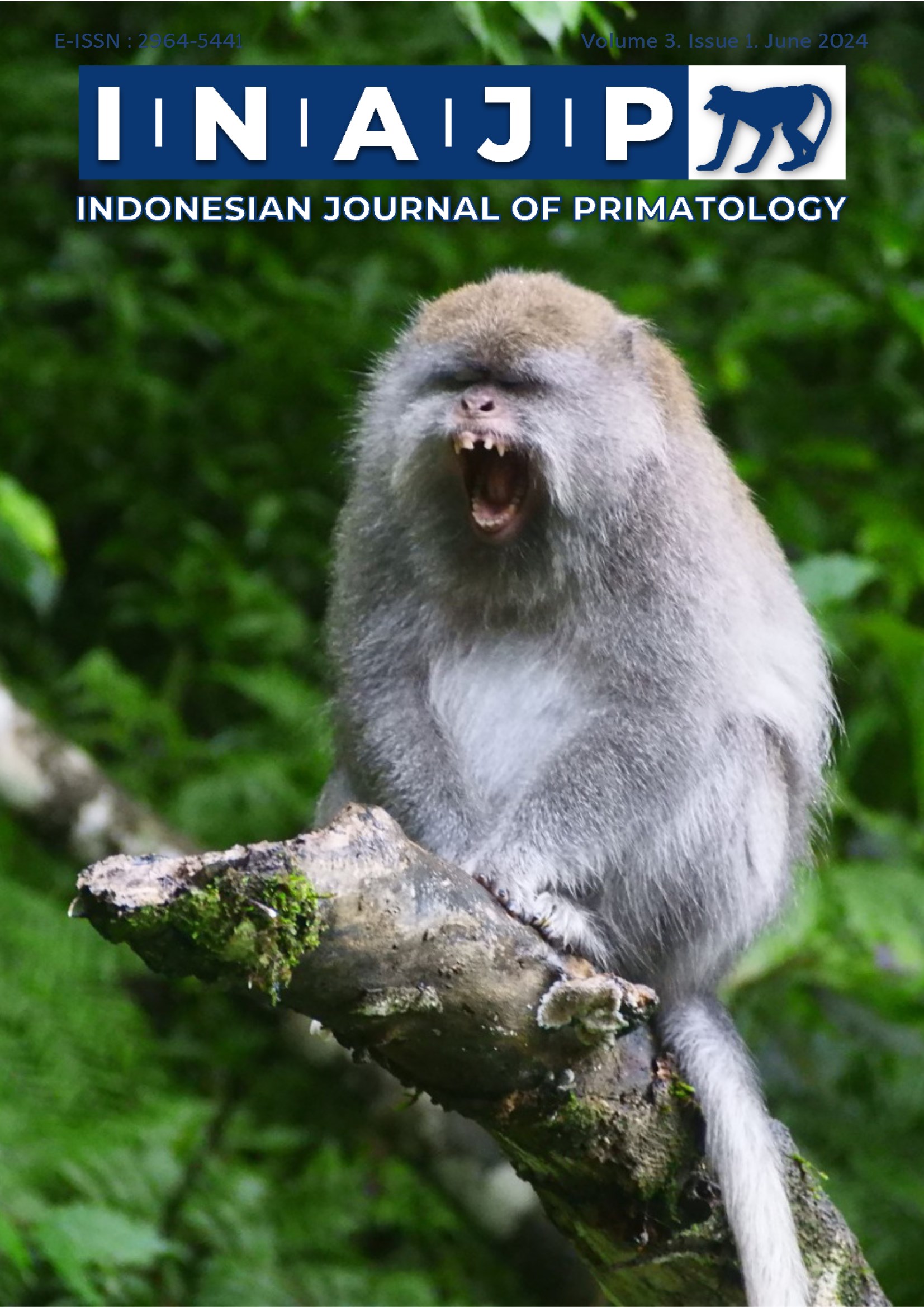
-
Cultured-method,, gut microbiota, Macaca fascicularis, putative-species, fecal
Abstract
Long-tailed macaque (Macaca fascicularis; LTM) is a common non-human primate used as an animal model in the medical field for its genetic similarity with humans. Maintaining the gut microbiota balance of LTM is crucial to avoid the possibility of disease in LTM caused by dysbiosis. Therefore, this study aims to isolate bacteria from the semi-wild LTM from Tinjil Island to know the diversity of their gut microbiota. We serially diluted four semi-wild LTM fecal samples and spread them onto the nutrient agar medium for bacteria enumeration through Total Plate Count (TPC). Then, we follow Bergey's Manual Determinative of Bacteriology. The bacteria isolates would be identified morphologically and biochemically. The average of total viable bacteria obtained was 1.86 x 10⁹ CFU/g. Aerobic isolation of bacteria from all the samples resulted in 19 isolates of gram-positive bacteria, of which six putative species of Staphylococcus sp., three Bacillus sp., four Micrococcus sp., and four Corynebacterium sp. In general, isolating cultivable fecal microbiota from fecal samples of semi-wild LTM from Tinjil Island has provided an overview of its gut microbiota composition based on limited analytical methods using cultured-dependent methods.
Full text article
Authors
Copyright (c) 2024 Indonesian Journal of Primatology

This work is licensed under a Creative Commons Attribution-NonCommercial 4.0 International License.
As our aim is to disseminate original research articles, hence publishing rights is necessary. The publishing right is needed in order to reach an agreement between the author and publisher. As the journal is fully open access, the authors will sign an exclusive license agreement, where authors have copyright but license exclusive publishing rights in their article to the publisher. The authors have the right to:
- Share their article in the same ways permitted to third parties under the relevant user license.
- Retain patent, trademark, and other intellectual property rights including research data.
- Proper attribution and credit for the published work.
For the open access article, the publisher is granted the following rights.
- The exclusive right to publish the article, and grant rights to others, including for commercial purposes.
- For the published article, the publisher applied for the Creative Commons Attribution-NonCommercial 4.0 International License.
Article Details
How to Cite



