
Freshness Identification in Stored Fresh-Cut Cabbage Based on Physicochemical and Sensory Indicators
DOI:
https://doi.org/10.19028/jtep.014.2.245-257Keywords:
freshness, Fresh-cut cabbage, postharvest lossess, respiration, qualityAbstract
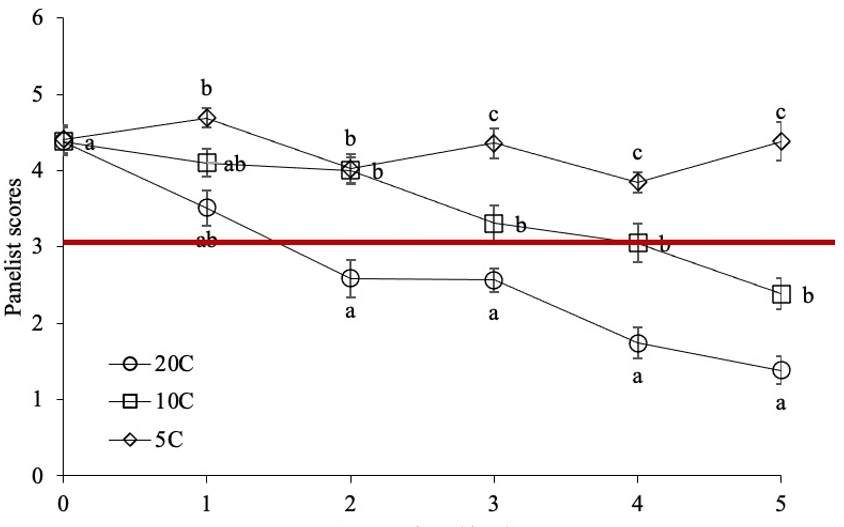
Fresh-cut cabbages, which are ready to eat, are also popular because of their convenience; however, the cutting process increases metabolism, thereby increasing the loss of quality. In addition, improper storage can result in the loss of quality of fresh-cut cabbages. This study was conducted to determine the respiration rates and quality alterations in fresh-cut cabbages, as well as to examine the effect of temperature on the physicochemical characteristics of fresh-cut cabbage. Fresh-cut cabbages were prepared using a food processor, and the samples were stored at 5, 10, and 20 °C in polypropylene films. During the storage period, respiration rate, color, ascorbic acid content, sensory qualities, and bacterial growth were monitored. The results showed that temperature significantly affected the investigated characteristics. Respiration, loss of color and ascorbic acid, and growth of microflora were higher in samples stored at 20 °C than in those stored at 10 and 5 °C. In contrast, storage at 5 °C reduced bacterial growth and ensured better preservation of quality than at other temperatures. From the sensory point of view, the freshness of cabbage was maintained for five days at 5 °C, four days at 10 °C, and two days at 20 °C. In conclusion, fresh-cut cabbage should be stored at 5 °C for maximum quality retention.
Downloads
Downloads
Published
Issue
Section
License
Copyright (c) 2026 Jurnal Keteknikan Pertanian

This work is licensed under a Creative Commons Attribution-ShareAlike 4.0 International License.
Authors submitting manuscripts should understand and agree that copyright of manuscripts of the article shall be assigned/transferred to Jurnal Keteknikan Pertanian. This work is licensed under a Creative Commons Attribution-ShareAlike 4.0 International License (CC BY-SA) where Authors and Readers can copy and redistribute the material in any medium or format, as well as remix, transform, and build upon the material for any purpose, but they must give appropriate credit (cite to the article or content), provide a link to the license, and indicate if changes were made. If you remix, transform, or build upon the material, you must distribute your contributions under the same license as the original.
Jurnal Keteknikan Pertanian is an open access journal.