Optimization of Adaptive Floating Raft System Planting Media in Lebak Swamp for Pakcoy Plant Growth (Brassica rapa L.)
DOI:
https://doi.org/10.19028/jtep.014.2.269-283Keywords:
floating raft system, growing medium, lebak swamp, pakcoy, crop water requirementsAbstract
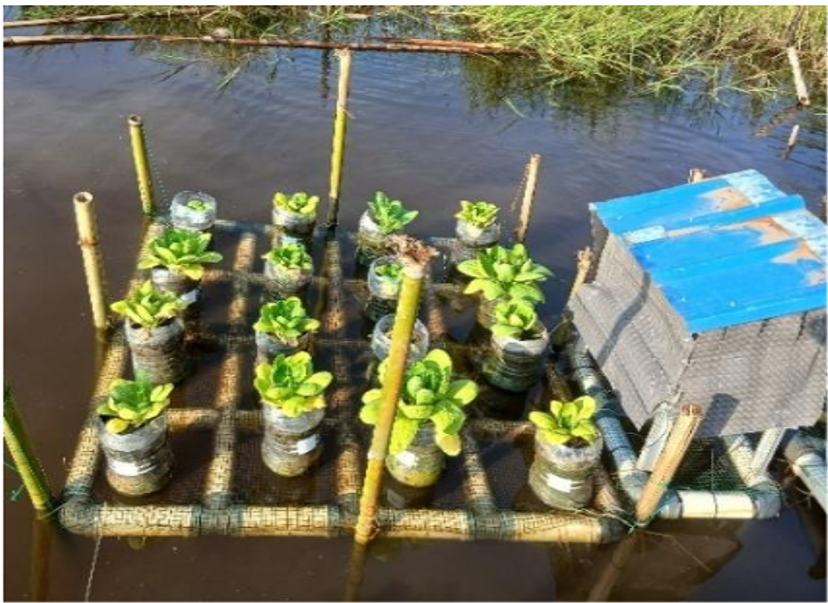
This study aimed to evaluate the effect of planting media composition in an adaptive floating raft system on the growth of pakcoy (Brassica rapa L.) cultivated in lebak swamp areas. Floating raft systems are expected to address challenges associated with high water-level fluctuations commonly found in lowland swamps while maintaining planting media stability. Three growing media compositions consisting of ultisol soil, manure, and husk charcoal with three different ratios: M1 (2:1:1), M2 (1:1:2), and M3 (1:1:1). Observed parameters included media pH, temperature, moisture content, and pakcoy growth characteristics, namely plant height, number of leaves, leaf width, and fresh and dry biomass. The results indicated that the M3 growing medium provided the most favorable conditions for pakcoy growth, as reflected by superior vegetative growth and biomass accumulation. In addition, the M3 treatment exhibited more stable moisture and temperature conditions, supporting optimal water availability for plant development. Crop water requirements were estimated using the Modified Penman method, showing an increasing trend in water demand along the growth stages. Overall, the adaptive floating raft system combined with an appropriate planting media composition proved effective in supporting stable pakcoy growth under fluctuating water-level conditions in lebak swamp environments.
Downloads
Downloads
Published
Issue
Section
License
Copyright (c) 2026 Puspitahati, Ressy Angli Permatasari, Haisen Hower, Endo Argo Kuncoro, Vincentia Veni Vera, Nurul Izzah Aulia

This work is licensed under a Creative Commons Attribution-ShareAlike 4.0 International License.
Authors submitting manuscripts should understand and agree that copyright of manuscripts of the article shall be assigned/transferred to Jurnal Keteknikan Pertanian. This work is licensed under a Creative Commons Attribution-ShareAlike 4.0 International License (CC BY-SA) where Authors and Readers can copy and redistribute the material in any medium or format, as well as remix, transform, and build upon the material for any purpose, but they must give appropriate credit (cite to the article or content), provide a link to the license, and indicate if changes were made. If you remix, transform, or build upon the material, you must distribute your contributions under the same license as the original.
Jurnal Keteknikan Pertanian is an open access journal.