Portable NIR Spectroscopy for Cocoa Bean Re-fermentation Analysis: A Rapid and Reliable Technique
DOI:
https://doi.org/10.19028/jtep.013.4.513-528Keywords:
Cocoa beans, fermentation, NIR spectrometer, PLSR, ANN, chemometricsAbstract
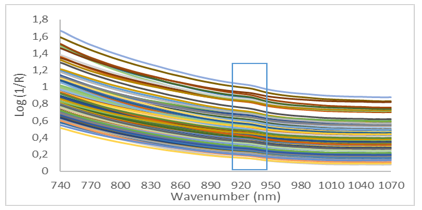
Portable near-infrared (NIR) spectrometers may examine samples directly on-site, speeding up data gathering. However, the NIR spectrometer has a limited wavelength, ranging from 740 to 1,070 nm, whereas previous studies used a longer wavelength. The research aims to determine the fermentation index, pH, and moisture content of fermented dry cocoa beans using a portable Near-Infrared (NIR) spectrometer. The NIR spectra were preprocessed using several methods, including the Savitzky-Golay first and second derivatives (SG 1 and SG2), Linear Baseline Correction (LBC), Multiplicative Scatter Correction (MSC), comparative Partial Least Square Regression (PLSR) modeling, and Artificial Neural Network (ANN). To simulate different fermentation levels, unfermented cacao beans underwent pretreatment fermentation for durations of 0, 24, 48, and 72 hours. The prediction outcomes of ANN models, when applied to dried fermented cocoa beans with data preprocessing, offered better results in comparison to PLSR models, with strong correlation, lowest RMSEC, and highest residual predictive value. The most effective method for predicting fermentation index was ANN combined with LBC preprocessing, while optimal pH models were applied using the SG2 method. The effective moisture content models were developed using MSC preprocessing. The analytical approach of portable NIR spectroscopy produced rapid and accurate results to determine the quality of ground-dried cacao bean fermentation.
Downloads
Downloads
Published
Issue
Section
License
Copyright (c) 2025 Jurnal Keteknikan Pertanian

This work is licensed under a Creative Commons Attribution-ShareAlike 4.0 International License.
Authors submitting manuscripts should understand and agree that copyright of manuscripts of the article shall be assigned/transferred to Jurnal Keteknikan Pertanian. This work is licensed under a Creative Commons Attribution-ShareAlike 4.0 International License (CC BY-SA) where Authors and Readers can copy and redistribute the material in any medium or format, as well as remix, transform, and build upon the material for any purpose, but they must give appropriate credit (cite to the article or content), provide a link to the license, and indicate if changes were made. If you remix, transform, or build upon the material, you must distribute your contributions under the same license as the original.
Jurnal Keteknikan Pertanian is an open access journal.