
FONi's Performances in the Hydroponic Cultivation of Various Vegetables
DOI:
https://doi.org/10.19028/jtep.013.3.432-448Keywords:
Hydroponic, FONi, Land productivity, Water productivity, Water efficiencyAbstract
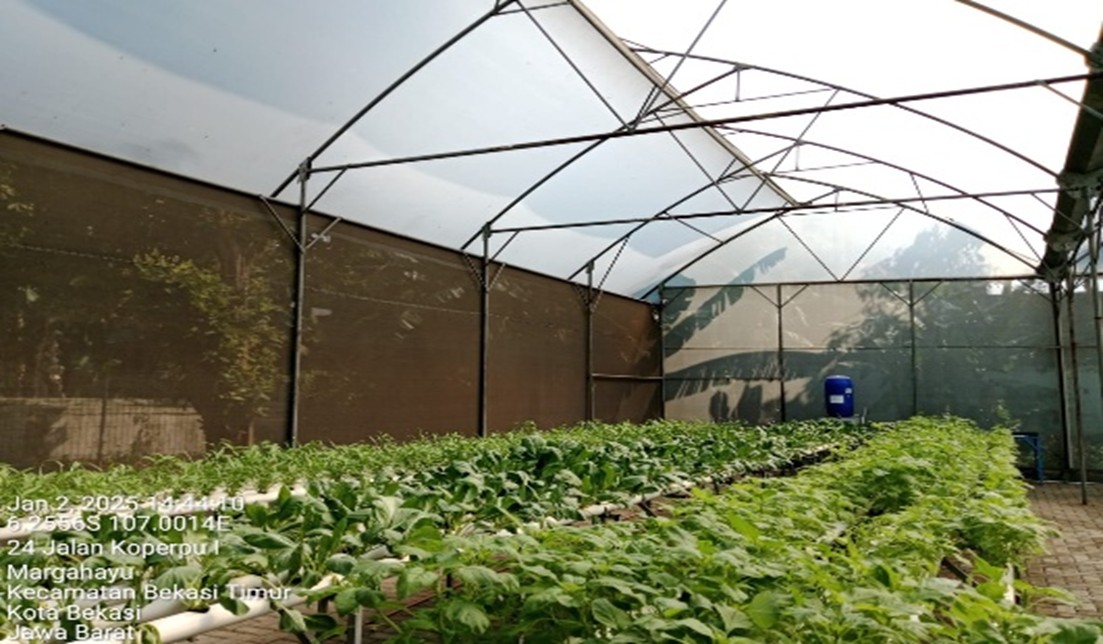
Land conversion, a phenomenon being encountered today, has led to a decline in the availability of agricultural land. On the other hand, population growth requires more food, which means more farmland is needed. Hydroponics is a method to grow crops intensively in any form of space without using soil, but only nutritious water as the growing medium. Hydroponics can produce high-quality crops and is easy to implement, making it popular in urban areas. However, it requires a continuous flow of water using electric pumps, which ultimately increases investment and operating costs. In this study, FONi (An Unpowered Automatic Fertigator) was tested to maintain water levels and flow rates as required by the plants. FONi is designed to replace the water lost by plant evapotranspiration, utilizing an automatic water valve. Here, FONi demonstrated good performance in growing three types of vegetables, namely water spinach (kangkung), choy sum (caisim), and spinach (bayam). The water productivity of each was 47.51 kg/m³, 43.80 kg/m³, and 21.25 kg/m³, respectively, and the land productivity was 1.35 kg/m², 0.97 kg/m², and 0.57 kg/m², respectively. The overall water efficiency was above 80%. By applying FONi, hydroponic cultivation activities at the research site, which had been suspended, can resume without incurring electricity costs.
Downloads
Downloads
Published
Issue
Section
License
Copyright (c) 2025 Jurnal Keteknikan Pertanian

This work is licensed under a Creative Commons Attribution-ShareAlike 4.0 International License.
Authors submitting manuscripts should understand and agree that copyright of manuscripts of the article shall be assigned/transferred to Jurnal Keteknikan Pertanian. This work is licensed under a Creative Commons Attribution-ShareAlike 4.0 International License (CC BY-SA) where Authors and Readers can copy and redistribute the material in any medium or format, as well as remix, transform, and build upon the material for any purpose, but they must give appropriate credit (cite to the article or content), provide a link to the license, and indicate if changes were made. If you remix, transform, or build upon the material, you must distribute your contributions under the same license as the original.
Jurnal Keteknikan Pertanian is an open access journal.