
Price Forecasting of Shallots Using the Machine Learning Approach of Random Forest Regression Supporting Price Stabilization
DOI:
https://doi.org/10.19028/jtep.013.3.449-461Keywords:
Machine Learning, Price Forecasting, Random forest regression, shallotAbstract
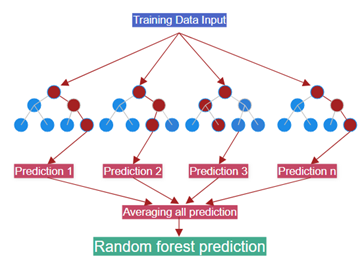
Shallots (Allium cepa L.) are a major horticultural commodity in Indonesia, with a production of 1.98 million tons in 2022, representing 13.59% of the total national vegetable production. Accurate forecasting of agricultural commodity prices is fundamental to sustainable development in the agricultural sector and contributes to broader economic stability. This study uses the random forest regression algorithm, a supervised machine learning technique that utilizes ensemble learning to combine multiple decision trees. This approach offers advantages in modeling non-linear relationships for agricultural price prediction while also reducing the risk of overfitting, resulting in more accurate and stable forecasts compared to individual decision trees. The purpose of this research is to develop and optimize a shallot price forecasting model using random forest regression. The optimized model, using 50 decision tree estimators, successfully predicted up to 15 months ahead of monthly prices and achieved an RMSE of 2363.15 and a MAPE of 8.71% in validation, then a MAPE of 10.31% in test evaluation.
Downloads
Downloads
Published
Issue
Section
License
Copyright (c) 2025 Jurnal Keteknikan Pertanian

This work is licensed under a Creative Commons Attribution-ShareAlike 4.0 International License.
Authors submitting manuscripts should understand and agree that copyright of manuscripts of the article shall be assigned/transferred to Jurnal Keteknikan Pertanian. This work is licensed under a Creative Commons Attribution-ShareAlike 4.0 International License (CC BY-SA) where Authors and Readers can copy and redistribute the material in any medium or format, as well as remix, transform, and build upon the material for any purpose, but they must give appropriate credit (cite to the article or content), provide a link to the license, and indicate if changes were made. If you remix, transform, or build upon the material, you must distribute your contributions under the same license as the original.
Jurnal Keteknikan Pertanian is an open access journal.