The Effectiveness of Zero Energy Cool Chamber in Extending the Shelf Life of Cherry Tomatoes with Packaging Treatment
DOI:
https://doi.org/10.19028/jtep.013.2.227-248Keywords:
Cherry tomatoes, Temporary storage, Zero Energy Cool Chamber (ZECC)Abstract
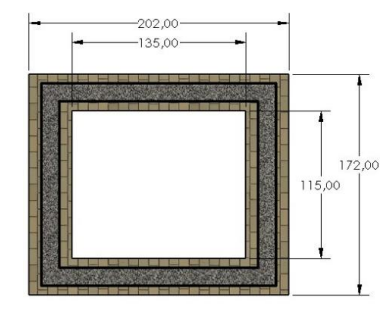
Cherry tomatoes are of high economic value due to their better nutrition, sweet flavor, and crunchy texture. They are in modern markets due to specific demand and intensive cultivation. Periodic harvesting poses distribution and storage challenges as cherry tomatoes are perishable, leading to price fluctuations and quality deterioration. Temporary storage is required to maintain quality before marketing. Zero Energy Cool Chamber (ZECC) is a low-cost and environmentally friendly cold storage alternative. This study aims to determine the combination of zeolite particle size combined with sand as a cooling medium on the ZECC wall that produces a shelf room temperature according to the temporary storage needs of cherry tomatoes. Cherry tomatoes were stored in retail (250 g) and bulky (1500 g) packaging to assess the effectiveness of the packaging in maintaining quality. Parameters measured included moisture content, texture, color, vitamin C content, and organoleptic. The results showed that chamber 1 (zeolite No. 1 mesh 14-20) was more stable than chamber 2 (zeolite No. 2 mesh 8-16). When loaded, the temperature of chamber 1 ranged from 24.6°C to 27.7°C with RH 94.7% to 95.4%. Retail packaging gave the best results with an organoleptic score of 4.03-4.16 on day 15, higher than the control. The vitamin C content in the retail packaging reached 35.83 mg/100 g, higher than the control (28.94 mg/100 g).
Downloads
Downloads
Published
Issue
Section
License
Authors submitting manuscripts should understand and agree that copyright of manuscripts of the article shall be assigned/transferred to Jurnal Keteknikan Pertanian. This work is licensed under a Creative Commons Attribution-ShareAlike 4.0 International License (CC BY-SA) where Authors and Readers can copy and redistribute the material in any medium or format, as well as remix, transform, and build upon the material for any purpose, but they must give appropriate credit (cite to the article or content), provide a link to the license, and indicate if changes were made. If you remix, transform, or build upon the material, you must distribute your contributions under the same license as the original.
Jurnal Keteknikan Pertanian is an open access journal.