Challenges in the Implementation of Internet of Things (IoT) in Irrigation and Fertilizer Management System in Indonesia
DOI:
https://doi.org/10.19028/jtep.013.2.265-283Keywords:
Agriculture, Internet of Things, irrigation system, fertilizer systemAbstract
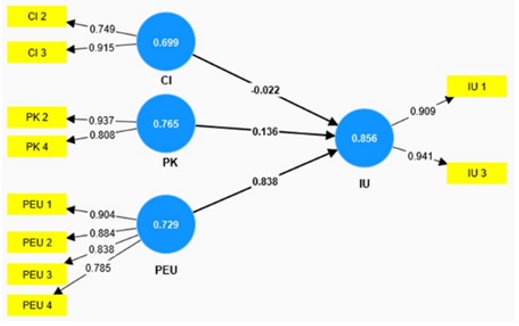
Agriculture is critical to many countries' economies, especially related to gross domestic products (GDP) and employment. However, as a result of industrialization, leading to a problem in fulfilling the expanding global food supply demand. The Internet of Things (IoT) can enhance automatic data transfer in agricultural, improve production, increase quality, improve cost-effectiveness, and reduce environmental impact. However, the obstacles related to IoT application in agriculture have received little discussion especially in the development countries such as Indonesia. This research seeks to fill that gap by investigating the specific issues of adopting the Internet of Things (IoT) in the context of an irrigation and fertilizer management system in Indonesia. To fully study this, a stratified multistage random sampling was conducted to acquire significant insights and data. According to the interview results, respondents voiced worries regarding IoT deployment in agriculture, including, costs implementation (CI), their own knowledge (perceived knowledge (PK)), user experiences with the technology (perceived ease of use (PEU)) and intention of use (IU). The study finds weak CI-IU and PK-IU links but a strong PEU-IU correlation, underscoring the multifaceted factors influencing IoT adoption in agriculture. It is found that the easiness of the use of IoT is the main factors that influence Indonesian farmers to implement the IoT in their farmers. Although the cost of the implementation is an essential factor, easiness to use IoT is the most significant factor. Lastly, researchers, policymakers, and agricultural stakeholders can leverage these insights to advance IoT integration and sustainability in farming practices.
Downloads
Downloads
Published
Issue
Section
License
Copyright (c) 2025 Jurnal Keteknikan Pertanian

This work is licensed under a Creative Commons Attribution-ShareAlike 4.0 International License.
Authors submitting manuscripts should understand and agree that copyright of manuscripts of the article shall be assigned/transferred to Jurnal Keteknikan Pertanian. This work is licensed under a Creative Commons Attribution-ShareAlike 4.0 International License (CC BY-SA) where Authors and Readers can copy and redistribute the material in any medium or format, as well as remix, transform, and build upon the material for any purpose, but they must give appropriate credit (cite to the article or content), provide a link to the license, and indicate if changes were made. If you remix, transform, or build upon the material, you must distribute your contributions under the same license as the original.
Jurnal Keteknikan Pertanian is an open access journal.