Effects of Different Commercial Probiotics on Growth and Survival of Oreochromis niloticus Fry
DOI:
https://doi.org/10.29244/bjnstj97Keywords:
probiotic, growth, tilapiaAbstract
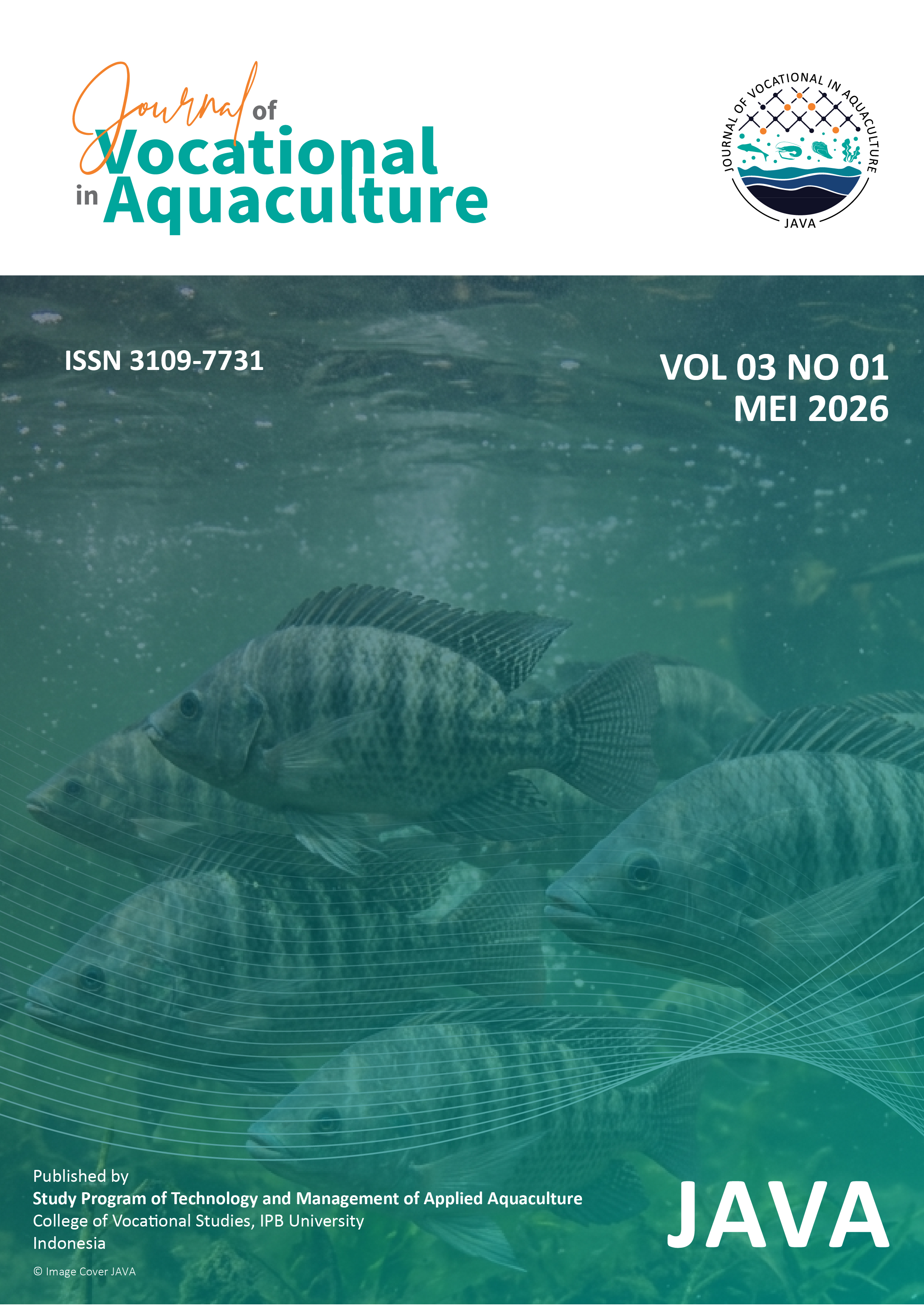
Nile tilapia (Oreochromis niloticus) is an important freshwater aquaculture commodity with strong development potential in Indonesia. Increasing market demand has encouraged farmers to improve production efficiency; however, several constraints remain, including aquaculture waste, low feed digestibility, and high feed costs. One approach that has been widely explored is the use of commercial probiotics as feed additives to improve nutrient utilization and overall fish performance. This study aimed to evaluate the effect of different commercial probiotics applied in feed on the growth performance and survival of Nile tilapia fry. The experiment was conducted using a Completely Randomized Design with three treatments and three replications: P0 (feed without probiotics), P1 (feed supplemented with a commercial probiotic containing Bacillus subtilis ≥10⁶ CFU/mL at a dose of 15 mL/kg feed), and P2 (feed supplemented with a commercial probiotic containing Lactobacillus casei ≥10⁶ CFU/mL and Saccharomyces cerevisiae ≥10⁶ CFU/mL at a dose of 20 mL/kg feed). The results showed that treatment P2 produced the best outcomes and differed significantly (P<0.05) from the other treatments. This treatment resulted in higher survival (94.43±7.35%), specific growth rate (8.44±0.30 %/day), absolute weight gain (5.32±0.86 g), and absolute length gain (2.08±0.27 cm/day), along with improved feed conversion ratio (1.26±0.07), feed efficiency (81.34±0.36%), and protein efficiency ratio (8.53±0.36). These findings suggest that the application of the probiotic used in treatment P2 can improve feed utilization and support better growth and survival of Nile tilapia fry under culture conditions.
Downloads
Published
Issue
Section
License
Copyright (c) 2026 Muhammad Arif Mulya, Rifqah Pratiwi, Mohammad Aghistni Rahman, Muthia Khairunnisa

This work is licensed under a Creative Commons Attribution 4.0 International License.