Determinants of Exports in Muslim Countries Developing Eight (D-8): Institutional Quality and Infrastructure Technology
Downloads
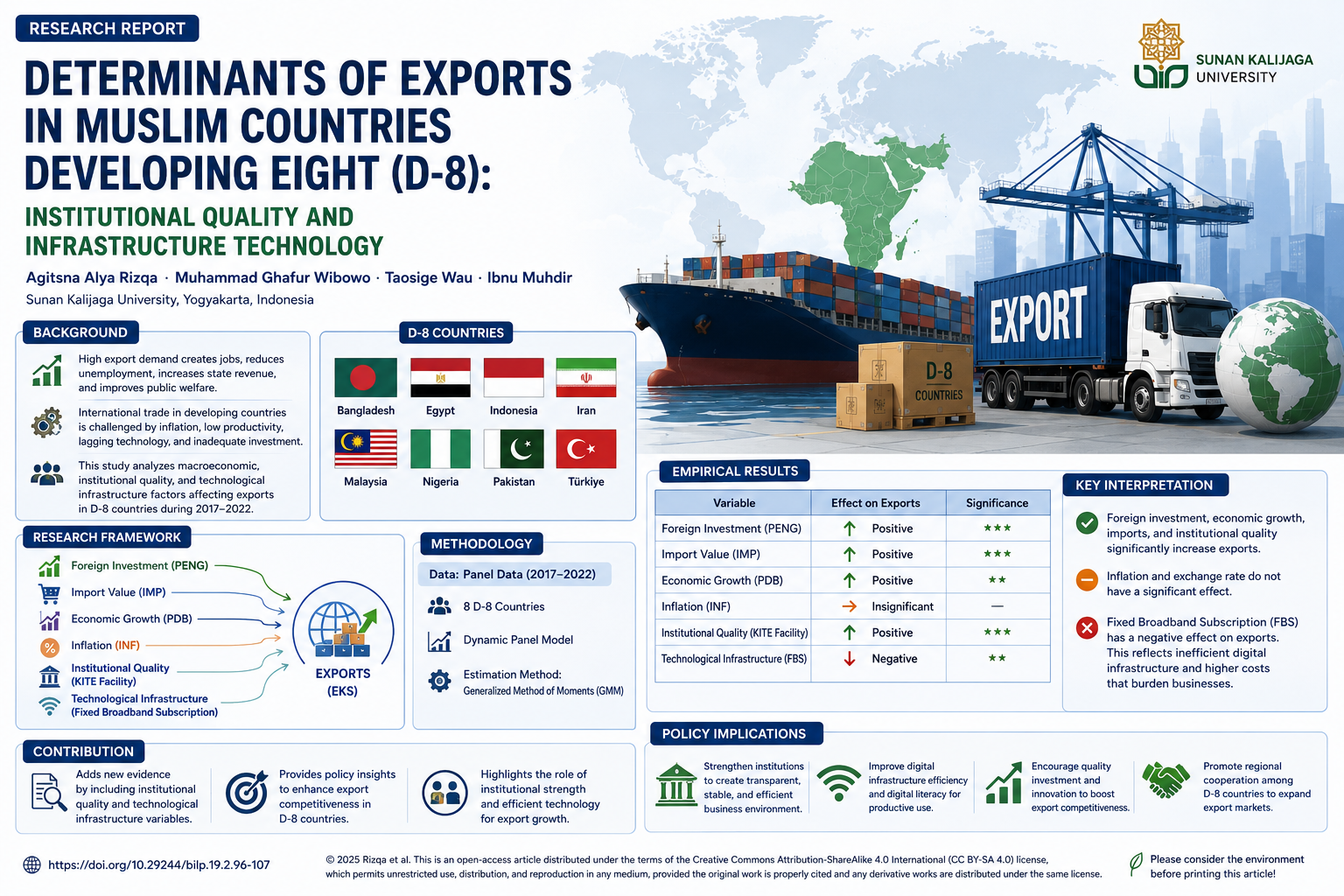
International trade problems in developing countries are caused by inflation, low labor productivity, lagging technological infrastructure, and lack of investment. High export demand will create new jobs, reduce unemployment rates, and increase state revenue sources, which will ultimately improve public welfare. The purpose of this study is to examine the determinants of exports in Developing Eight (D-8) countries from a macroeconomic perspective, institutional quality, and technological infrastructure. This study strengthens previous findings by using institutional quality and technological infrastructure variables and is processed using the efficient, consistent, and unbiased Generalized Method of Moments (GMM). This study uses eight Muslim countries that are members of the Developing Eight organization with a research period of 2017-2022. The research findings show that Foreign Investment, Economic Growth, Institutional Quality, and Technological Infrastructure significantly influence exports, while Inflation is insignificant. This study presents a new research by showing negative results on the relationship between Fixed Broadband Subscription (FBS) and Exports. FBS can reflect inefficient digital infrastructure. The increase in FBS is primarily directed at domestic consumption rather than productive export activities, while high costs and low service quality actually burden businesses. Technology has a greater impact on imports than exports because consumers utilize the ease of cross-border technology access more to purchase imported goods.